Nasution Nanang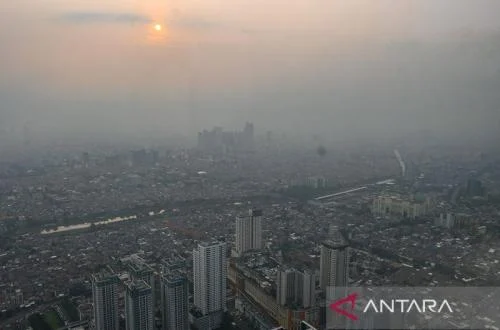
On a recent Friday morning, residents of Jakarta woke to a stark reminder of the city’s persistent environmental challenge as air quality deteriorated significantly, registering as "unhealthy" according to real-time data from the reputable air quality monitoring platform IQAir. The update, recorded at 04:00 Western Indonesian Time (WIB), immediately triggered public health advisories, with authorities strongly recommending the use of masks for individuals venturing outdoors to mitigate exposure to harmful pollutants. This latest episode underscores the critical need for sustained and aggressive measures to combat air pollution in the bustling Indonesian capital, a problem that has far-reaching implications for public health, economic stability, and the overall quality of life for its millions of inhabitants.
Understanding the Severity: Air Quality Index and PM2.5
The IQAir report indicated Jakarta’s Air Quality Index (AQI) reached a concerning 154, a level classified as "unhealthy." This metric is derived primarily from the concentration of particulate matter 2.5 (PM2.5), which was recorded at 60 micrograms per cubic meter (µg/m³). To put this into perspective, the World Health Organization (WHO) establishes an annual air quality guideline value for PM2.5 at 5 µg/m³. Jakarta’s recorded concentration on this Friday morning was therefore twelve times higher than the WHO’s recommended annual exposure limit, highlighting the severe deviation from healthy air quality standards.
PM2.5 refers to microscopic airborne particles with a diameter of 2.5 micrometers or less. These particles are incredibly small, about 30 times smaller than the average human hair, making them capable of bypassing the body’s natural defenses and penetrating deep into the lungs and even the bloodstream. Common sources of PM2.5 include emissions from vehicle exhaust, industrial processes, power plants, construction activities, and the burning of biomass and waste. The composition of PM2.5 can vary but often includes sulfates, nitrates, ammonia, sodium chloride, black carbon, mineral dust, and water.
Profound Health Implications of PM2.5 Exposure
The health risks associated with elevated PM2.5 levels are extensive and well-documented. Short-term exposure can lead to immediate symptoms such as eye, nose, and throat irritation, coughing, wheezing, and shortness of breath. For individuals with pre-existing respiratory conditions like asthma or chronic obstructive pulmonary disease (COPD), even brief exposure can trigger severe exacerbations requiring medical intervention. Similarly, those with cardiovascular diseases are at increased risk of heart attacks and strokes.
Long-term exposure to PM2.5 is even more insidious, contributing to a range of chronic and debilitating health conditions. It has been conclusively linked to reduced lung function, the development of chronic bronchitis, and an increased risk of lung cancer. Cardiovascular diseases, including ischemic heart disease and hypertension, are also significantly exacerbated by prolonged exposure to these fine particulates. Studies have even suggested links between long-term PM2.5 exposure and neurological disorders, diabetes, and adverse birth outcomes. Children, the elderly, and pregnant women are particularly vulnerable populations, experiencing heightened susceptibility to these health impacts due to their developing or compromised physiological systems. The economic burden of these health issues is substantial, encompassing increased healthcare costs, lost productivity due to illness, and premature mortality, collectively impacting the city’s social and economic fabric.
A Recurring Crisis: Jakarta’s Persistent Air Pollution Challenge
Jakarta’s struggle with poor air quality is not an isolated incident but a chronic issue that has garnered significant public and governmental attention over recent years. The city frequently ranks among the most polluted major cities globally, particularly during the dry season (typically from June to September) when atmospheric conditions, such as temperature inversions and reduced rainfall, tend to trap pollutants closer to the ground. This phenomenon exacerbates the concentration of airborne particles, making the problem visibly worse and more acutely felt by residents.
Historically, the rapid urbanization and industrialization of Jakarta, coupled with its massive population growth (over 10 million in the core city, and nearly 30 million in the greater Jabodetabek region), have contributed to an exponential increase in pollutant emissions. The sheer volume of vehicles – millions of cars and motorcycles – on Jakarta’s congested roads is a primary culprit, spewing out exhaust fumes rich in PM2.5, nitrogen oxides, and volatile organic compounds. Adding to this complex mix are emissions from numerous industrial facilities in and around the capital, coal-fired power plants in neighboring provinces, and biomass burning from agricultural activities or waste disposal. The city’s geographical characteristics, nestled in a low-lying basin, also play a role, often leading to poor dispersion of pollutants.
Regional Snapshot: Jakarta’s Position in Indonesia’s Pollution Landscape
The recent IQAir data also provided a broader context, revealing that Jakarta, despite its severe pollution, was not the worst-affected city in Indonesia on that particular Friday morning. It ranked fourth in the nation, surpassed by three neighboring cities within the greater Jakarta metropolitan area, known as Jabodetabek (Jakarta, Bogor, Depok, Tangerang, Bekasi). Tangerang Selatan led with an AQI of 165, followed by Bekasi at 161, and Tangerang at 155. Jakarta’s AQI of 154 placed it just below these immediate neighbors. This regional pattern underscores the interconnectedness of air pollution across administrative boundaries and highlights that the problem is not confined to Jakarta alone but is a pervasive challenge for the entire mega-urban agglomeration. Pollutants generated in one area can easily drift and affect others, necessitating a coordinated, inter-regional approach to mitigation.
Immediate Public Health Recommendations
In light of the "unhealthy" air quality, health authorities and environmental agencies reiterated several critical recommendations for the public to minimize exposure and safeguard their well-being. Beyond the primary advice to wear masks – specifically N95 or KN95 respirators, which offer superior protection against fine particulate matter compared to surgical masks – additional measures were strongly urged:
- Limit Outdoor Activities: Residents, especially vulnerable groups, were advised to avoid strenuous outdoor activities and reduce the duration of time spent outside. If outdoor activities are unavoidable, they should be minimized and scheduled for periods when pollution levels are relatively lower, typically later in the day or early morning, though the Friday morning data indicated even these times could be hazardous.
- Keep Windows Closed: To prevent outdoor air from infiltrating indoor spaces, residents were advised to keep windows and doors tightly closed, particularly during peak pollution hours.
- Utilize Air Purifiers: The use of indoor air purifiers equipped with High-Efficiency Particulate Air (HEPA) filters was recommended to clean indoor air effectively. These devices can significantly reduce PM2.5 concentrations within homes and offices, creating safer environments.
- Stay Hydrated and Monitor Symptoms: Maintaining good hydration and monitoring for any respiratory or cardiovascular symptoms was also encouraged, with a clear instruction to seek medical attention if symptoms worsen.
Governmental Strategies and Commitments: A Multi-Pronged Approach
The Provincial Government of DKI Jakarta has long acknowledged the gravity of the air pollution crisis and has been actively developing and implementing various strategies aimed at mitigating emissions and improving air quality. These initiatives reflect a comprehensive understanding that the problem requires interventions across multiple sectors.
One significant strategic thrust is the transformation of the energy sector. A key project in this regard is the development of Pembangkit Listrik Tenaga Sampah (PLTSa), or Waste-to-Energy Plants. These facilities aim to address two pressing environmental issues simultaneously: solid waste management and energy generation. By incinerating waste at high temperatures, PLTSa can reduce landfill volume while generating electricity. However, careful design and stringent emission controls are paramount to ensure that these plants do not inadvertently become new sources of air pollutants. The government emphasizes the integration of advanced filtration and emission control technologies in such projects.
Another cornerstone of the government’s strategy is the transformation of the transportation sector. Recognizing that vehicular emissions are a major contributor to Jakarta’s air pollution, the provincial administration is vigorously promoting a shift towards electric vehicles (EVs) and enhancing public transportation infrastructure. Initiatives include:
- Incentives for EVs: Policies to encourage the adoption of electric cars and motorcycles, such as tax breaks, charging station expansion, and potentially subsidies.
- Public Transport Expansion: Continuous development and expansion of mass transit systems like the MRT (Mass Rapid Transit), LRT (Light Rail Transit), and TransJakarta bus network, aiming to provide convenient, affordable, and cleaner alternatives to private vehicles.
- Emission Standards and Testing: Enforcement of stricter vehicle emission standards and mandatory emission testing for all vehicles to ensure compliance and identify high-polluting vehicles.
- Traffic Demand Management: Implementation of measures like the odd-even license plate policy and exploring congestion pricing to reduce the sheer volume of vehicles on the road.
Furthermore, the Pemprov DKI Jakarta consistently emphasizes the critical importance of cross-regional cooperation and collaboration among various regional government organizations (OPDs). As the recent IQAir data vividly illustrates, air pollution does not respect administrative boundaries. Effective control of pollution emanating from surrounding industrial zones, power plants, and transportation corridors requires synchronized efforts with the provincial governments of West Java and Banten, as well as the municipal authorities within the Jabodetabek region. This involves sharing data, coordinating regulatory enforcement, and harmonizing development plans to collectively address transboundary pollution.
Regulatory Framework: The 2023-2030 Air Pollution Control System
The commitment to combating air pollution has been formalized through robust regulatory frameworks. A significant development is the issuance of Governor’s Decree Number 576 of 2023 concerning the Air Pollution Control System (SPPU) for the period 2023-2030. This decree provides a comprehensive roadmap for Jakarta’s sustained efforts to improve air quality over the next seven years. The SPPU outlines several key pillars:
- Strengthening Governance and Regulation: This involves enhancing the legal and institutional framework for air quality management, improving monitoring capabilities, and ensuring transparent reporting of pollution data. It also includes strengthening the capacity of regulatory bodies to enforce environmental laws.
- Reduction of Emissions from Mobile Sources: This pillar specifically targets the transportation sector, encompassing all the initiatives mentioned above, from promoting EVs and public transport to stricter emission standards and traffic management. The goal is to significantly reduce emissions from cars, motorcycles, buses, and trucks.
- Reduction of Emissions from Stationary Sources: This focuses on industrial facilities, power plants, commercial buildings, and other fixed sources of pollution. Strategies include mandating the adoption of cleaner production technologies, requiring the installation of advanced pollution control equipment (e.g., scrubbers, electrostatic precipitators), and promoting the use of cleaner fuels. It also addresses emissions from waste management facilities and construction sites.
The decree underscores the government’s long-term vision and commitment, recognizing that air pollution control is a complex, multi-faceted challenge that demands sustained effort, significant investment, and coordinated action across all levels of governance and society.
Broader Impact and Implications: A Call for Sustainable Urban Living
The recurring air pollution crisis in Jakarta carries profound broader implications that extend beyond immediate health concerns. Economically, chronic poor air quality can deter foreign investment and tourism, impacting the city’s growth prospects. It also leads to substantial healthcare expenditures and lost productivity, creating a drag on the regional economy. Socially, air pollution often disproportionately affects lower-income communities, who may live closer to industrial zones or major roadways and have limited access to protective measures, raising issues of environmental justice.
Regionally, Jakarta’s air quality is inextricably linked to the environmental health of the entire Jabodetabek area. A holistic, integrated approach is essential, requiring coordinated urban planning, industrial siting policies, and environmental regulations across all constituent regions. This collaborative model is crucial for achieving meaningful and lasting improvements.
Looking ahead, Jakarta’s efforts to tackle air pollution are also intertwined with Indonesia’s broader commitments to sustainable development goals and climate action. Transitioning to cleaner energy sources, promoting sustainable transport, and improving waste management practices are not only crucial for air quality but also contribute significantly to reducing greenhouse gas emissions and fostering a more resilient and sustainable urban environment. The challenge is immense, but the commitment demonstrated by the regulatory frameworks and ongoing initiatives suggests a determined path towards a healthier, breathable future for Jakarta’s citizens. The continued vigilance of monitoring platforms like IQAir, coupled with robust governmental action and heightened public awareness, will be pivotal in navigating this complex environmental crisis.