Nasution Nanang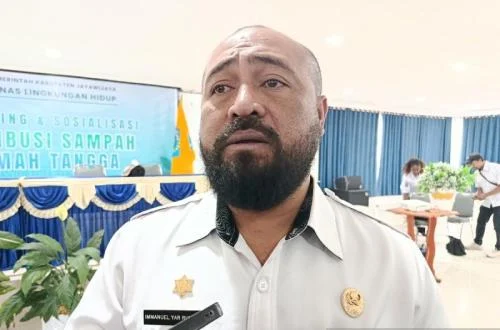
WAMENA, PAPUA PEGUNUNGAN – The Regional Revenue Agency (Bapenda) of Jayawijaya Regency has issued a stern reminder to both the general public and civil servants (ASN) regarding the timely payment of household waste retribution. This proactive measure is part of a broader strategic effort aimed at achieving the ambitious Regional Original Revenue (PAD) target for the Papua Pegunungan province this year, underscoring the critical link between civic responsibility, environmental sustainability, and regional fiscal autonomy. The initiative is not merely about collecting fees but represents a fundamental push towards strengthening local governance and ensuring the provision of essential public services, particularly in a region like Papua Pegunungan, which faces unique geographical and developmental challenges.
The Mandate for Fiscal Autonomy: Understanding Regional Original Revenue (PAD)
Regional Original Revenue (PAD) constitutes the financial backbone of local governments in Indonesia, serving as a vital indicator of their fiscal independence and capacity to fund local development programs without excessive reliance on transfers from the central government. In the context of Indonesia’s decentralized governance framework, established primarily through Law No. 32 of 2004 (later superseded by Law No. 23 of 2014) on Regional Government and Law No. 28 of 2009 on Regional Taxes and Retributions, local administrations are empowered to generate their own revenue through various sources. These typically include regional taxes (such as land and building tax, vehicle tax, hotel and restaurant tax), regional retributions (fees for specific public services like waste collection, market services, parking), profits from regionally-owned enterprises (BUMD), and other legitimate regional revenues. The ability of a region to maximize its PAD is directly correlated with its capacity to invest in infrastructure, education, healthcare, and environmental services, thereby directly impacting the quality of life for its citizens. For Jayawijaya, a regency within the newly established Papua Pegunungan province, enhancing PAD is particularly crucial as it navigates the complexities of regional autonomy and strives for sustainable development in a geographically challenging terrain. The emphasis on waste retribution highlights a dual objective: to fund critical environmental services and to instill a sense of ownership and responsibility among the populace for the upkeep of their local environment.
Jayawijaya’s Drive for Sustainable Waste Management and Financial Stability
Immanuel YAR Rumere, the Acting Head of Bapenda Jayawijaya Regency, has been at the forefront of this campaign, reiterating the importance of consistent payment of the household waste retribution. According to Rumere, the fixed monthly fee of Rp30,000 per household is a modest contribution that collectively can yield significant financial resources for the regency. This fee is earmarked for the operational costs associated with waste management, including collection, transportation, and disposal, which are essential services for maintaining public hygiene and environmental health. The timely payment of this retribution is framed not merely as a legal obligation but as a civic duty, a direct investment by citizens in their immediate environment and the overall well-being of their community. Rumere’s statements underline the administration’s commitment to improving public services and fostering a culture of compliance that supports the region’s fiscal health. The initiative is particularly critical in urban centers like Wamena, the capital of Jayawijaya, where population density and economic activities generate substantial waste, demanding robust and adequately funded waste management systems. Without consistent revenue from retribution, the quality and reach of these services risk degradation, leading to potential public health crises and environmental degradation. The focus on regular payments aims to create a predictable revenue stream, allowing the Dinas Lingkungan Hidup (DLH) or Environmental Agency, the primary body responsible for waste management, to plan and execute its operations more effectively.
The Crucial Role of Civil Servants in Revenue Generation
A significant focus of Bapenda’s campaign is on the approximately 3,500 civil servants (ASN) employed within Jayawijaya Regency. This targeted appeal to ASN is strategic for several reasons. Firstly, as government employees, ASNs are expected to uphold the law and serve as role models for the wider community. Their consistent compliance sets a positive precedent and encourages other citizens to follow suit. Secondly, ASNs generally have stable incomes, making it easier for them to meet their financial obligations consistently. This stability provides a more reliable revenue stream compared to the general public, whose income may fluctuate. Rumere highlighted the substantial potential revenue from this group alone: if all 3,500 ASNs consistently pay the Rp30,000 monthly retribution, it could generate approximately Rp1.2 billion annually. While this figure represents a fraction of the overall PAD target, its significance extends beyond the numerical value. It signifies a foundational commitment from within the government apparatus itself to contribute to regional development. This internal compliance not only boosts direct revenue but also enhances the legitimacy and effectiveness of the government’s call for broader public compliance. Furthermore, ensuring ASN compliance can simplify collection mechanisms, potentially through salary deductions, making the process more efficient and reducing administrative overhead for Bapenda. This focus on ASN can also serve as a pilot for broader community engagement, allowing Bapenda and DLH to refine their communication and collection strategies before scaling them up.
A Collaborative Approach: Engaging Stakeholders for Wider Compliance
The campaign to promote waste retribution payment has been characterized by a robust and multi-stakeholder socialization effort. Bapenda, in close collaboration with the local Environmental Agency (Dinas Lingkungan Hidup – DLH), has conducted extensive outreach programs. These sessions have involved a diverse array of participants, including civil servants, community representatives from all 40 districts of Jayawijaya, members of the Regional Leadership Communication Forum (Forum Koordinasi Pimpinan Daerah – Forkopimda), and representatives from the Association of State-Owned Banks (Himpunan Bank Negara – Himbara). The involvement of Forkopimda, which typically comprises the Regent, heads of police, military, and judiciary, lends significant institutional weight and authority to the campaign, underscoring the government’s unified stance on this issue. Their participation helps in addressing potential resistance or misunderstandings, ensuring that the message is received as a collective government directive rather than merely a Bapenda initiative.
The collaboration with Himbara is particularly crucial for modernizing payment mechanisms. By involving state-owned banks, Bapenda aims to facilitate easier and more accessible payment options for citizens, potentially leveraging digital payment platforms, mobile banking, and a wider network of physical bank branches. This move addresses a common barrier to compliance: the inconvenience of payment. Streamlining the payment process through banking partners can significantly improve collection rates and reduce the administrative burden on Bapenda. Furthermore, engaging community leaders from the 40 districts is vital for disseminating information effectively at the grassroots level, especially in a regency with diverse communities and varying levels of access to information. These local leaders can act as intermediaries, explaining the rationale behind the retribution and encouraging compliance within their respective communities. The socialization efforts extend beyond mere announcements; they are designed to educate the public on the importance of waste management, the purpose of the retribution, and how the collected funds will be utilized for the betterment of the environment and public health. This transparency is key to building public trust and fostering a sense of shared responsibility.
Beyond the Numbers: Environmental and Public Health Imperatives
While the financial target of Rp90 billion in PAD is a primary driver, the underlying motivation for emphasizing waste retribution extends to critical environmental and public health concerns. Effective waste management is foundational to sustainable urban and rural development. Uncollected or improperly disposed waste leads to a myriad of problems, including environmental pollution (soil, water, and air), breeding grounds for disease vectors (such as mosquitoes and rats), unpleasant odors, and aesthetic degradation of public spaces. In a regency like Jayawijaya, with its unique ecological landscape and reliance on natural resources, maintaining a clean environment is paramount not only for the health of its residents but also for preserving its biodiversity and natural beauty. The funds generated from waste retribution are directly channeled back into strengthening the operational capacity of the DLH. This includes acquiring more waste collection vehicles, improving waste transfer stations, potentially investing in waste processing technologies (such as composting or recycling facilities), and enhancing the welfare of waste management personnel. Without adequate funding, the DLH’s ability to provide comprehensive and timely services is severely hampered, leading to a visible decline in environmental quality. The campaign, therefore, serves as a crucial reminder that paying waste retribution is not just about meeting a financial obligation, but about contributing to a cleaner, healthier, and more sustainable living environment for all. It underscores the principle that those who generate waste should contribute to its management, fostering a sense of collective responsibility for environmental stewardship.
Strategic Vision: Achieving the Rp90 Billion PAD Target
Immanuel Rumere underscored that the overall PAD target for Jayawijaya Regency this year stands at an ambitious Rp90 billion. This target reflects the regency’s commitment to enhancing its fiscal self-reliance and reducing its dependence on central government transfers. While the projected Rp1.2 billion from ASN waste retribution represents a modest portion of this overall target (approximately 1.3%), its symbolic and strategic importance cannot be overstated. It demonstrates the principle that every source of regional revenue, no matter how small individually, contributes to the larger financial health of the regency. The primary sources of this Rp90 billion PAD are expected to come from various regional taxes and retributions, of which waste retribution is one component. Other significant contributors typically include regional taxes such as the Land and Building Tax (PBB), Vehicle Motor Tax (PKB), and various business taxes, as well as other retributions for services like market fees, parking, and building permits. To achieve such a substantial target, Bapenda recognizes the indispensable support required from all technical Regional Apparatus Organizations (OPD), the general public, and private sector entities. This comprehensive approach involves improving tax collection efficiency, broadening the tax base where feasible, optimizing revenue from BUMDs, and ensuring high compliance rates for all forms of regional retribution. The strategy emphasizes not only collection but also the transparent and accountable use of these funds, ensuring that citizens perceive a direct benefit from their contributions, thereby reinforcing their willingness to comply in the future.
Navigating Challenges and Ensuring Long-Term Success
Despite the clear objectives and robust efforts, Bapenda Jayawijaya faces several challenges in ensuring sustained compliance and achieving its PAD targets. These challenges are often magnified in regions like Papua Pegunungan. One significant obstacle is public awareness and willingness to pay. While socialization efforts are underway, reaching every household across 40 districts, many of which may be remote or have limited access to information, remains a monumental task. There can also be resistance if citizens do not perceive the quality of waste management services to be commensurate with the retribution fee. Trust in government institutions and the transparent use of funds are critical factors influencing compliance. Therefore, Bapenda and DLH must continuously demonstrate tangible improvements in waste collection and disposal services to justify the payments. Enforcement mechanisms also need to be clearly defined and consistently applied, ensuring fairness and equity in the collection process. The economic capacity of households can also vary significantly, making consistent payment a burden for some. Future strategies might need to explore differentiated retribution rates or subsidy mechanisms for vulnerable populations, though this adds complexity. Furthermore, the capacity of the DLH to manage an increasing volume of waste as urban areas grow will require ongoing investment in infrastructure and human resources, which itself is contingent on the success of revenue collection efforts. For long-term success, Jayawijaya will need to foster a civic culture where contributing to public services is seen as a shared responsibility, underpinned by efficient service delivery and transparent financial management.
Reactions and Future Outlook
While specific individual reactions from the public or private entities were not detailed in the initial report, it can be logically inferred that the call for increased compliance is met with a mixed response. Many citizens, particularly those who value a clean environment, would likely support the initiative, especially if they see tangible improvements in waste management services. Business owners might also appreciate cleaner surroundings, which can indirectly benefit their operations. However, some might express concerns regarding affordability, the fairness of collection, or the transparency of fund utilization. From the perspective of Himbara, their involvement signals a commitment to supporting local government initiatives through modern banking solutions, making payments easier and more secure. The Forkopimda’s endorsement signifies a unified governmental approach, providing crucial institutional backing.
Looking ahead, Bapenda Jayawijaya’s proactive stance on waste retribution is a critical step towards building a more fiscally resilient and environmentally sustainable regency. The success of this initiative will not only contribute to the immediate PAD targets but also lay the groundwork for a more engaged and responsible citizenry. Future efforts will likely focus on strengthening digital payment infrastructure, expanding public education campaigns that highlight the direct benefits of waste management funding, and continuously improving the efficiency and reach of waste collection services. The journey towards achieving full fiscal autonomy and environmental stewardship is ongoing, and Jayawijaya’s commitment to these principles serves as a vital example for regional development in Indonesia’s diverse provinces. The emphasis on transparency, collaboration, and consistent service delivery will be key determinants of the long-term success of this crucial revenue-generation and public service enhancement initiative.