Nila Kartika Wati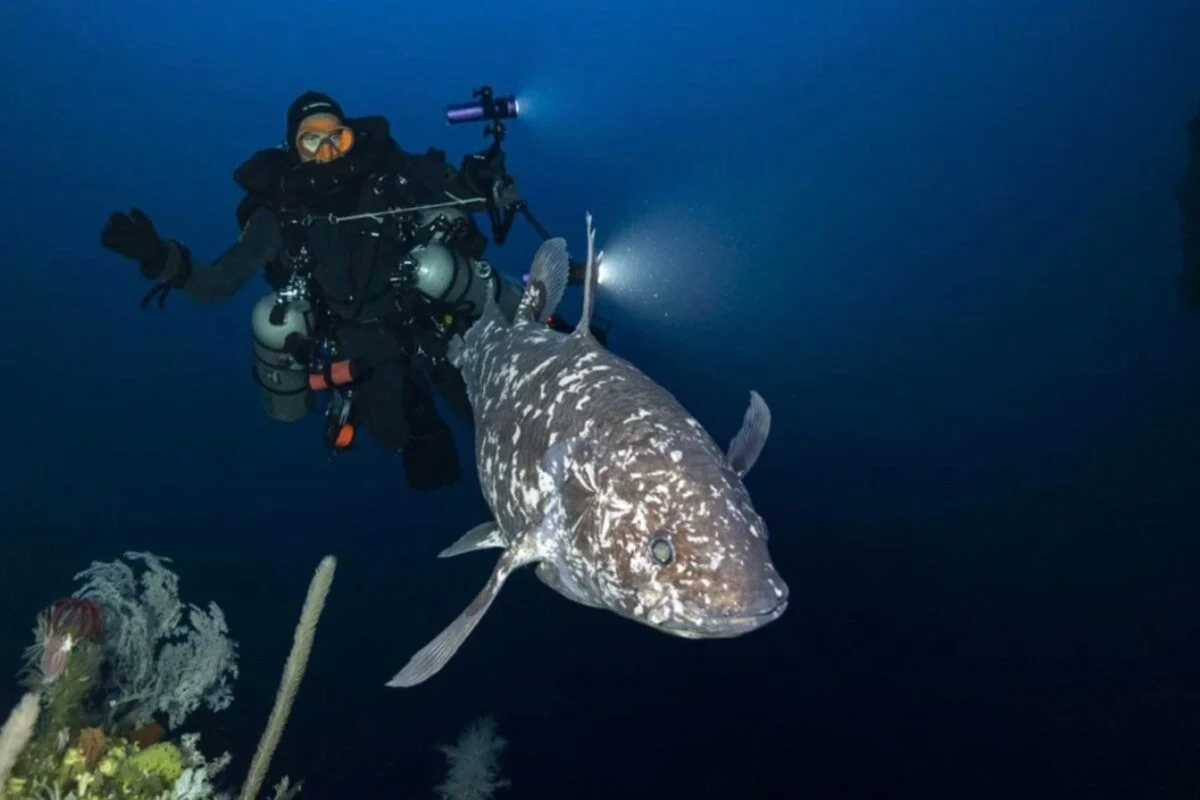
The Indonesian archipelago, a sprawling expanse of over 17,000 islands positioned at the convergence of three major tectonic plates, serves as more than just a geopolitical entity; it is a biological sanctuary that has harbored life through some of the planet’s most cataclysmic events. Within the crushing pressures of its deep-sea trenches and the tea-colored currents of its ancient inland rivers, Indonesia hides a secret of immense scientific value: a collection of "living fossils." These are species that have remained virtually unchanged for millions of years, outlasting the dinosaurs, surviving the rise and fall of mountain ranges, and enduring the apocalyptic ash clouds of prehistoric volcanic eruptions. The most iconic of these survivors is the Indonesian Coelacanth (Latimeria manadoensis), a creature once thought to have vanished from the face of the Earth 66 million years ago, only to be rediscovered in the modern era as a living testament to the resilience of the Nusantara ecosystem.
The Resurrection of a Legend: A Chronology of Discovery
The narrative of Indonesia’s living fossils is headlined by a chance encounter in a fish market in North Sulawesi. For over a century, the scientific community believed the Coelacanth—a lobe-finned fish belonging to a lineage dating back 400 million years—had gone extinct during the Cretaceous-Paleogene extinction event, the same disaster that wiped out the non-avian dinosaurs. While a related species was discovered off the coast of South Africa in 1938, it was not until the late 1990s that the world realized Indonesia held its own unique population.
The chronology of this discovery began in September 1997, when marine biologist Mark Erdmann, on a honeymoon trip to Manado Tua, spotted a strange, charcoal-colored fish being wheeled through a local market. Although he recognized it as a Coelacanth, he was unable to secure the specimen for immediate study. It took another year of diligent searching and collaboration with local fishermen before a second specimen was caught in July 1998. This fish, later named Latimeria manadoensis, was genetically distinct from its African cousin, having been separated by millions of years of evolutionary history.
This discovery sent shockwaves through the global scientific community. It suggested that the deep waters of the Celebes Sea and the Molucca Sea acted as "refugia"—habitats that remain stable even when the rest of the world undergoes radical environmental shifts. Since 1998, further sightings via Remotely Operated Vehicles (ROVs) have confirmed that these ancient predators continue to inhabit the steep volcanic slopes of the Indonesian seabed, living at depths between 150 and 200 meters.
Evolutionary Resilience Amidst Geological Chaos
Indonesia’s ability to preserve these species is inextricably linked to its violent geological history. The region is home to the Ring of Fire, characterized by intense volcanic activity. Approximately 74,000 years ago, the super-eruption of Mount Toba in Sumatra triggered a volcanic winter that nearly decimated the global human population and altered the Earth’s climate for a decade. Yet, beneath the waves and within the deep river basins, these "living fossils" persevered.
The resilience of these species can be attributed to several factors:
- Habitat Stability: The deep-sea environment is remarkably consistent. Temperature, pressure, and light levels at 200 meters depth do not fluctuate as wildly as they do on the surface or in shallow reefs.
- Specialized Physiology: Species like the Coelacanth possess a low-metabolic rate, allowing them to survive in nutrient-poor environments. Their "lobed" fins, which move in a sequence similar to a horse’s trot, represent a transitional phase in evolution between sea-dwelling fish and land-dwelling tetrapods.
- Geographic Isolation: The complex bathymetry of the Indonesian archipelago, with its deep basins separated by shallow sills, creates isolated pockets where evolution can slow to a crawl, or where species can hide from the competitive pressures of more "modern" predators.
Beyond the Coelacanth: A Diverse Prehistoric Portfolio
While the Coelacanth is the most famous, it is by no means the only prehistoric survivor in Indonesian waters. The archipelago’s freshwater systems and coastal zones are home to several other species that carry the DNA of the distant past.
The Asian Arowana (Scleropages formosus): Often called the "Dragon Fish," the Arowana belongs to the family Osteoglossidae, a group of primitive ray-finned fish. Their ancestors were present during the Jurassic period. Found in the blackwater rivers of Kalimantan and Sumatra, the Arowana’s ability to breathe air via a primitive lung-like swim bladder allows it to survive in oxygen-poor waters where other fish would perish.
The Nautilus: Often described as a "living submarine," the Nautilus has inhabited the Indo-Pacific for over 500 million years. With its spiraled shell and multiple tentacles, it is a remnant of the cephalopod lineage that predates the evolution of modern squid and octopuses. In Indonesia, they are frequently found in the deep waters off the coast of Papua and the Moluccas.
The Largetooth Sawfish (Pristis pristis): Once common in the rivers of West Papua and Kalimantan, this shark-like ray features a rostrum (saw) that has remained largely unchanged for 60 million years. Though now critically endangered, its presence in Indonesia’s remote river systems highlights the country’s role as a final stronghold for megafauna that have elsewhere disappeared.
Scientific Analysis and Implications
The existence of these species provides a "window into the past" for evolutionary biologists. By studying the genome of the Indonesian Coelacanth, researchers have discovered that its genes are evolving at a significantly slower rate than those of almost every other vertebrate. This "slow evolution" is a subject of intense study, as it helps scientists understand the genetic triggers for morphological change.
Furthermore, the presence of these species indicates a high level of ecosystem health in specific deep-water zones. Unlike shallow-water coral reefs, which are currently suffering from massive bleaching events due to rising sea temperatures, the deeper refugia of Indonesia appear to be more buffered against the immediate effects of the climate crisis. However, this does not mean they are invulnerable.
Conservation Challenges and Official Responses
Despite their millions of years of survival, these ancient species now face their greatest threat: the rapid expansion of human industrial activity. The Indonesian government, through the Ministry of Marine Affairs and Fisheries (KKP), has taken steps to protect these biological treasures. The Coelacanth is currently listed as a protected species under Indonesian law (Government Regulation No. 7 of 1999) and is included in Appendix I of CITES, which prohibits all international trade.
However, conservationists warn that "passive protection" is not enough. Dr. Lukman, a senior researcher at the Indonesian Institute of Sciences (now part of BRIN), has frequently emphasized that the biggest threats are indirect. "The Coelacanth and other deep-sea species are not usually targeted by fishermen, but they are frequently caught as ‘bycatch’ in deep-sea shark nets," he noted in a previous scientific forum. "Furthermore, the emerging threat of deep-sea mining and plastic pollution in our trenches could disrupt the fragile balance of these ancient habitats."
Local communities in places like Manado have begun to embrace the Coelacanth as a symbol of regional pride. Educational programs have been implemented to ensure that if a fisherman accidentally catches a "living fossil," it is returned to the sea or reported to authorities for scientific documentation rather than being sold in a market.
The Broader Impact: Indonesia as a Global Bio-Archive
The preservation of living fossils in the Nusantara region has profound implications for global biodiversity strategy. Indonesia’s waters are not just a source of food and economic revenue; they are a global archive of life’s history. The fact that a fish from the era of the dinosaurs still swims in the Celebes Sea suggests that there may be other undiscovered species lurking in the unexplored depths of the Banda or Weber Deeps.
As the world grapples with the "sixth mass extinction" driven by human activity, the resilience of Indonesia’s living fossils offers a glimmer of hope. They prove that with the right environmental conditions and a lack of human interference, life can endure for eons. The challenge for the 21st century lies in ensuring that modern "progress"—in the form of seabed trawling, climate change, and habitat destruction—does not accomplish in a few decades what millions of years of volcanic eruptions and asteroid impacts could not: the permanent silencing of these ancient sentinels.
In conclusion, the perairan Nusantara stands as a fortress of time. From the Coelacanth of Manado to the Arowanas of Kalimantan’s peatlands, Indonesia’s aquatic ecosystems are a living laboratory of evolution. Protecting these species is not merely an act of environmentalism; it is an act of preserving the planet’s heritage, ensuring that the secrets of the deep remain available for future generations to uncover. The survival of these "living fossils" is a testament to the raw power of nature, but their future now rests firmly in human hands.