Nila Kartika Wati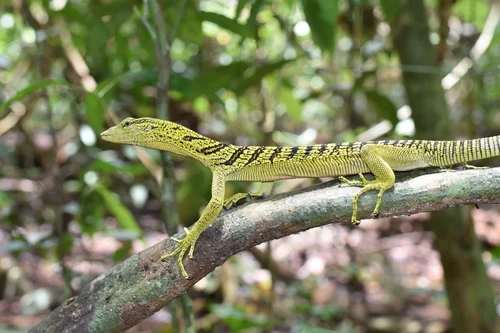
The tropical rainforests of Papua, a region often referred to as the "Little Amazon" of Asia, hold a biological wealth that transcends mere aesthetic value. While global trends occasionally fixate on specific colors—such as the viral "poor pantone" green—the natural world in Indonesia’s easternmost province offers a more literal and profound interpretation of emerald richness. Within the dense, humid canopies and forest floors of Papua, a specialized group of reptiles has evolved various shades of green, not merely for beauty, but as a sophisticated survival mechanism. Chief among these is the Green Tree Python (Morelia viridis), a species that has become a global icon for exotic wildlife enthusiasts. However, this fame is a double-edged sword. Alongside the python, other lesser-known species such as the Emerald Tree Monitor, the Misool Monitor, and the mysterious green-blooded skink form an intricate ecological web that is currently under siege from illegal poaching, habitat fragmentation, and a critical lack of comprehensive scientific data.
The ecological significance of these reptiles cannot be overstated. Far from being mere "ornaments" for glass enclosures, these green-pigmented predators and prey serve as vital indicators of forest health. They occupy specific niches in the trophic structure of the rainforest: as predators, they control populations of small mammals and insects that could otherwise become agricultural pests; as prey, they sustain apex predators like the New Guinea Harpy Eagle and larger snake species. The loss of these reptiles would trigger a cascade of negative effects throughout the Papuan ecosystem, yet their survival is increasingly threatened by the very traits that make them so unique.
The Green Tree Python: A Master of Arboreal Camouflage
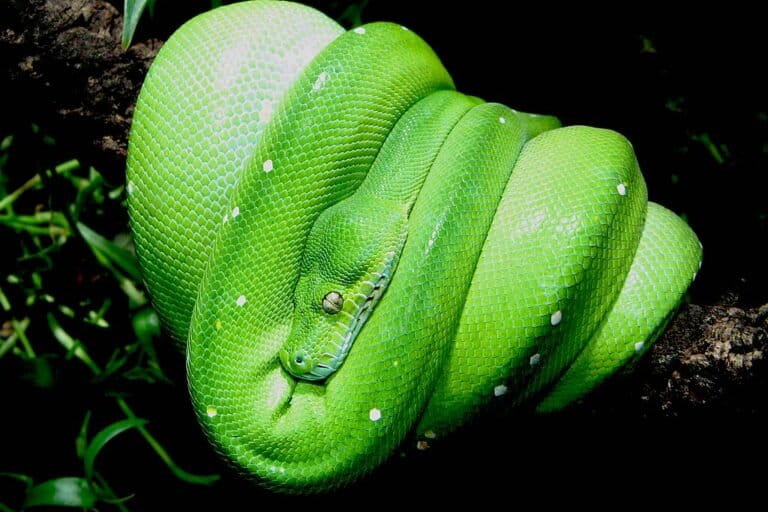
The Green Tree Python, known scientifically as Morelia viridis, is perhaps the most recognizable representative of Papua’s herpetofauna. Reaching lengths of up to 1.8 meters, this snake is perfectly adapted for a life spent almost entirely in the trees. Its most striking feature is its vibrant emerald-green coloration, often punctuated by irregular white or yellow spots and stripes along the spine. This coloration provides near-perfect camouflage against the moss-covered branches and leafy canopies where it hunts.
Biologically, the species is a marvel of evolution. It possesses a highly prehensile tail, which it uses to anchor itself firmly to branches, allowing it to strike at passing prey with surgical precision. Interestingly, the Green Tree Python is not born green. Hatchlings are typically bright yellow or brick red, a phenomenon known as ontogenetic color change. Scientists believe this allows juveniles to blend into the forest edge and scrubland where they live before moving into the deep forest canopy as adults.
Despite being listed as "Least Concern" by the International Union for Conservation of Nature (IUCN), the Indonesian government has taken a more cautious stance. Under Ministry of Environment and Forestry (LHK) Regulation No. P.106 of 2018, the Green Tree Python is a protected species. This legal protection is a direct response to the massive pressure from the international pet trade. Because of their docile nature and striking appearance, they are highly coveted in Europe, North America, and East Asia. While captive breeding programs exist, a significant portion of the "captive-bred" individuals found in international markets are suspected to be wild-caught specimens laundered through fraudulent breeding facilities.
The Emerald Tree Monitor: The Acrobat of the Canopy
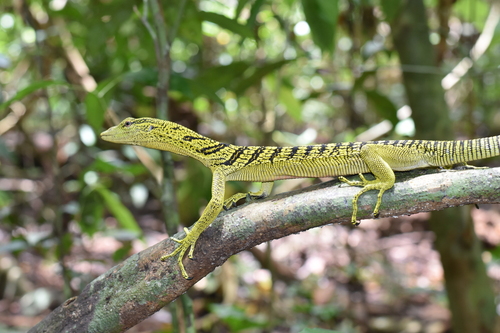
While the Green Tree Python is the "star" of the canopy, the Emerald Tree Monitor (Varanus prasinus) is undoubtedly its most agile inhabitant. Unlike its larger, ground-dwelling relative, the Komodo Dragon, the Emerald Tree Monitor is built for speed and verticality. Its slender body is covered in bright green scales with black transverse bands, providing a dappled effect that mimics the play of light and shadow in the rainforest.
Found across Papua, Papua New Guinea, and parts of northern Australia, this lizard thrives in habitats ranging from sea-level mangroves to mountain forests up to 2,000 meters in elevation. Its most distinctive anatomical feature is its prehensile tail, which acts as a fifth limb. This allows the monitor to navigate the thinnest of branches in search of its primary diet: large insects, small birds, and other lizards.
The conservation status of the Emerald Tree Monitor mirrors that of the Green Tree Python. While broadly distributed, local populations are being decimated by illegal harvesting. Experts from the Ministry of Environment and Forestry have noted that thousands of these monitors are smuggled out of Papua annually. In the European market, a single adult Varanus prasinus can fetch upwards of $500, making it a high-value target for organized wildlife trafficking rings. The lack of stringent monitoring at regional ports in Papua facilitates this illicit trade, which often utilizes social media platforms for discreet transactions.
The Misool Monitor: The Rare Jewel of Raja Ampat
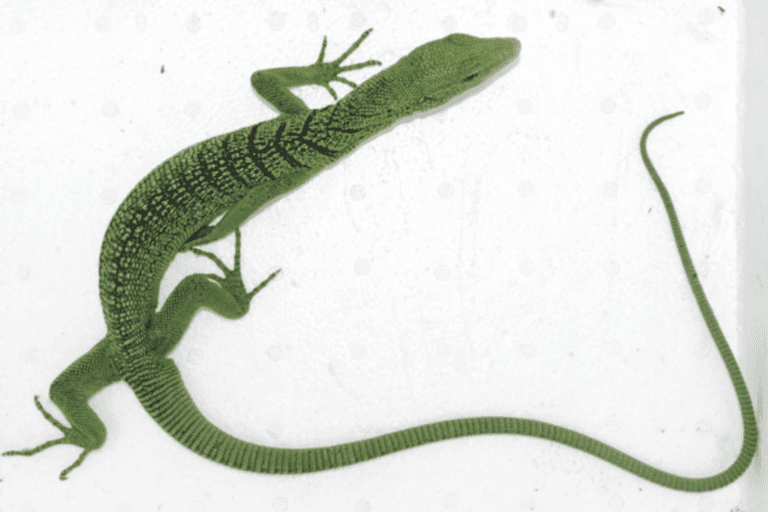
Deep within the Raja Ampat archipelago lies Misool Island, home to one of the rarest and most geographically restricted reptiles in the world: the Misool Monitor (Varanus reisingeri). This species is a member of the Varanus prasinus species complex but is distinguished by its yellowish-green hue and smaller stature, rarely exceeding one meter in length.
The Misool Monitor represents a significant challenge for conservationists. It is currently listed as "Data Deficient" by the IUCN, meaning there is not enough scientific information to accurately assess its risk of extinction. This lack of data is largely due to the remoteness of its habitat. However, for illegal collectors, rarity increases value. Reports from reptile enthusiast communities and international trade monitors indicate a surging demand for the Misool Monitor precisely because it is so difficult to find.
The fragmentation of its habitat on a small island makes Varanus reisingeri particularly vulnerable to any environmental changes. Whether through localized deforestation for infrastructure or the slow encroachment of agricultural land, the loss of even a few hectares of forest on Misool could have a disproportionate impact on the species’ total population. Conservationists argue that without immediate "boots-on-the-ground" research to determine its population density, the species could vanish before its ecological role is fully understood.
The Mystery of Prasinohaema virens: The Green-Blooded Skink
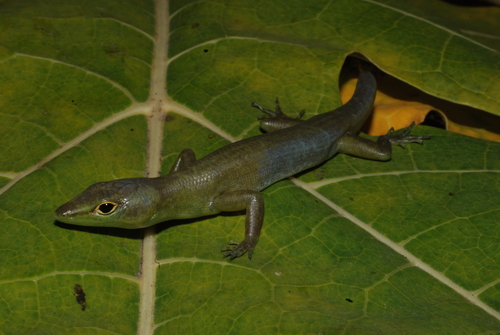
Perhaps the most scientifically fascinating reptile in Papua does not wear its greenness on its skin alone. The green-blooded skink (Prasinohaema virens) possesses a biological trait that is almost unique in the vertebrate world: its blood, bones, and tissues are a vivid lime green. This coloration is caused by extremely high levels of biliverdin, a green bile pigment. In humans and most other vertebrates, high levels of biliverdin are toxic and cause jaundice; however, these skinks have evolved to tolerate levels 40 times higher than the lethal limit for humans.
Native to the forests of Papua, Papua New Guinea, and the Solomon Islands, these small skinks are often overlooked in favor of more charismatic megafauna. Yet, they are a subject of intense interest for medical researchers. Understanding how these reptiles survive such high concentrations of bile pigments could lead to breakthroughs in treating human liver diseases and malaria.
Despite their scientific value, green-blooded skinks are not immune to the threats facing Papuan wildlife. They are frequently caught as "by-catch" in the broader reptile trade or lose their micro-habitats—vines and small branches—to forest clearing. The tragedy of Prasinohaema virens is that its potential to contribute to human medicine is being jeopardized by the short-term gains of the illegal wildlife trade and industrial expansion.
The Mechanics of the Illegal Wildlife Trade in Indonesia
Indonesia has frequently been described by environmental NGOs as a "hub" for the illegal trade in amphibians and reptiles. The scale of this trade is staggering. According to data from TRAFFIC and various Indonesian wildlife authorities, the illicit export of reptiles is a multi-million dollar industry. The "chain of custody" for a smuggled Green Tree Python or Emerald Tree Monitor often begins with local hunters in remote Papuan villages who sell the animals for a pittance to middlemen in cities like Jayapura, Sorong, or Merauke.
From Papua, the animals are often hidden in shipments of timber, agricultural products, or even carried in personal luggage on domestic flights and ships to Jakarta or Surabaya. Once in these major hubs, they are laundered into the legal market using forged CITES (Convention on International Trade in Endangered Species of Wild Fauna and Flora) permits or smuggled directly out of the country to international transit points like Singapore or Bangkok.
The rise of digital commerce has further complicated enforcement. Social media groups and encrypted messaging apps allow sellers to connect directly with international buyers, bypassing traditional marketplaces where authorities could conduct raids. This "invisible" market makes it nearly impossible to track the actual volume of animals being removed from the wild, leading to a "silent extinction" where species disappear from their habitats long before they are officially declared endangered.
Habitat Destruction: The Loss of the Emerald Canopy
While poaching is the most immediate threat, the long-term survival of Papua’s green reptiles is tied to the fate of the forest itself. Papua contains Indonesia’s last great expanse of primary rainforest, but this wilderness is under increasing pressure from palm oil plantations, logging, and mining operations.
When primary forests are converted into monoculture plantations, the complex vertical structure of the canopy—essential for arboreal species like the Green Tree Python and Emerald Tree Monitor—is destroyed. These reptiles cannot survive in oil palm environments, which lack the humidity, prey diversity, and structural complexity of the native bush. Furthermore, the construction of roads into previously inaccessible areas provides poachers with easier access to "virgin" populations of rare reptiles.
The "Trans-Papua" highway and other infrastructure projects, while intended for economic development, have the unintended consequence of fragmenting habitats. For a species like the Misool Monitor, which is restricted to a single island, or the Green Tree Python, which requires specific canopy corridors to move and breed, these disruptions can lead to genetic isolation and a decline in overall population fitness.
Policy Implications and the Path Toward Conservation
Addressing the crisis facing Papua’s green reptiles requires a multi-faceted approach that combines legal enforcement, scientific research, and community engagement. The Indonesian government, through the Ministry of Environment and Forestry and the Natural Resources Conservation Agency (BKSDA), has stepped up patrols and seizures at key ports. However, enforcement remains uneven.
There is an urgent need for:
- Enhanced Field Research: More funding must be directed toward Papuan universities and local researchers to conduct population surveys. Without knowing how many individuals remain in the wild, it is impossible to set sustainable harvest quotas or effective conservation targets.
- Community-Based Conservation: Local communities in Papua must be incentivized to protect their natural heritage. If the economic benefits of ecotourism or sustainable forest management outweigh the small payments from wildlife traffickers, local residents can become the most effective guardians of the forest.
- International Cooperation: Since the demand for these reptiles is global, the solution must be global. Stricter import controls in destination countries and better cooperation between Indonesia and international law enforcement agencies are essential to breaking the smuggling rings.
- Public Awareness: Educating the global reptile-keeping community about the ethics of their hobby is crucial. Buyers must demand verifiable proof of captive-bred status and support efforts to ban the trade of species that cannot be sustainably harvested.
The green reptiles of Papua are more than just beautiful creatures; they are the living pulse of one of the world’s most important ecosystems. Their survival is a litmus test for Indonesia’s commitment to biodiversity conservation in the face of economic pressure. As the "emerald" of the Indonesian archipelago, Papua’s forests and the unique life forms within them deserve a future that is not confined to a glass box, but one where they can continue to thrive in the wild, hidden among the leaves of their ancestral home.