Nila Kartika Wati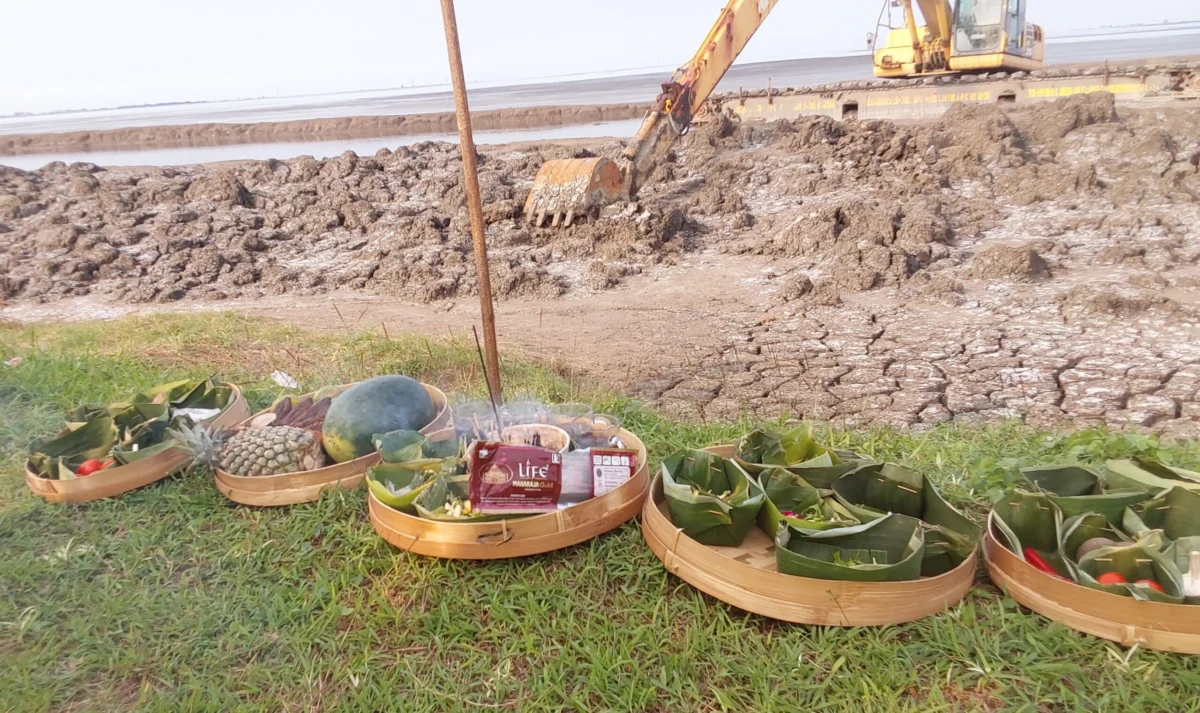
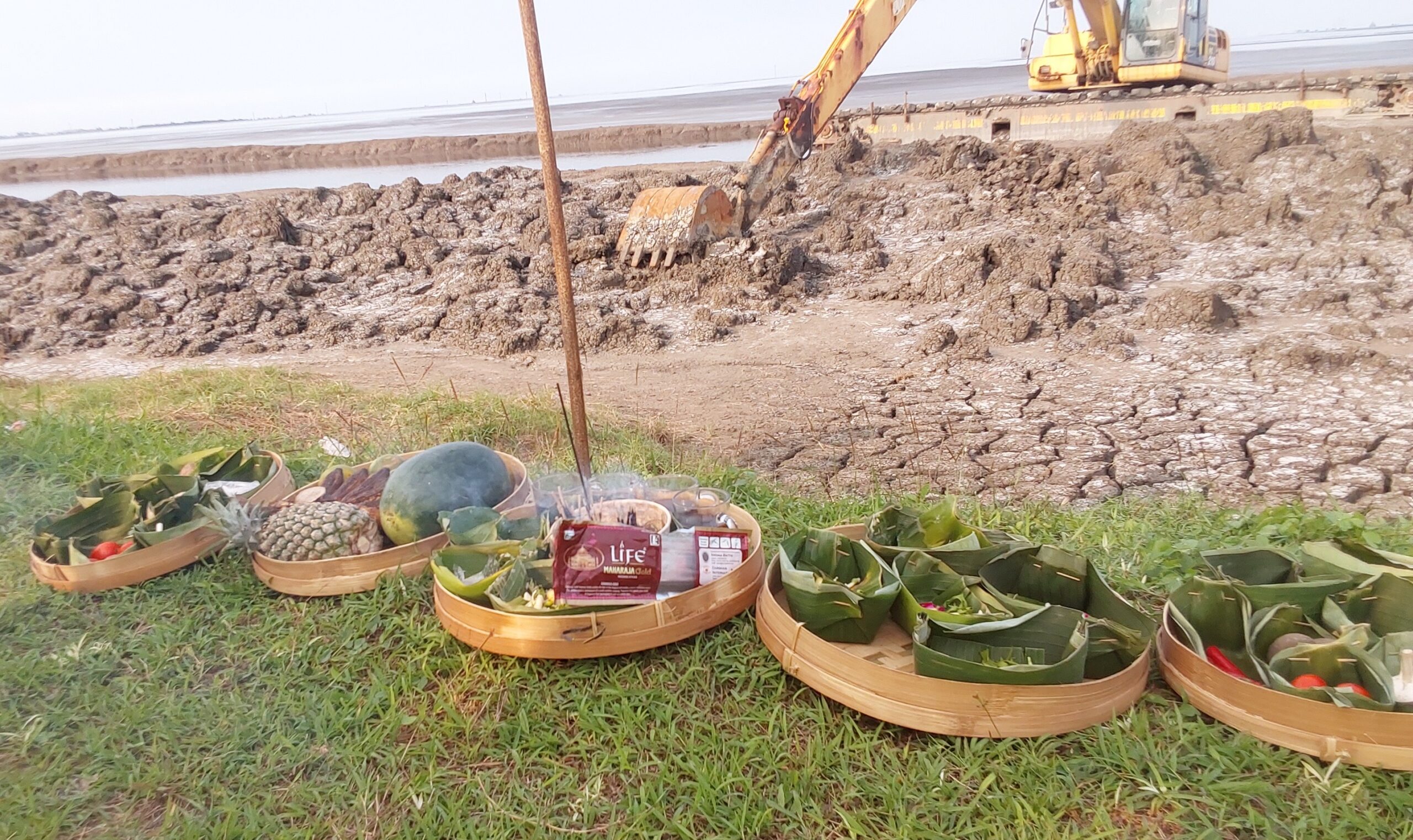
A small procession of victims from the Lapindo mudflow tragedy walked solemnly from Dwarakerta Park toward the massive earthen embankments that now define their landscape. The distance was a mere 300 meters, but for those participating in the "Sambang Buyut" ritual, the journey spanned twenty years of grief, displacement, and a relentless search for accountability. Each person carried a tampah—a traditional woven bamboo tray—heaped with agricultural produce, food, and drinks. These were offerings for their ancestors, whose graves and homes now lie buried under millions of cubic meters of toxic sludge.
The air was thick with the sound of Javanese chants and prayers. Upon reaching the summit of the levee, the residents planted the Indonesian red-and-white flag into the parched earth. A heavy silence followed, broken only by the rhythmic recitation of prayers sent to the spirits of the villages—Porong, Siring, Jatirejo, and Renokenongo—that were swallowed by the earth starting on May 29, 2006. This ritual marked the 20th anniversary of the disaster, a milestone that serves as a grim reminder of the longest-running industrial catastrophe in Indonesia’s history.
Harwati, a survivor from Siring Village, explained that the ritual is not merely an act of mourning but a political statement against "extractivism"—the aggressive extraction of natural resources that often leaves local communities in ruin. "This ritual is first and foremost a way to maintain our connection with our ancestors and the founders of our villages," she said on Friday, May 29, 2026. "We bring these offerings and prayers according to our respective beliefs, but we also carry the weight of twenty years of neglect."
The Genesis of a Catastrophe: A 20-Year Timeline
The disaster began in the early hours of May 29, 2006, at the Banjar Panji-1 exploration well in Porong, Sidoarjo, operated by Lapindo Brantas Inc. What started as a localized "kick" during drilling quickly escalated into an uncontrollable eruption of hot mud, gas, and water. At its peak, the vent spewed up to 180,000 cubic meters of mud per day—enough to fill 72 Olympic-sized swimming pools every 24 hours.
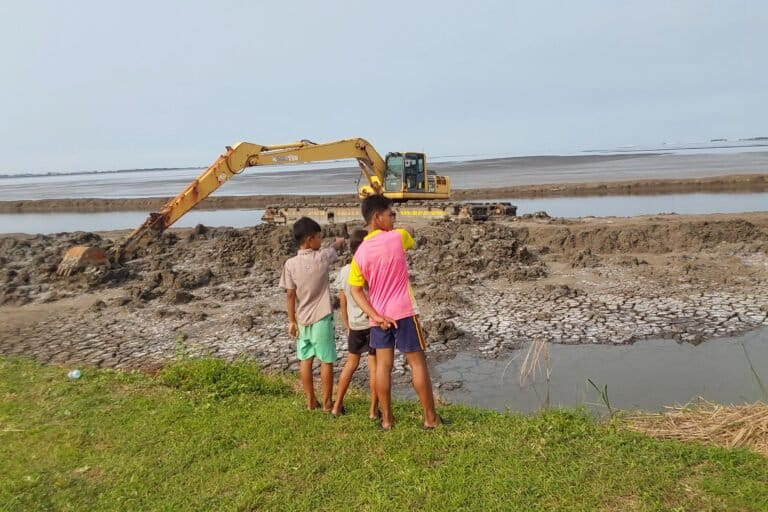
By 2007, the mud had submerged more than 600 hectares of land, displacing over 40,000 people and destroying 12 villages. The infrastructure of East Java was crippled; the main Surabaya-Gempol toll road was severed, and vital rail links were buried. Over the next two decades, the government and the operator engaged in a protracted legal and scientific debate over whether the eruption was a "natural disaster" triggered by a distant earthquake in Yogyakarta or "human error" caused by the failure to install protective casing in the borehole.
While the Supreme Court eventually ruled in favor of the company, labeling it a natural phenomenon, environmental groups and international geologists have largely maintained that the drilling activity was the primary catalyst. This legal distinction has had profound implications for compensation, shifting much of the financial burden from the private sector to the Indonesian state.
Administrative Limbo and the Digital Divide
For survivors like Harwati, the passage of two decades has not brought stability. Instead, the modernization of Indonesia’s administrative systems has created new hurdles. The transition to digital residency records has effectively "erased" many victims who were forced to move multiple times. Because many residents moved into temporary rentals or moved across provincial lines without formal documentation in the chaos of the mid-2000s, they now find themselves unable to access basic state services.
"The digital population system makes it difficult for us," Harwati noted. "We are scattered. When the data is not updated to reflect our current status as displaced persons, we lose our rights to healthcare, social assistance, and even our right to vote in elections. We want restoration—not just of the environment, but of our status as citizens."
The issue of compensation remains a festering wound. Despite government-backed loans intended to facilitate payouts, a significant number of residents report they have yet to receive 100% of the promised compensation. The lack of a proactive government strategy to track down displaced residents has left thousands in a state of permanent transience, living in rented rooms or makeshift housing while their ancestral lands remain entombed in mud.
The Erosion of Social Cohesion and Identity
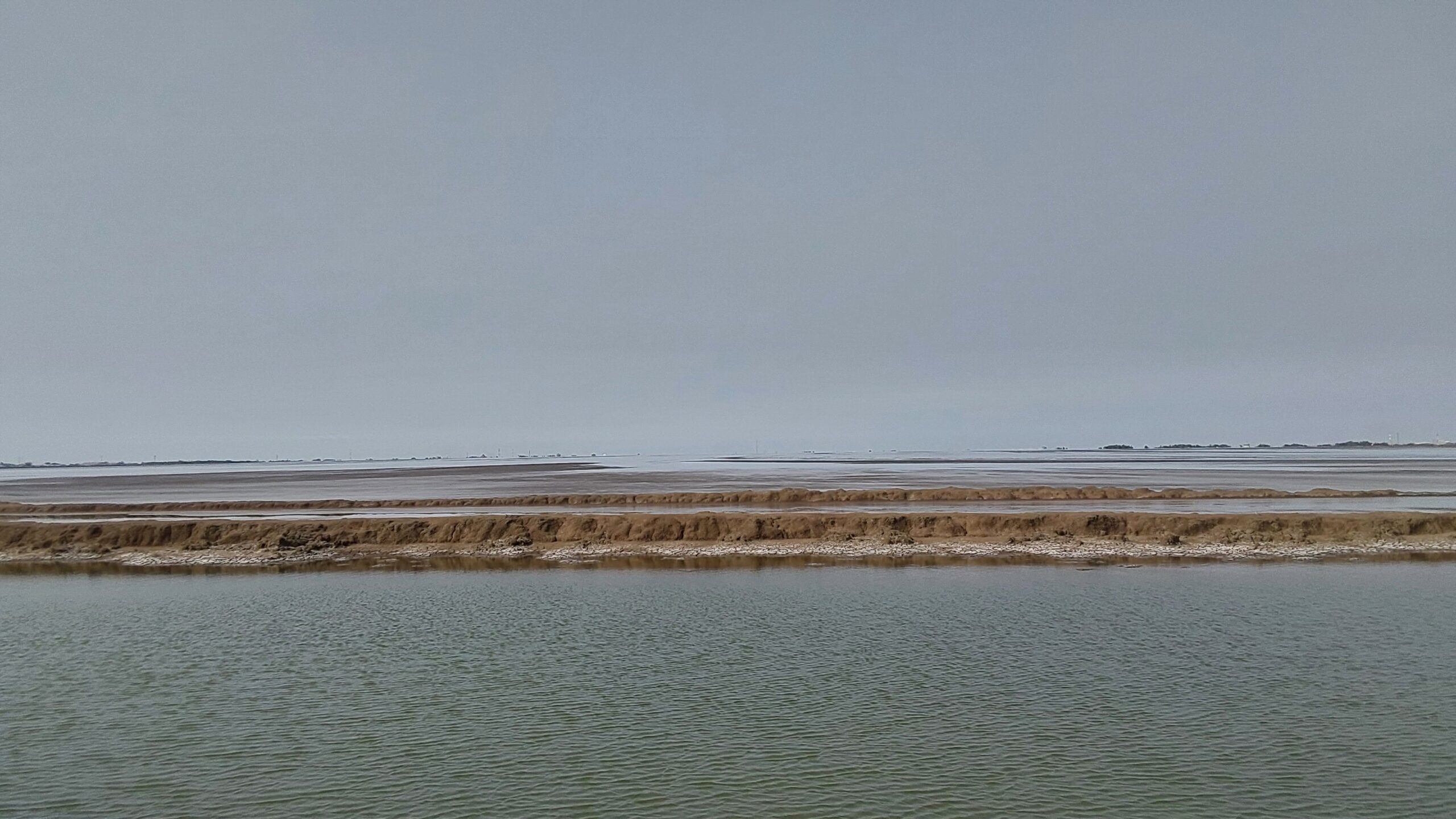
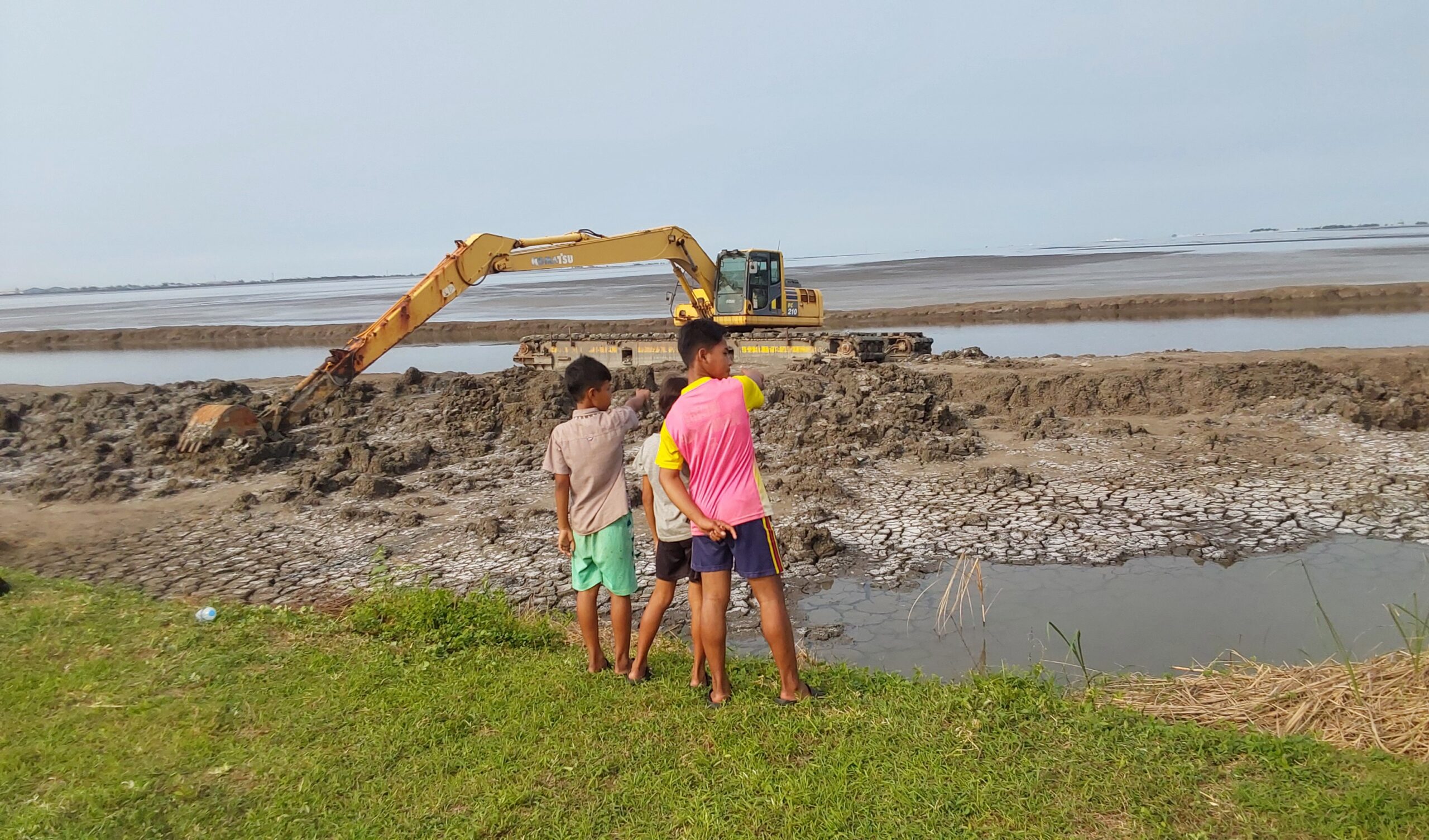
The impact of the Lapindo mudflow extends far beyond material loss. For the younger generation, the villages of their parents are myths rather than memories. During the "Sambang Buyut" ritual, children stood atop the 10-meter-high embankment, squinting at the vast expanse of grey silt, trying to locate where their family homes once stood.
"Which way was my village?" one child asked, his voice nearly lost to the wind.
Ghulam Nashrullah, a 20-year-old who was an infant when the eruption began, spoke of a profound sense of disconnection. Originally from Besuki Village, he now lives in Pasuruan. "I’ve lost that sense of togetherness," he said. "It’s not like it was in the stories my parents told about Besuki. We are all separated now."
Mochammad Irsyad, a former neighborhood head (RT) from Besuki, recalled the early years of the disaster as a time of intense horizontal conflict. As the mud spread, villages fought over where the flow should be diverted. "There were brawls between villages almost every day because everyone was trying to save their own homes at the expense of their neighbors," Irsyad remembered.
He criticized the government’s narrow view of the disaster as a purely economic transaction. "The state sees this as a simple ‘buy and sell’ of assets. You give them your land, they give you a check, and the relationship ends. But there is no responsibility for what happens to our lives afterward. Starting over in a new place is not just about money; it’s about rebuilding a life from zero, and the government has been absent from that process."
Environmental Degradation: A Biological Dead Zone
The long-term ecological consequences of the mudflow are only now being fully understood through the work of scientists like Professor Dewi Hidayati, an ecotoxicologist from the Sepuluh Nopember Institute of Technology (ITS). For twenty years, the mud has been diverted into the Porong River to prevent the embankments from breaching. This has transformed the river from a vital waterway into a conduit for industrial waste.
According to Professor Hidayati, the river has received a massive volume of untreated solid material, leading to "extreme" levels of Total Suspended Solids (TSS). "The massive sedimentation has buried the original riverbed of sand and gravel, replacing it with a thick layer of fine clay," she explained.
This change has been fatal for local aquatic life. Microscopic analysis shows that fine particles—less than 10 microns in size—clog the gill filaments of fish, leading to respiratory failure. Furthermore, using Scanning Electron Microscopy (SEM), researchers found that the mud has caused "microstructural deformation" in fish scales, making them prone to infection and disease.
"The biological monitoring shows a clear shift in species composition," Hidayati said. "Sensitive local fish are being eliminated, replaced by only the most tolerant and often invasive species. Moreover, we are seeing high levels of heavy metals like aluminum and iron. Aluminum, in particular, becomes highly toxic if the pH of the water turns acidic."
The Porong River is a primary water source for the Sidoarjo region. The ongoing pollution poses a generational threat to public health, as heavy metals accumulate in the food chain, affecting the fish consumed by local communities.
The "People’s Veto" and the Global Context
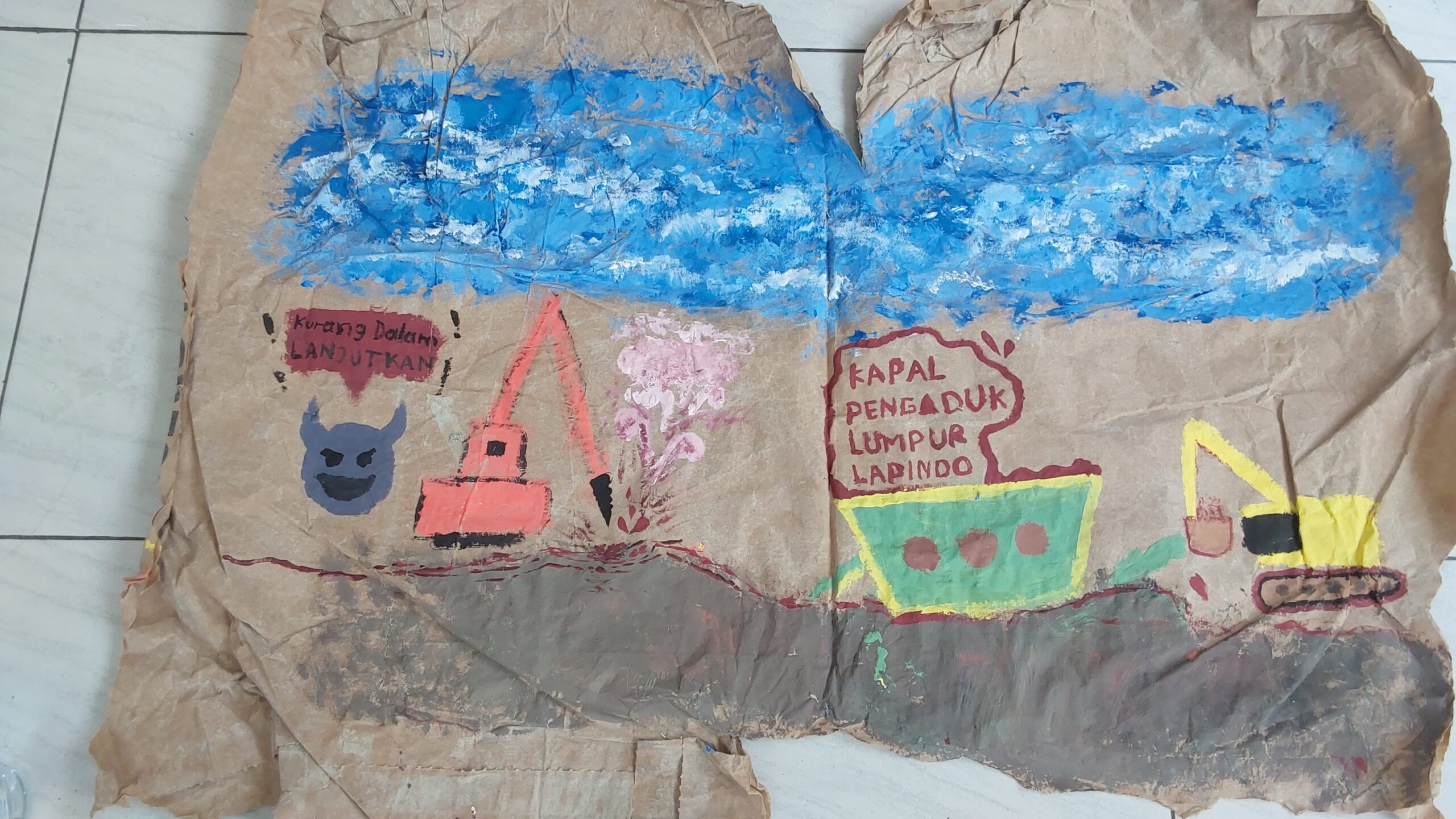
The 20th-anniversary commemorations were held under the theme: "From Lapindo to the Whole Island: Opposing Extractivism, Asserting the People’s Veto." This slogan reflects a growing movement among Indonesian activists to grant local communities the right to reject large-scale mining and drilling projects.
Melky Nahar, the National Coordinator of the Mining Advocacy Network (JATAM), argued that the Lapindo tragedy is a textbook example of "legal impunity." Despite the scale of the damage, the primary corporate actors have never faced criminal prosecution. "This is not just about environmental damage; it is a crime that spans generations," Nahar said. "Children are born into this, breathing polluted air and drinking contaminated water, without ever knowing their heritage."
Nahar warned that the "Porong Model"—where the state absorbs the costs of corporate failure—is being replicated across the Indonesian archipelago. He pointed to nickel mining in Sulawesi, gold mining in Sangihe, and geothermal projects in Flores as potential future "Porongs."
"The state has become the dominant actor in creating this ‘destruction capacity’ that outlasts the life of the mine itself," Nahar stated. "We cannot rely on the authorities currently in power. The only hope lies in the residents of these villages re-activating their collective movements to protect their land."
A Future Held in Stasis
As the sun set over the Sidoarjo mudflats, the heat haze shimmering off the grey expanse, the reality of the situation remained unchanged. The mud continues to bubble at the center of the eruption zone, albeit at a lower volume than in previous years. The embankments require constant maintenance, and the threat of a breach during the monsoon season remains a perennial fear for the thousands who still live in the "shadow zone" surrounding the levees.
The Lapindo mudflow is no longer a breaking news story, but for the people of Porong, it is a living entity—a grey, silent monument to industrial negligence and state indifference. The "Sambang Buyut" ritual concluded with the participants looking out over the wasteland, their faces etched with a mixture of sorrow and defiance.
"They think this is finished," Harwati said, her gaze fixed on the horizon where her village once stood. "They consider the case closed. But for us, it is far from over. As long as the mud flows and our rights are ignored, the tragedy of Lapindo continues every single day."
The 20-year mark serves as a critical juncture for Indonesia. It raises fundamental questions about the cost of development, the adequacy of environmental safeguards, and the definition of justice in a nation where the interests of powerful extraction industries often overlap with the halls of political power. For the survivors, the struggle is no longer just about compensation; it is about the right to be remembered and the right to ensure that no other community in Indonesia has to hold a funeral for their village.