Nila Kartika Wati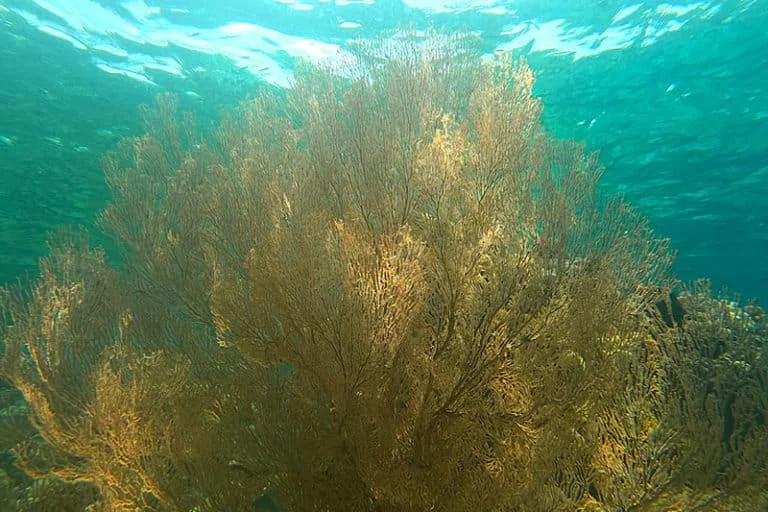
The coastal waters of Indonesia, particularly within the vast and biodiverse expanse of the Coral Triangle, harbor secrets that are as biologically complex as they are culturally misunderstood. Among these is the "Akar Bahar," a name that translates literally to "Root of the Sea." For generations, many Indonesians have viewed these dark, wiry structures as botanical wonders or mystical talismans. In the Togean Islands of Central Sulawesi, it is common to see Akar Bahar fashioned into bracelets to ward off illness or hung above doorways to repel misfortune. However, beneath this veneer of spiritual reverence lies a grim reality of ecological pillaging and legal violations. The Akar Bahar is not a plant at all, but a group of rare, slow-growing animals known as black corals, and their survival is currently under threat from an unregulated trade that spans from roadside stalls to sophisticated digital marketplaces.
The Biological Misconception: An Animal in Plant’s Clothing
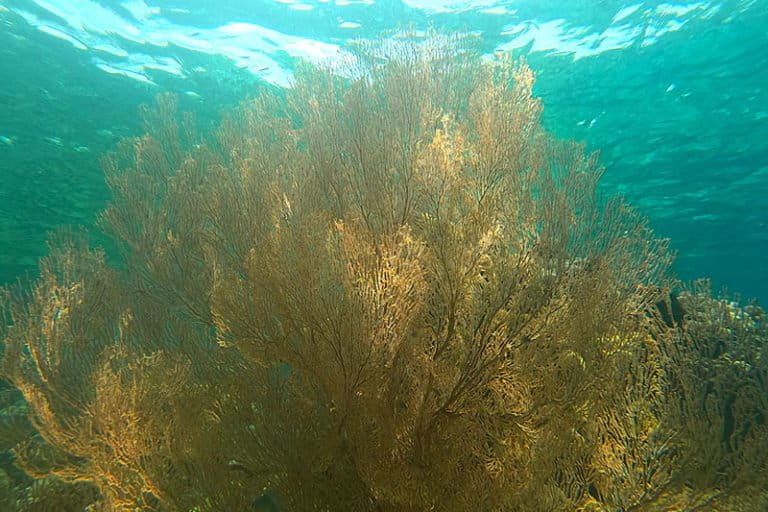
To the untrained eye, the Akar Bahar resembles a leafless shrub or a tangled root system, which explains its common name. Scientifically classified under the order Antipatharia, these organisms are actually colonial animals related to sea anemones and stony corals. Known internationally as black corals, they are characterized by their dark-colored, chitinous skeletons. Unlike many other coral species that thrive in shallow, sun-drenched waters, black corals are often found in deeper environments, typically ranging from 5 to 40 meters, though some species inhabit the abyss thousands of meters below the surface.
The biological complexity of Antipatharia is profound. These are hollow-bodied animals that lack traditional respiratory, circulatory, or excretory systems. They rely on the movement of seawater to deliver oxygen and nutrients while carrying away waste. Their reproduction is a delicate process involving the release of male and female gametes into the water column, where fertilization occurs by chance. Because they are filter feeders, their health is intrinsically linked to the purity and nutrient density of the surrounding currents. Furthermore, black corals are among the slowest-growing organisms on the planet. Some species grow only a few micrometers to a few millimeters per year, meaning a colony just a few feet tall could be centuries or even millennia old. When a fisherman harvests a single Akar Bahar "root," they are effectively ending a life that may have begun before the modern era.
The Geography of Exploitation: From Banggai to the Global Market
The exploitation of black corals in Indonesia is driven by a combination of traditional belief and modern commercialism. In the Banggai Regency of Central Sulawesi, specifically along the Trans-Sulawesi highway in Pagimana District, the trade is visible and unapologetic. Here, Akar Bahar bracelets are sold as common souvenirs, with prices ranging from IDR 50,000 to IDR 80,000 (approximately USD 3 to USD 5). To the tourists passing through, these items represent a cheap, exotic memento of their travels. To the local economy, they represent a quick source of income. However, to the marine ecosystem, these sales represent a catastrophic loss.
The trade is no longer confined to physical stalls in remote districts. The digital age has facilitated a surge in the illegal trade of Akar Bahar. Online marketplaces and social media platforms are now flooded with listings for black coral accessories, often marketed with claims of health benefits or spiritual protection. This "mythological marketing" masks the environmental cost of the product. The demand generated by urban consumers who are disconnected from the marine environment provides a steady incentive for local divers to continue harvesting these protected animals from the reefs of Sulawesi, Maluku, and beyond.
A Chronology of Law Enforcement and Seizures
As the trade has expanded, Indonesian authorities have intensified their efforts to curb the illegal movement of black corals. The chronology of recent seizures highlights the scale of the problem and the various routes used by traffickers to move these marine products across the archipelago.
In the Riau Islands, a significant interception occurred at Raja Haji Fisabilillah (RHF) Airport in Tanjungpinang. Aviation Security (AVSEC) personnel, in collaboration with the Fish Quarantine and Inspection Agency (BKIPM), discovered a package containing 2.2 kilograms (approximately 75 ounces) of Akar Bahar. The shipment was destined for Purbalingga, Central Java, a region far removed from the sea where the demand for traditional talismans remains high. This seizure underscored the fact that black corals are being moved through formal logistics channels, often disguised as general merchandise.
Meanwhile, in the Takabonerate National Park—home to the third-largest atoll in the world—authorities have taken a different approach. Recognizing that many local artisans depend on the sea for their livelihoods, park officials have engaged in "community coaching" or pembinaan. In a recent operation, four local craftsmen were identified as working with Akar Bahar. Rather than immediate incarceration, the authorities confiscated their raw materials and provided education on the protected status of the species. This approach aims to strike a balance between law enforcement and social welfare, though the underlying pressure on the coral populations remains a constant concern.
The Legal Framework: Five Years and a Hundred Million Rupiah
The protection of Akar Bahar is not merely a suggestion; it is a mandate codified in several layers of Indonesian law. The legal framework surrounding these organisms is robust, reflecting their importance to marine biodiversity. At least four major pieces of legislation govern the protection and trade of black corals:
- Law No. 5 of 1990 concerning the Conservation of Living Natural Resources and their Ecosystems: This is the primary pillar of conservation law in Indonesia, prohibiting the capture, killing, or trading of protected species.
- Law No. 31 of 2004 concerning Fisheries (as amended by Law No. 45 of 2009): This law regulates the management of all aquatic resources and provides the basis for the protection of specific marine biota.
- Law No. 21 of 2019 concerning Animal, Fish, and Plant Quarantine: This legislation empowers agencies like BKIPM to monitor and seize illegal biological shipments at ports and airports.
- Government Regulation (PP) No. 7 of 1999 concerning the Preservation of Plant and Animal Species: This regulation specifically lists the types of flora and fauna that are granted protected status due to their rarity or ecological role.
The penalties for violating these laws are severe. Individuals caught in the illegal trade of Akar Bahar face up to five years in prison and maximum fines of IDR 100 million. Despite these heavy sanctions, the "silent" nature of the trade—where items are small, easily hidden, and often sold in informal settings—makes total eradication of the market a significant challenge for the Ministry of Marine Affairs and Fisheries (KKP).
Ecological Implications: The Ripple Effect of Removal
The removal of black corals from the reef is not an isolated event; it triggers a cascade of negative effects throughout the marine ecosystem. Black corals are often referred to as "foundation species." Their complex, branching structures provide essential habitat for a wide array of marine life. Small fish, crustaceans, and mollusks use the branches of the Akar Bahar for protection from predators and as nurseries for their young.
When these corals are harvested, the structural complexity of the reef is diminished. This leads to a reduction in local biodiversity, as the species that rely on the coral for shelter are forced to move or perish. Furthermore, because black corals are so slow to grow, their recovery time is measured in centuries. A reef that is stripped of its black corals today will not return to its original state within a human lifetime.
There is also a broader impact on reef stability. Corals play a role in dissipating wave energy, protecting coastlines from erosion. While black corals are typically found deeper than the primary wave-breaking zone of a reef, they contribute to the overall resilience of the underwater landscape. Their loss makes the entire ecosystem more vulnerable to environmental stressors, such as rising sea temperatures and ocean acidification.
Socio-Economic Analysis and the Path Forward
The conflict between traditional practices and modern conservation is at the heart of the Akar Bahar trade. For many coastal communities, the harvest of sea products is the only viable economic path. However, the commercialization of Akar Bahar for the souvenir trade is a relatively recent phenomenon compared to its traditional use as a local talisman. The low price point at which these bracelets are sold (IDR 50,000) suggests that the harvesters and middle-men do not value the resource in a way that reflects its true ecological worth.
To address this, experts suggest a multi-pronged approach. First, there must be a significant increase in "maritime literacy" among the Indonesian public. Many consumers who purchase Akar Bahar bracelets genuinely believe they are buying a plant-based product and are unaware that they are contributing to the destruction of a protected animal. Public awareness campaigns focusing on the biological reality of black corals could dampen the demand.
Second, the government must continue to strengthen its monitoring of digital platforms. The transition of the trade to the online sphere requires specialized cyber-monitoring by the Ministry of Communication and Information in tandem with the KKP. Shutting down online storefronts and penalizing digital distributors would cut off a major artery of the trade.
Finally, providing sustainable alternative livelihoods for coastal artisans is crucial. In places like Takabonerate, training craftsmen to work with sustainable materials—such as coconut shells, sustainable wood, or even synthetic resins that mimic the look of Akar Bahar—could preserve local craft traditions without sacrificing the health of the ocean.
Conclusion: A Call for Wise Stewardship
The journey of the Akar Bahar from the serene depths of the Indonesian sea to a tourist’s wrist is a journey of ecological degradation. Each bracelet serves as a silent witness to a broken law and a damaged reef. As Indonesia continues to position itself as a global leader in marine conservation, the plight of the black coral serves as a reminder that even the smallest, most inconspicuous organisms require our protection.
The "Root of the Sea" belongs in the sea. Its value as a living component of the reef far outweighs its value as a decorative accessory. By choosing not to buy, sell, or trade Akar Bahar, the public can help ensure that these ancient, mysterious animals continue to thrive in the dark, cool currents of the archipelago, rather than being silenced in the name of fashion or folklore. The transition from exploitation to conservation requires a collective shift in perspective—recognizing that the true "luck" provided by the sea is not found in a talisman, but in a healthy, vibrant, and intact ecosystem.