Nila Kartika Wati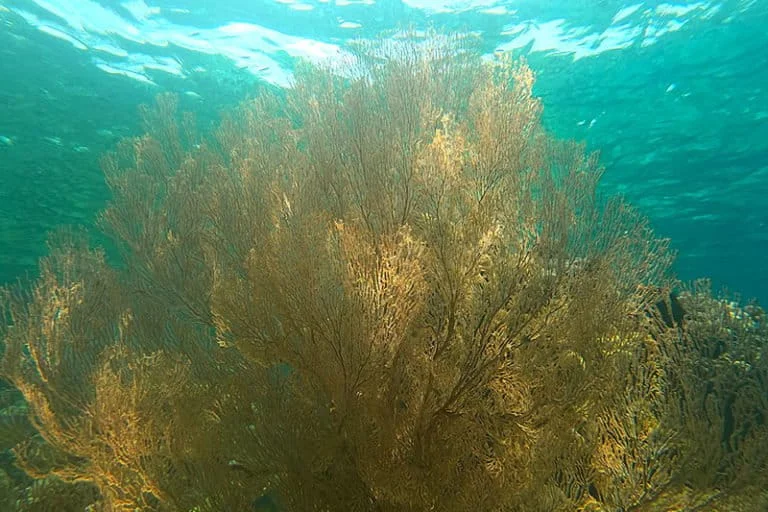
Across the sprawling Indonesian archipelago, a curious item frequently appears in traditional markets, souvenir stalls, and digital marketplaces: a dark, polished, and often intricately carved bracelet known locally as Akar Bahar. For generations, these "roots of the sea" have been steeped in mysticism, believed by many to possess supernatural properties capable of warding off disease, protecting the wearer from black magic, and neutralizing misfortune. In the Togean Islands of Central Sulawesi, it is common to see these items hung above doorways as a form of spiritual insurance against "bala" or calamity. However, beneath this layer of cultural folklore lies a stark and devastating biological reality that many consumers and even some vendors remain unaware of: Akar Bahar is not a plant, nor is it a simple root. It is a living, breathing animal, and its extraction is pushing delicate marine ecosystems toward a point of no return.
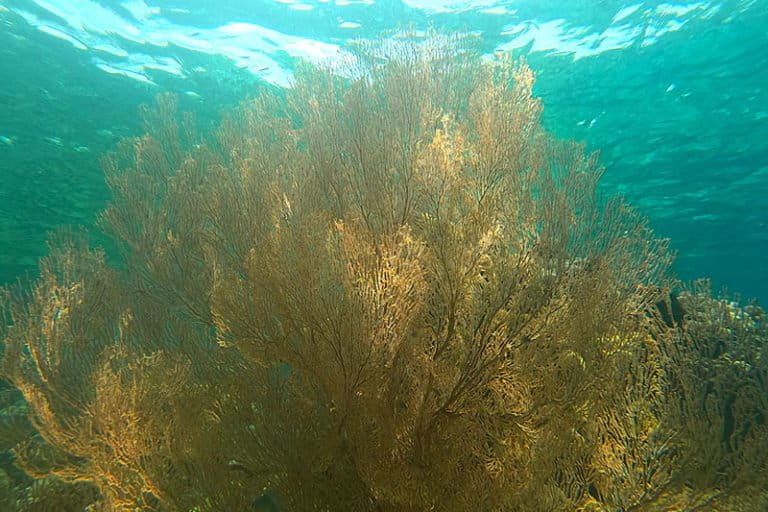
The term "Akar Bahar" is a misnomer that has contributed significantly to its exploitation. Scientifically classified under the order Antipatharia, these organisms are more accurately known as black corals. Unlike the terrestrial plants they resemble, black corals are colonial animals related to sea anemones and stony corals. The "root" that people wear on their wrists is actually the protein-rich, chitinous skeleton of a colony of polyps. These organisms are vital components of the "twilight zone" of the ocean, typically thriving at depths ranging from 5 to 40 meters, though some species are found much deeper. Their growth is agonizingly slow, often measured in millimeters per year, meaning that a single bracelet represents decades, if not centuries, of biological growth harvested in a matter of minutes.
The Biological Paradox of the Antipatharia
To understand the gravity of the illegal trade, one must first understand the unique biology of the black coral. Belonging to the phylum Cnidaria, black corals are characterized by their lack of a traditional waste disposal system, respiratory organs, or a circulatory system. They are sessile organisms, meaning they are anchored to the seafloor or reef structures, relying entirely on the movement of nutrient-rich currents to survive. They capture microscopic zooplankton using stinging cells located on their polyps.
Reproduction is an equally delicate process. Black corals reproduce through the release of male and female gametes into the water column. For fertilization to be successful, the surrounding environment must be pristine, with specific temperature and salinity levels. This sensitivity makes them highly vulnerable to climate change and water pollution. When a collector rips a black coral from its substrate, they are not just taking an individual; they are removing a slow-growing architectural cornerstone of the reef that provides habitat, nursery grounds, and protection for dozens of other marine species, including small fish and crustaceans.
The Commercialization of a Protected Species
The transition of black coral from a sacred spiritual object to a mass-produced souvenir has accelerated its decline. Along the Trans-Sulawesi highway, particularly in the Pagimana District of the Banggai Regency, the trade is visible and unapologetic. Here, Akar Bahar bracelets are sold as common trinkets, with prices ranging from IDR 50,000 to IDR 80,000 (approximately USD 3 to USD 5). To the uninitiated tourist, this seems like an affordable and "natural" memento of their travels. To the marine biologist, it is evidence of an ongoing ecological crime.
The trade is no longer confined to roadside stalls. The digital age has facilitated a "grey market" where black coral products are sold on major Indonesian e-commerce platforms and social media networks. These listings often bypass automated filters by using coded language or by emphasizing the "mystical" and "health" benefits of the material, such as its supposed ability to absorb toxins from the body—a claim with no scientific basis. The ease of online transactions has expanded the consumer base from local villagers to urban dwellers in Jakarta, Surabaya, and even international collectors, significantly increasing the pressure on wild populations.
A Chronology of Enforcement and Seizures
The Indonesian government, through various agencies, has attempted to stem the tide of this illegal trade, though the vastness of the archipelago makes policing a Herculean task. Recent years have seen a spike in enforcement actions that highlight the scale of the problem.
In the Takabonerate National Park—home to the third-largest atoll in the world—authorities recently intervened in a localized manufacturing operation. Four craftsmen were apprehended while processing raw black coral into jewelry. Rather than immediate incarceration, the authorities opted for a "guidance and education" approach, confiscating the raw materials and attempting to pivot the artisans toward sustainable livelihoods. This incident underscored a recurring theme in conservation: many of those at the bottom of the supply chain are unaware that their trade is illegal or ecologically destructive.
A more significant blow to the trade occurred at Raja Haji Fisabilillah (RHF) Airport in Tanjungpinang. Aviation Security (AVSEC) personnel, working in coordination with the Fish Quarantine and Inspection Agency (BKIPM), intercepted a suspicious package destined for Purbalingga, Central Java. Upon inspection, the authorities discovered 2.2 kilograms (approximately 75 ounces) of processed and semi-processed black coral. This seizure was particularly telling, as it demonstrated the logistical routes used to move protected marine resources from Indonesia’s outer islands to the densely populated markets of Java.
The Legal Framework and Penalties
The protection of Akar Bahar is not merely a matter of environmental ethics; it is a mandate enshrined in Indonesian law. The species is protected under a robust, albeit often under-enforced, legal framework designed to preserve the nation’s "mega-biodiversity."
- Law No. 5 of 1990 concerning Conservation of Living Natural Resources and Their Ecosystems: This is the cornerstone of Indonesian environmental law. It prohibits the capture, injury, killing, possession, or trade of protected species, whether alive or dead.
- Law No. 31 of 2004 concerning Fisheries (as amended by Law No. 45 of 2009): This legislation regulates the management of all aquatic resources and provides the legal basis for protecting coral reefs and their associated biota.
- Law No. 21 of 2019 concerning Animal, Fish, and Plant Quarantine: This law mandates that any movement of biological resources across regional or national borders must be accompanied by proper documentation and health certifications, which are impossible to obtain for protected black corals.
- Government Regulation (PP) No. 7 of 1999 concerning Preservation of Plant and Animal Species: This regulation specifically lists protected taxa, including various types of corals that fall under international protection standards.
The penalties for violating these laws are severe. Individuals found guilty of trading or possessing protected black coral face a maximum prison sentence of five years and fines of up to IDR 100 million. Despite these deterrents, the low probability of arrest and the steady demand for "mystical" accessories continue to incentivize poachers.
Ecological Implications: The Silent Death of the Reef
The removal of black coral has repercussions that extend far beyond the loss of a single colony. In the deep-sea and mesophotic (middle-light) zones, black corals act as "foundation species." Their complex, branching structures create three-dimensional habitats in otherwise featureless areas of the seabed. These structures provide essential hiding spots for juvenile fish, preventing them from being eaten by larger predators and thus ensuring the future of local fisheries.
Furthermore, because black corals are extremely long-lived—some specimens globally have been carbon-dated to be over 4,000 years old—they serve as biological archives. They incorporate chemical signatures from the surrounding water into their skeletons, providing scientists with invaluable data on historical ocean temperatures and pH levels. When these organisms are harvested for bracelets, centuries of "environmental data" are destroyed, hindering our ability to understand and combat long-term climate trends.
Analysis: The Conflict Between Tradition and Conservation
The crisis facing the Akar Bahar highlights a profound tension in modern Indonesia: the intersection of ancient cultural beliefs and contemporary environmental necessity. For a resident of the Togean Islands, the Akar Bahar is a symbol of safety and a connection to the sea. To the conservationist, it is a protected animal in decline.
Addressing this issue requires more than just police raids and airport seizures. It requires a fundamental shift in public perception. Education campaigns must bridge the gap between "myth" and "biology," informing the public that by wearing an Akar Bahar bracelet, they are not protecting themselves from bad luck; they are contributing to the death of the very ocean that sustains their communities.
Furthermore, the economic aspect cannot be ignored. For many coastal residents, the sea is their only source of income. If the government bans the trade of Akar Bahar, it must provide viable, sustainable alternatives—such as eco-tourism or sustainable aquaculture—to ensure that the local population does not revert to poaching out of economic desperation.
Conclusion: A Call for Collective Responsibility
The journey of the Akar Bahar from the serene depths of the Indonesian sea to the wrists of unsuspecting consumers is a narrative of ecological tragedy. Each polished black ring represents a violation of the natural order and a breach of national law. As Indonesia continues to position itself as a global leader in marine conservation and the "Blue Economy," the persistence of the illegal black coral trade remains a significant blemish on its record.
The survival of the Antipatharia depends on a multi-pronged approach: stricter monitoring of e-commerce platforms, more rigorous inspections at regional ports, and, most importantly, a conscious decision by consumers to reject products derived from protected wildlife. It is time to recognize that the true "luck" or "blessing" of the Akar Bahar lies not in its presence on a human wrist, but in its continued existence on the ocean floor, where it can continue to anchor the vibrant, hidden life of the Indonesian archipelago. The silence of the reefs should not be the price we pay for our accessories.