Azin Asro
Seres Group has officially announced a landmark strategic partnership with Volcano Engine, the cloud and artificial intelligence arm of ByteDance, to establish a new automotive force named Chongqing Saidou Technology. This move marks a significant evolution for the company formerly known as Landian Technology, signaling a shift away from the entry-level budget segment toward a tech-driven, premium-oriented approach aimed at a younger, digitally native demographic. The transition is backed by a massive capital injection totaling 6.67 billion yuan, approximately equivalent to USD 920 million or IDR 17.4 trillion, sourced from a consortium of high-profile investors including regional government funds and the global battery manufacturing leader, Contemporary Amperex Technology Co. Limited (CATL).
The formation of Chongqing Saidou Technology represents more than a mere rebranding; it is a fundamental restructuring of Seres Group’s internal business ecosystem. By reducing its majority stake in the entity, Seres Group aims to deconsolidate the financial burdens associated with its previous legacy operations, which had faced challenges in a hyper-competitive domestic market. This strategic divestment allows Seres to streamline its balance sheet while retaining a vital role in the development of a brand that leverages the massive data processing and AI capabilities of ByteDance, the parent company of the global phenomenon TikTok.
The Evolution from Landian to Saidou Technology
The history of this venture traces back to Landian Technology, a sub-brand under the Seres umbrella that primarily targeted the value-conscious segment of the Chinese electric vehicle (EV) market. Landian focused on the price range of 100,000 to 150,000 yuan (approximately USD 14,000 to USD 21,000). However, the brand struggled to gain significant traction amidst a brutal price war led by established players like BYD and emerging tech-centric competitors.
Recognizing that the "budget" strategy was unsustainable in the long term, Seres Group initiated a total overhaul. The transformation into Chongqing Saidou Technology involves not only a change in nomenclature but a complete pivot in product philosophy. The new entity is designed to bridge the gap between traditional automotive engineering and the "Software-Defined Vehicle" (SDV) era. By inviting external investment from CATL and government-backed industrial funds, Seres has secured the necessary liquidity to fund research and development for a new generation of vehicles that prioritize connectivity, entertainment, and user experience over mere utility.
Product Roadmap and the First Crossover Model
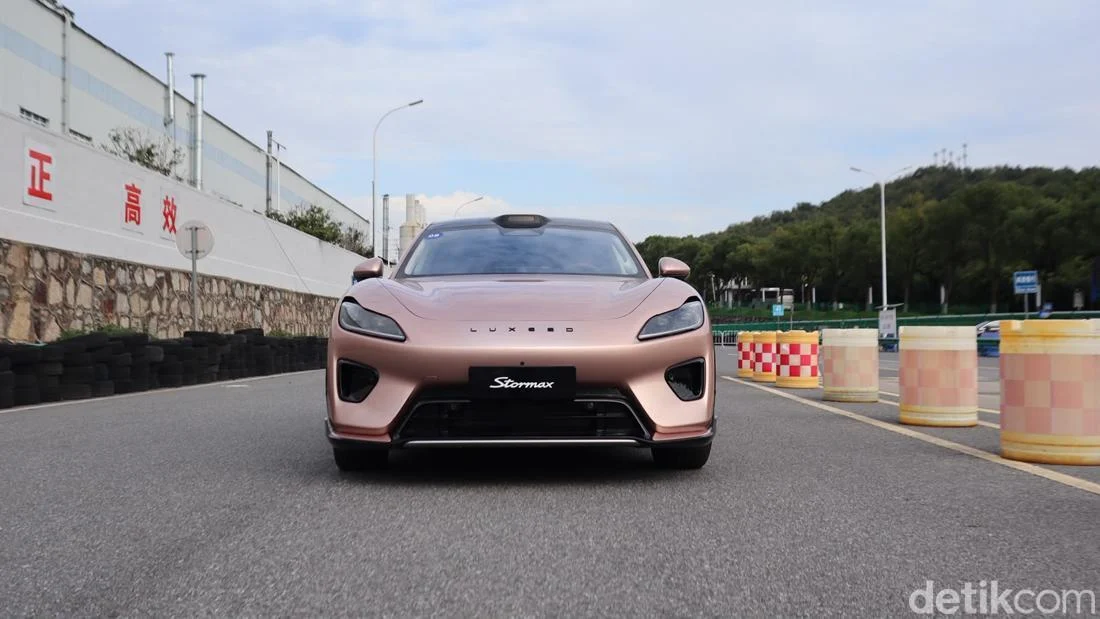
Industry insiders suggest that Saidou Technology is moving at an aggressive pace, with its inaugural vehicle slated for a market launch before the end of the current calendar year. The first model is designed as a crossover, a strategic choice intended to capture the "best of both worlds"—the sleek aerodynamics and comfort of a sedan combined with the rugged versatility and commanding road presence of a SUV.
To address the diverse infrastructure realities of both the Chinese and international markets, the vehicle will be offered with two distinct powertrain options. The first is a Battery Electric Vehicle (BEV) configuration for urban centers with robust charging networks. The second is an Electric Range-Extended Vehicle (EREV) version. The EREV system utilizes a small internal combustion engine as a generator to charge the battery on the go, effectively eliminating range anxiety for long-distance travel—a technology that Seres has already mastered through its successful collaboration with Huawei in the Aito series.
Manufacturing for these new models is currently being centralized at the Seres Phoenix plant. This facility is undergoing a comprehensive technological upgrade to accommodate the precision required for Saidou’s high-tech architecture. The renovation includes the integration of advanced robotics, sustainable energy systems, and high-speed data links to ensure that every vehicle rolling off the line meets the stringent quality standards required for global export.
The ByteDance Synergy: Focus on the "Smart Cockpit"
The most significant differentiator for Saidou Technology is its integration with Volcano Engine. While Seres’ other high-profile partnership with Huawei (the Aito brand) focuses heavily on the "Huawei ADS" (Automated Driving System), the collaboration with ByteDance takes a different trajectory. Volcano Engine has clarified that its primary focus is not on the mechanical aspects of autonomous driving but on the "brain" of the passenger experience.
Saidou vehicles will be equipped with a "Smart Cockpit" powered by ByteDance’s proprietary Large Language Models (LLM). This AI-driven interface is designed to provide ultra-responsive voice interaction, predictive navigation, and a deeply personalized entertainment ecosystem. Given ByteDance’s expertise in content algorithms and user engagement, the Saidou infotainment system is expected to offer a level of interactivity previously unseen in the automotive sector. This includes seamless integration with social media platforms, high-definition streaming, and an AI assistant capable of understanding complex, natural-language commands.
By positioning Volcano Engine as the cloud service provider and AI architect, Saidou Technology aims to create a "third living space" for users. The focus on the interior experience rather than full self-driving capabilities allows the brand to target a market segment that values connectivity and lifestyle integration over the technical complexities of Level 3 or Level 4 autonomy, which often comes at a significantly higher price point.
Strategic Financials and Stakeholder Roles
The 6.67 billion yuan investment is a testament to the confidence that major industrial players have in the Seres-ByteDance synergy. CATL’s involvement is particularly noteworthy; as the world’s largest EV battery manufacturer, their participation ensures that Saidou will have priority access to the latest cell-to-pack (CTP) technologies and ultra-fast charging batteries. This vertical integration provides Saidou with a competitive edge in terms of supply chain security and cost management.
For Seres Group, the move to relinquish majority control is a calculated financial maneuver. In previous quarters, the underperformance of legacy sub-brands had weighed on the group’s overall profitability. By bringing in regional government investment, the project gains political and logistical support, while the deconsolidation of Saidou’s debt from Seres’ primary balance sheet makes the parent company more attractive to global investors. Seres remains a vital technical partner, providing the manufacturing backbone and automotive engineering expertise, while ByteDance provides the digital soul.
Market Context and the Rise of Tech-Automotive Sub-Brands
The launch of Saidou Technology is part of a broader trend sweeping the Chinese automotive industry, where traditional manufacturers are spinning off new, agile sub-brands to compete with tech giants entering the space. Companies like Xiaomi have successfully transitioned from electronics to EVs, while others like Leapmotor are seeking global footprints through partnerships with legacy giants like Stellantis.
Seres Group is currently experiencing a period of unprecedented growth, largely driven by the success of its Aito brand. In May 2024, Seres reported the sale of 33,476 New Energy Vehicles (NEVs). The cumulative sales figures for the first five months of 2024 reached 145,108 units, representing a staggering 15.14% increase compared to the same period in the previous year. This momentum provides a solid foundation for the launch of Saidou, as Seres has proven its ability to scale production and manage complex high-tech partnerships.
The target audience for Saidou—the "active youth"—is a demographic that is increasingly moving away from traditional brand loyalty. These consumers prioritize software updates, interior aesthetics, and digital ecosystems over engine displacement or historical prestige. By leveraging ByteDance’s cultural cachet and Volcano Engine’s technical prowess, Saidou is positioned to capture a market that views the car as a mobile extension of their smartphone.
Global Ambitions and Future Outlook
While the immediate focus of Chongqing Saidou Technology remains the domestic Chinese market, the company has built international expansion into its core strategy from day one. The use of flexible platforms (BEV/EREV) and the emphasis on standardized cloud-based AI makes the product easily adaptable to various international regulations and consumer preferences.
The partnership also signals a shift in how technology companies view the automotive sector. Rather than building cars themselves—a capital-intensive and risky endeavor—companies like ByteDance are finding success as "Tier 0.5" suppliers, providing the essential digital infrastructure that defines the modern driving experience. For Seres, this collaboration offers a path to diversify its portfolio beyond the Huawei ecosystem, ensuring that it remains a versatile and indispensable player in the global transition to sustainable mobility.
As Saidou Technology prepares to unveil its first crossover model later this year, the industry will be watching closely to see if the "TikTok-car" formula can translate digital engagement into automotive sales. With the backing of CATL, the AI power of Volcano Engine, and the manufacturing experience of Seres, Saidou enters the market not as a startup, but as a well-funded, technologically mature contender ready to disrupt the status quo. The success of this venture could provide a new blueprint for the future of the automotive industry, where the value of a vehicle is measured as much by its lines of code as by its physical performance.