Nila Kartika Wati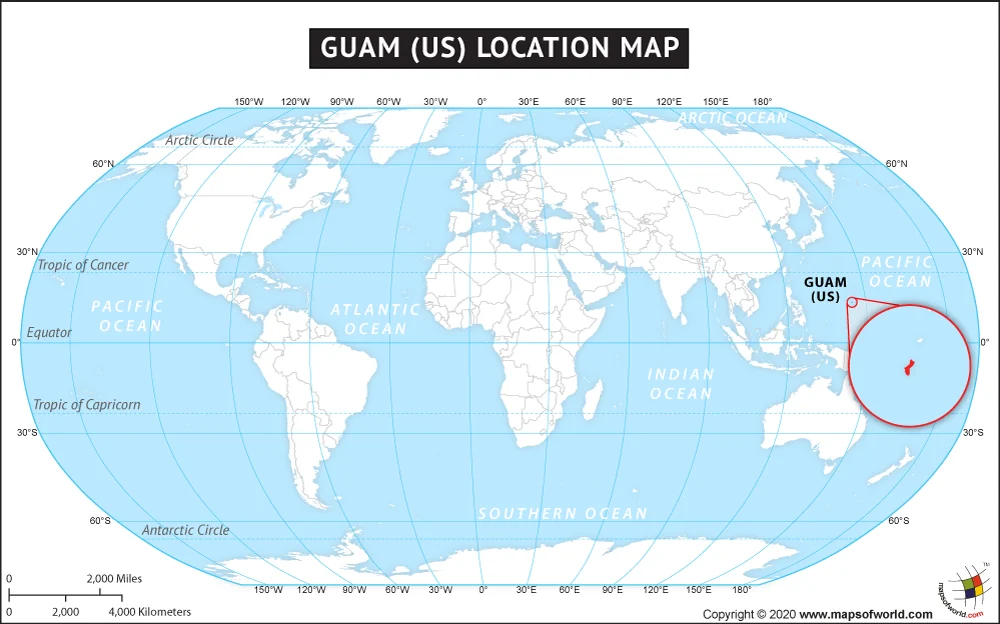
The island of Guam, a United States territory in the Western Pacific, currently serves as the world’s most harrowing case study in how a single invasive species can dismantle an entire ecosystem. What was once a lush, vibrant tropical landscape defined by the calls of endemic birds has been transformed into a "silent forest." This ecological shift is not the result of industrial pollution or direct habitat destruction, but rather the accidental introduction of the brown tree snake (Boiga irregularis). Over the course of seven decades, this nocturnal predator has eliminated nearly all of Guam’s native forest birds, triggered a massive explosion in spider populations, and is now fundamentally altering the very structure of the island’s forests by halting the natural cycle of seed dispersal and tree regeneration.
The history of this biological catastrophe dates back to the aftermath of World War II. During the late 1940s and early 1950s, Guam served as a critical logistics hub for the United States military in the Pacific. It is widely believed by ecologists and historians that several brown tree snakes, native to Papua New Guinea, the Solomon Islands, and northern Australia, hitched a ride to the island hidden within military cargo or the wheel wells of aircraft. In its native range, the brown tree snake is kept in check by various predators and competitors. However, on Guam, the snake found an ecological vacuum. The island’s native fauna had evolved for millennia without the presence of arboreal snakes, leaving them entirely defenseless against a predator that could climb almost any vertical surface.
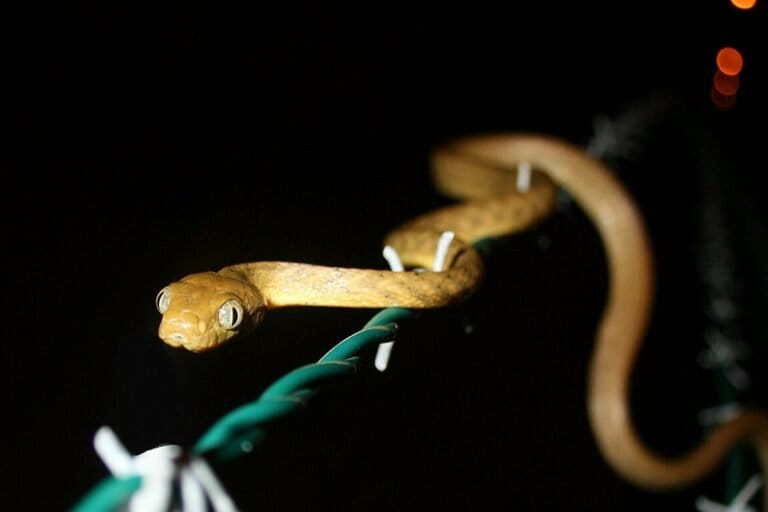
By the 1960s, the snake population began to expand from its initial point of entry near the Apra Harbor area. Because the snakes are nocturnal and highly secretive, their spread was initially overlooked by the local population. It was not until the 1970s and 1980s that residents and scientists began to notice a chilling trend: the birds were disappearing. By the time the full scale of the invasion was realized, the snakes had reached densities of up to 5,000 individuals per square kilometer in some areas—among the highest snake densities ever recorded on Earth.
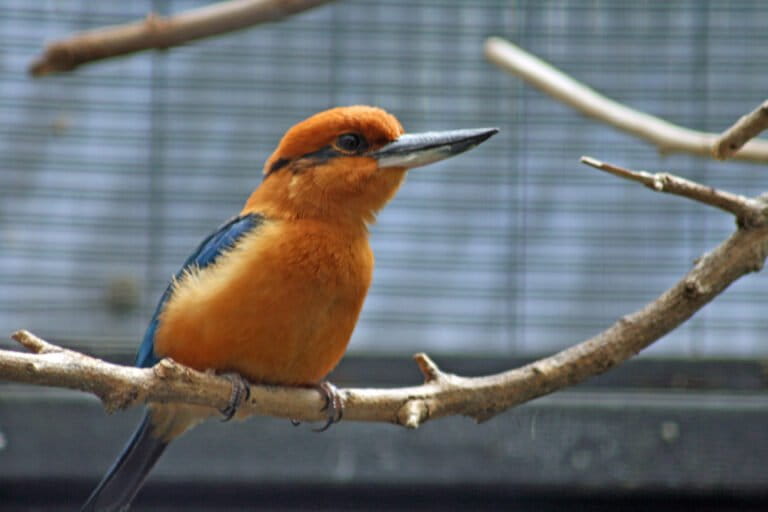
The impact on Guam’s avian population has been nothing short of apocalyptic. Out of 12 native forest bird species, 10 have been completely extirpated from the wild on Guam. Among the most tragic losses is the Guam kingfisher (Todiramphus cinnamominus), a stunning bird with cinnamon-colored plumage that now exists only in captive breeding programs in mainland U.S. zoos. The Guam flycatcher (Myiagra freycineti) is officially extinct, having not been seen since 1983. Other species, such as the Mariana crow (Corvus kubaryi) and the Guam rail (Hypotaenidia owstoni), have been pushed to the absolute brink. The rail, known locally as the Ko’ko’, has seen some success in reintroduction efforts on neighboring snake-free islands like Rota and Cocos Island, but it remains unable to survive on the Guam mainland.
Biologists point out that the vulnerability of these birds stemmed from "evolutionary naivety." Having never encountered a snake, many of Guam’s birds nested in open, accessible branches and lacked the flight-or-fight instincts necessary to escape a nocturnal hunter. The brown tree snake’s ability to consume prey up to 70% of its own body weight meant that eggs, hatchlings, and even adult birds were equally at risk. As the bird populations collapsed, the ecological "domino effect" began to manifest in ways that scientists are only now beginning to fully quantify.
In 2017, a landmark study published in Nature Communications by researchers from the University of Colorado and other institutions highlighted a secondary crisis: the failure of forest regeneration. In tropical ecosystems, birds play a vital role as "gardeners of the forest." They consume fruits and berries, then fly across the island, depositing seeds in their droppings far from the parent tree. This process, known as zoochory, is essential for maintaining genetic diversity and ensuring that new trees can grow in areas where light and soil conditions are optimal.
The research compared Guam’s forests to those on the nearby islands of Saipan and Tinian, which remain free of the brown tree snake. The findings were stark. In Guam’s silent forests, between 61% and 92% of the seeds from key tree species simply fall directly beneath the parent tree. Without birds to move them, these seeds face a "death sentence." Seedlings growing in the shadow of their parent tree are frequently killed by fungi, pathogens, or intense competition for sunlight. The study estimated that the loss of birds has reduced the dispersal of new tree seedlings by as much as 92%. This suggests that while Guam still looks green today, it is populated by "living dead" trees—mature specimens that are not being replaced. As the older generation of trees dies out, the forest may eventually transition into a scrubland dominated by a few wind-dispersed or invasive plant species.
The absence of birds has also led to a visible shift in the island’s invertebrate populations. Without avian predators to keep them in check, spider populations on Guam have surged to levels 40 times higher than those on neighboring islands. During the wet season, the forests of Guam are often draped in thick, shimmering webs that span across trails and between trees. This "trophic cascade"—where the removal of a top predator causes a boom in lower-level species—has created a surreal and uncomfortable environment for hikers and researchers, further highlighting the deep imbalance of the ecosystem.
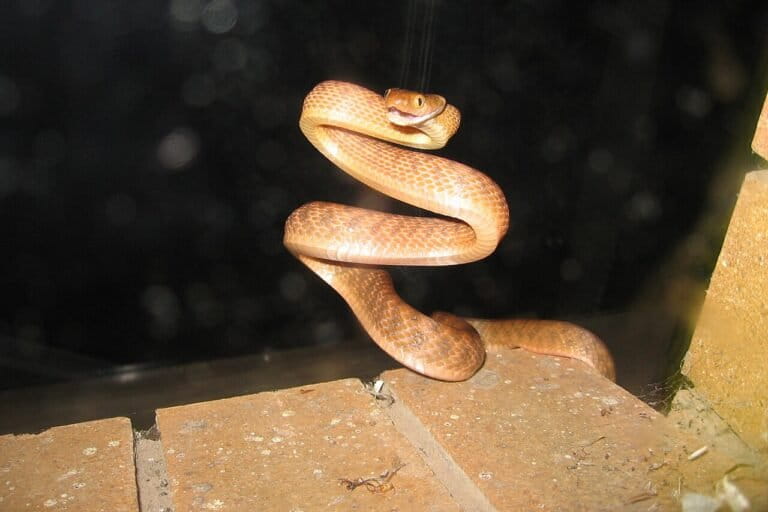
The brown tree snake itself has proven to be an incredibly resilient and adaptable adversary. As the bird population dwindled, the snake did not starve; instead, it shifted its diet to lizards, such as the invasive house gecko and various skinks, as well as small mammals. In 2021, researchers documented a previously unknown movement called "lasso climbing." By looping its body into a lasso-like shape around smooth, wide cylinders, the snake can shimmy up poles and trees that were previously thought to be inaccessible. This discovery sent shockwaves through the conservation community, as it meant that many "snake-proof" barriers used to protect remaining bird nests or power infrastructure were actually vulnerable.
Beyond the ecological damage, the invasion has exacted a heavy economic and social toll on Guam. The snakes are notorious for causing frequent power outages. Because they are adept climbers, they often crawl onto power lines and into transformers, causing short circuits that can plunge entire villages into darkness. These outages cost the Guam Power Authority millions of dollars annually in repairs and lost productivity. Furthermore, while the snakes are only mildly venomous and generally pose little threat to healthy adults, they frequently enter residential homes through plumbing or open windows, posing a risk to infants and small pets.
The response from the U.S. government has been multifaceted and costly, involving the Department of Agriculture (USDA), the Department of the Interior, and the U.S. Geological Survey. One of the most unconventional and famous methods of control involves the use of "toxic mice." Research discovered that the brown tree snake is unusually sensitive to acetaminophen, the active ingredient in common over-the-counter painkillers like Tylenol. In a program that has garnered international headlines, authorities have used helicopters and automated drones to drop dead neonatal mice laced with acetaminophen into the forest canopy. These mice are attached to small cardboard parachutes designed to snag on tree branches, where the arboreal snakes are most likely to find them.
While the "mouse-drop" program has successfully reduced snake densities in localized areas—particularly around Andersen Air Force Base and the island’s ports—eradicating the snake from the entire 544-square-kilometer island remains a logistical impossibility with current technology. The terrain of Guam, characterized by jagged limestone cliffs and dense, impenetrable jungle, provides endless hiding spots for the millions of snakes estimated to be living on the island.
The situation in Guam serves as a grim warning for other Pacific islands, particularly Hawaii. The introduction of the brown tree snake to Hawaii would be an economic and environmental catastrophe of even greater proportions, potentially costing the state billions of dollars in lost tourism and agricultural damage while wiping out dozens of endangered honeycreeper species. Consequently, much of the work currently being done on Guam is focused on interdiction—using trained canine teams at airports and seaports to ensure that no snakes leave the island in outgoing cargo.
As the battle for Guam’s ecosystem continues, the focus has shifted toward creating "ecological fortresses." These are small, heavily fenced areas where snakes are meticulously eradicated and kept out through a combination of physical barriers and constant trapping. The hope is that these small pockets can serve as "lifeboats" where native birds can eventually be reintroduced. However, until a landscape-scale solution is found to suppress the snake population, the forests of Guam will remain a haunting reminder of how fragile the balance of nature truly is, and how a single stowaway can change the fate of an island forever.