Nila Kartika Wati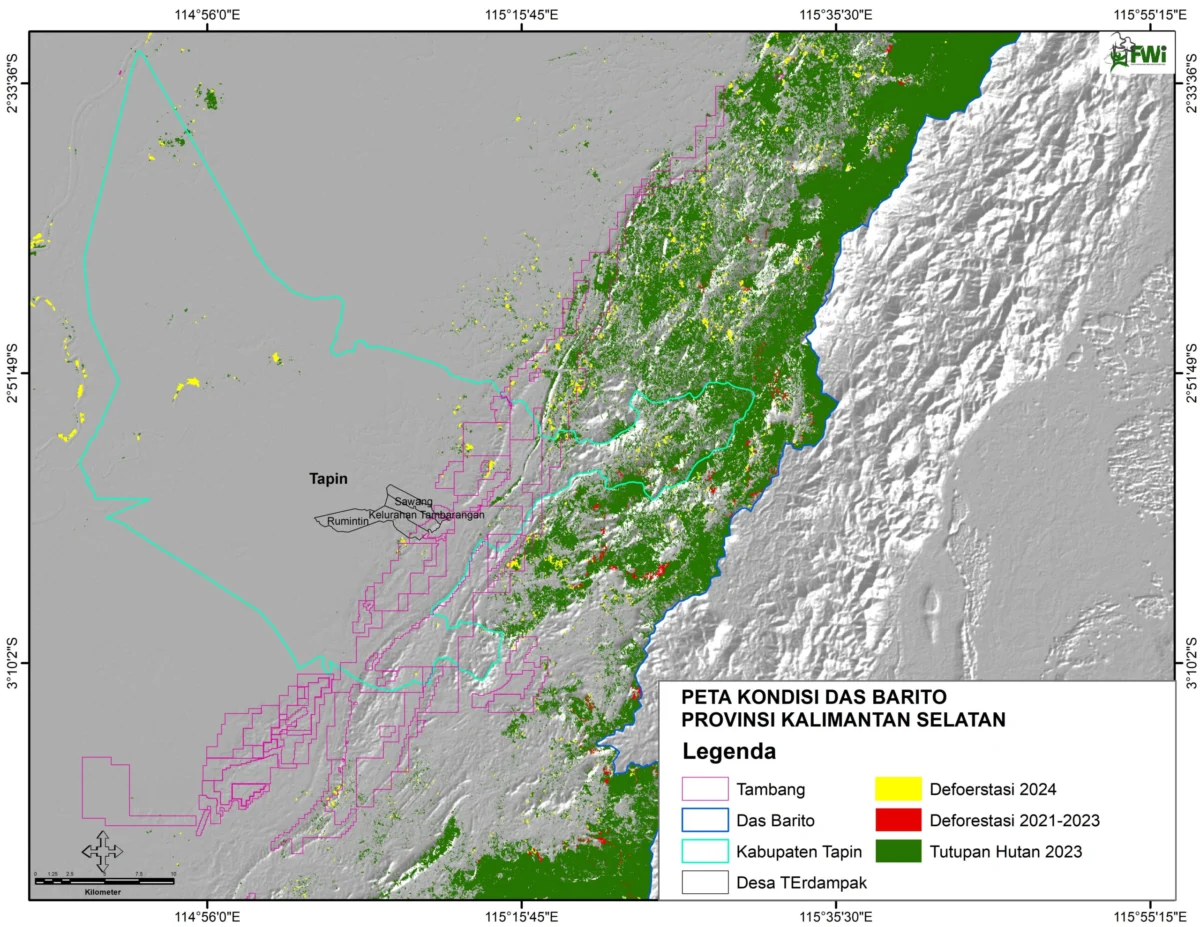
The onset of overcast skies has become a source of profound anxiety for the residents of South Tapin District, Tapin Regency, South Kalimantan. For the communities in this region, heavy rainfall no longer signifies a natural cycle of renewal but rather the precursor to a recurring environmental disaster. In recent years, the nature of flooding in the area has evolved from simple water inundation into a more destructive phenomenon: thick, viscous mud floods heavily contaminated with coal particles and oily residues. This environmental crisis has not only damaged homes and infrastructure but has also systematically dismantled the local economy, particularly the rubber farming sector that has sustained families for generations.
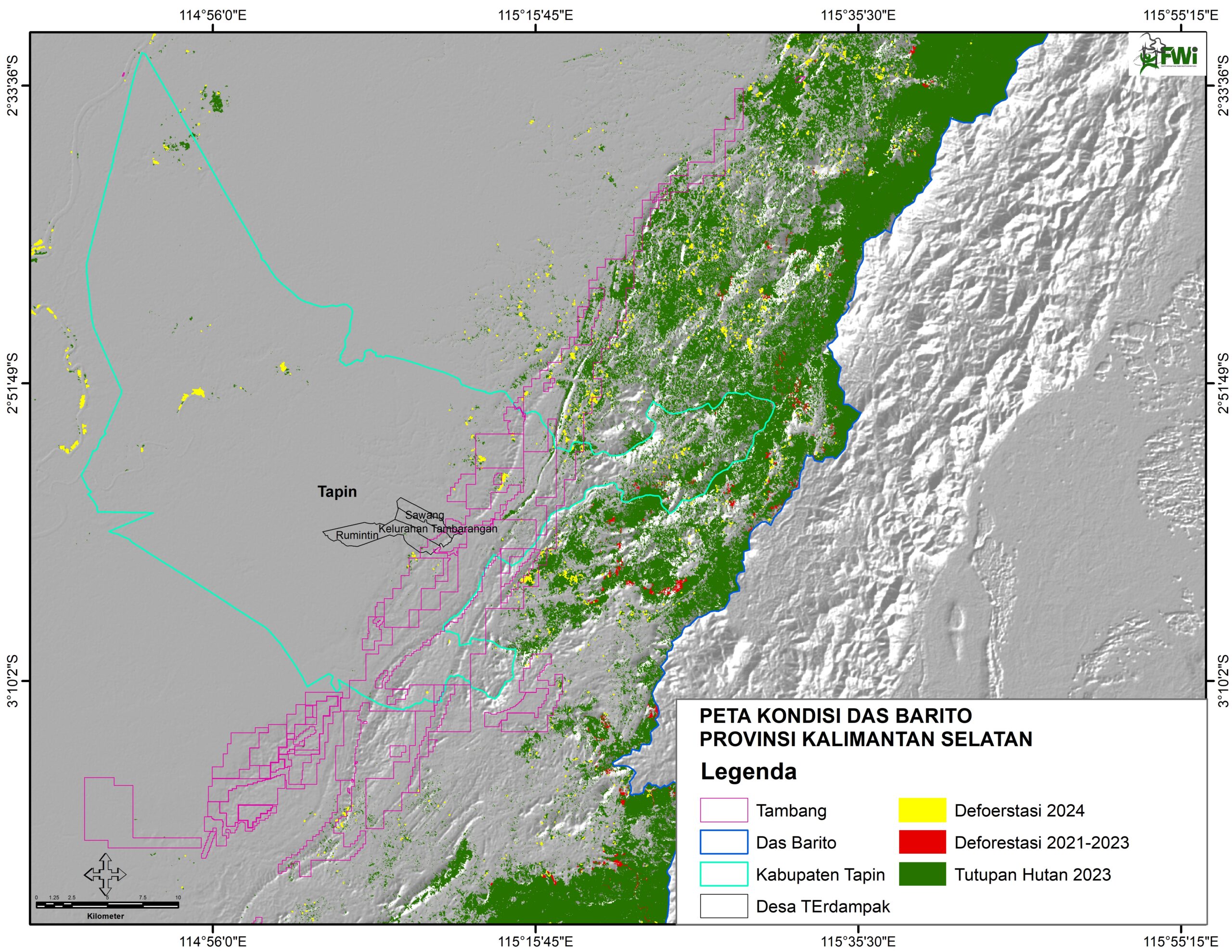
Between late March and mid-April 2025, the region was battered by five distinct flooding events, submerging the Kelurahan of Tambarangan, as well as the villages of Sawang and Rumintin. Data from the Tapin Regency Regional Disaster Management Agency (BPBD) underscores the scale of the displacement. In Tambarangan, four neighborhood units (RT) were affected, impacting 136 families or approximately 531 individuals. In Sawang, four RTs saw 61 families (184 people) affected, while in Rumintin, three RTs reported 33 families (117 people) suffering from the inundation. These figures, while significant, only scratch the surface of the long-term socio-economic degradation facing the district.
The Human Cost of Recurring Inundation
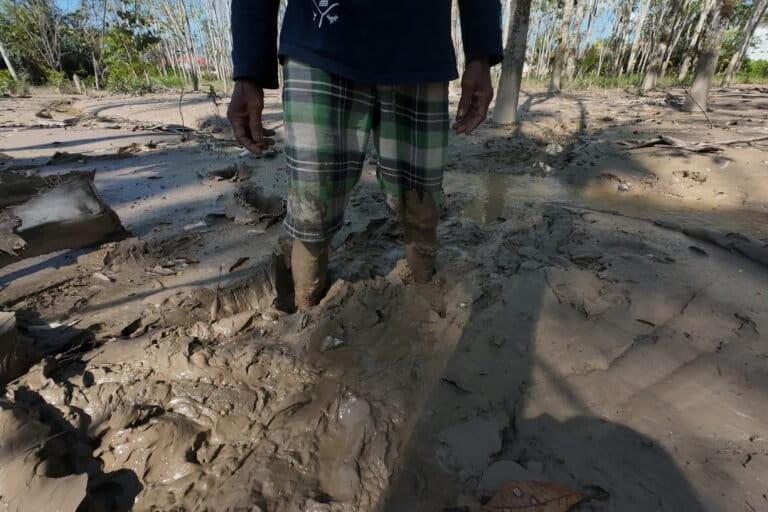
For residents like Mustaqimah (a pseudonym), the frequency of these floods has become impossible to track. She notes that while flooding has been a reality for roughly five years, the severity and the presence of thick mud have intensified significantly over the last 24 months. When the water enters her home, it typically reaches calf-height, leaving behind a sediment layer at least two centimeters thick. The labor required to remediate a home after such an event is grueling. The mud must be scrubbed away while still wet; once it dries, it adheres to surfaces with a tenacity that requires multiple rounds of heavy cleaning.
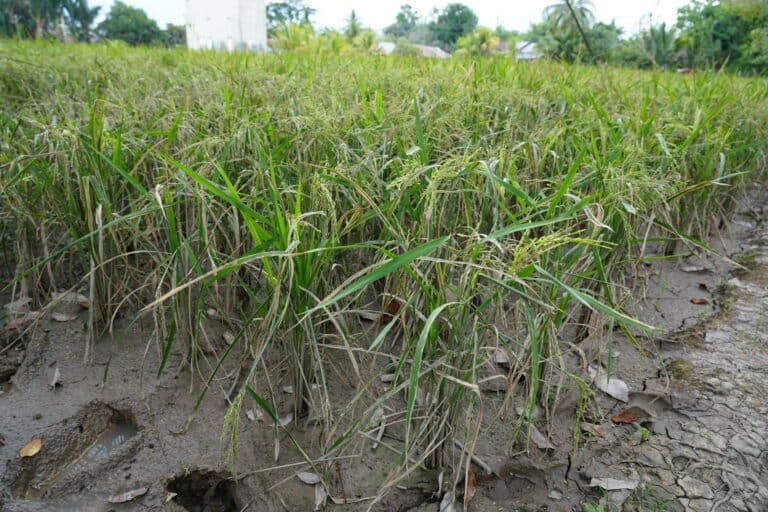
The physical toll on infrastructure is equally devastating. Mustaqimah’s home, constructed largely of wood, is succumbing to rot. The constant moisture has warped floorboards and weakened structural walls, forcing her to spend upwards of Rp15 million on repairs—a staggering sum for a rural household. However, the most permanent damage is found in her fields. Her one-hectare rubber plantation, which once provided the financial stability necessary to fund her children’s education, has been unproductive for three years. Mud has accumulated to knee-height across the grove, suffocating the trees and contaminating the latex. The resulting sap is acidic and commercially worthless.
The economic shift is stark. Previously, Mustaqimah could earn between Rp700,000 and Rp1,000,000 every three days from her own trees. Now, she is forced to work as a sharecropper on a relative’s land, earning a maximum of Rp250,000 before deducting the costs of fertilizer and fuel. This 75% drop in income has cast a shadow over her children’s prospects for higher education, a common narrative among the district’s farming families.
Environmental Degradation and the Siltation of Waterways
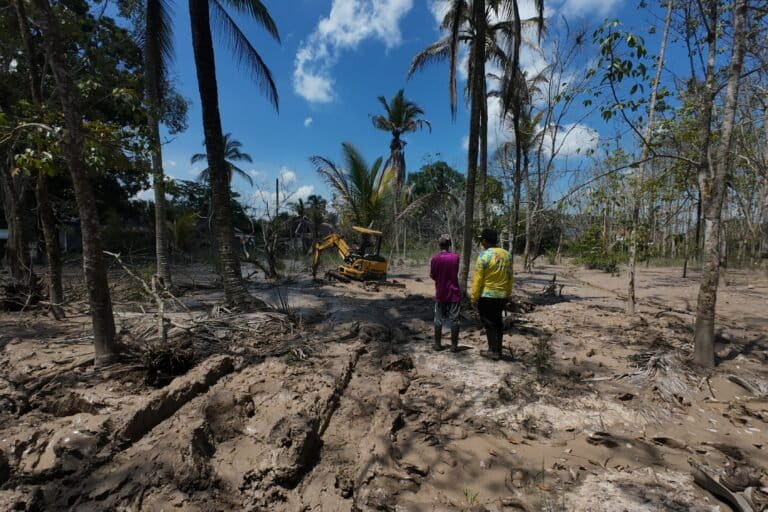
The environmental transformation of South Tapin is visible in its waterways. Sumiyati, another local resident, recalls a time when the local rivers were clear and flooding was a rare, annual occurrence. Today, the rivers are perpetually turbid, and their channels have narrowed significantly due to heavy sedimentation. This siltation has a direct impact on the traditional architecture of the region. Many residents live in "rumah panggung" or stilt houses, designed to sit 1.5 meters above the ground to avoid seasonal high water.
However, the relentless accumulation of mud beneath these structures has effectively "shortened" the houses. In some areas, the ground level has risen so much that it nearly touches the floorboards. Consequently, even moderate rain causes mud-laden water to seep through the gaps in the floor, turning living rooms into silt traps. The loss of river depth means the natural drainage system of the Barito Watershed is failing, ensuring that even brief periods of rain result in immediate overflows.
The impact extends to the very heart of community life. Rahimah, a resident who has had to evacuate multiple times, describes the psychological exhaustion of the "clean-up cycle." During the 2025 Eid al-Fitr holidays, while she was visiting family in Martapura, her home was completely inundated. Upon her return, she found her refrigerator destroyed, mattresses soaked in filth, and electronic appliances buried in sludge. The cost of repairing her porch alone reached Rp10 million, while floor replacements cost another Rp5 million. For many, the financial burden of living in South Tapin is becoming unsustainable.
The Nexus Between Mining and Disaster
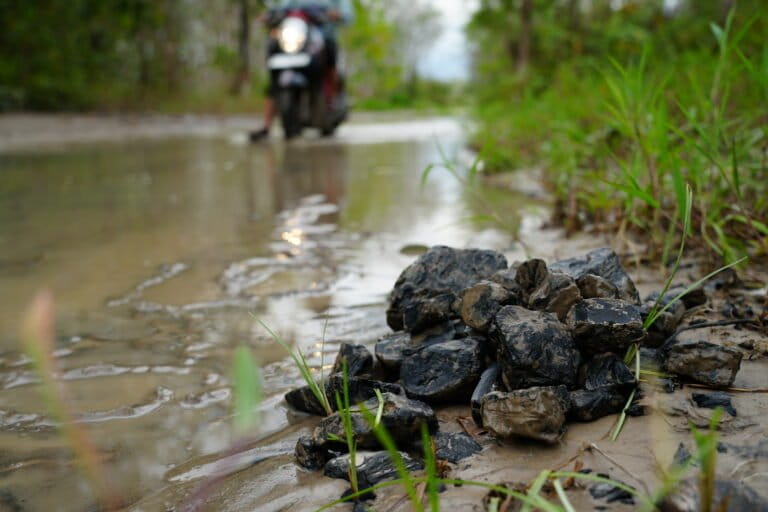
Public suspicion regarding the source of the mud and coal contamination points toward the upstream operations of PT Binuang Mitra Bersama (BMB) Blok Dua. The company’s concession is located approximately five kilometers from the affected residential areas. Residents frequently find coal fragments—ranging from small grains to larger chunks—deposited in their yards and along the riverbanks after floods. At one point, the presence of coal was so prevalent that some residents collected and sold it to collectors for a meager Rp4,000 to Rp7,000 per sack, a grim silver lining to the destruction of their primary livelihoods.
Spatial analysis conducted by Forest Watch Indonesia (FWI) provides a scientific basis for these grievances. The hulu (upstream) regions of Sawang, Rumintin, and Tambarangan are critical components of the Barito Watershed. FWI data reveals that between 2021 and 2024, this specific area lost 849 hectares of forest cover. By 2025, the remaining forest cover outside protected areas stood at only 45,086 hectares. According to FWI researcher Respati Bayu Kusuma, the correlation between deforestation and recurring floods is linear.
"When forest cover is removed, the land loses its ability to absorb rainwater," Kusuma explained. "Instead of infiltrating the soil, the water rushes across the surface, picking up topsoil and mining sediments. This creates the heavy mudflows we see entering Tapin Selatan." Satellite imagery confirms that PT BMB Blok Dua’s activities are situated directly in these sensitive upstream zones. Data from the Mapbiomas platform indicates that as of 2024, 52% of the company’s 2,280-hectare concession (approximately 1,199 hectares) consists of non-vegetated areas, while only five hectares of actual forest remain within the site.
Corporate and Administrative Accountability
The ownership and management of PT BMB Blok Dua link the operation to significant industrial players. Documents from the Directorate General of Legal Administrative Affairs (AHU) identify Gt Denny Ramdhani—who also serves as the Assistant Operations Project Manager for the "Wanam 1 Million Hectare Rice Field" initiative—as the President Commissioner. Despite the clear impact on downstream communities, efforts to secure accountability have met a wall of silence.
Mongabay Indonesia reached out to various stakeholders, including PT BMB’s public relations representative, Farid, and the company’s offices in South Kalimantan and Jakarta. No responses were provided. Similarly, local government officials, including the Head of the Tapin Environment Agency’s Pollution Control Division and the Head of the Public Works and Spatial Planning (PUPR) Agency, failed to respond to multiple inquiries sent throughout May 2024.
The provincial government’s stance has been equally elusive. The South Kalimantan Mining and Energy Agency (ESDM) claimed that no formal reports regarding the mud floods had reached their office. Gayatrie Agustina, a senior official at the agency, stated that while they had not received a report, they were "informed" by the permit holder that the Tapin Environment Agency was handling the matter. This "pass-the-parcel" approach to environmental governance has left residents feeling abandoned by the state.
Strategic Recommendations and the Path Forward
Civil society organizations like Walhi (The Indonesian Forum for Environment) and FWI argue that the situation in South Tapin is not a natural disaster but a "crisis of extractive industry." Raden Rafiq, Executive Director of Walhi South Kalimantan, emphasized that short-term fixes like river normalization are insufficient. He pointed out that as far back as 2021, Desa Sawang suffered land shifts near PT BMB’s active mining pits, which destroyed productive farmland.
To prevent the total collapse of the local ecosystem and economy, FWI has proposed a five-point mitigation strategy:
- Tighten Spatial Planning (RTRW): The Tapin Regency must implement strict limits on the total area of land that can be cleared simultaneously within a single watershed.
- Mandatory Rehabilitation: Mining companies must be legally compelled to close and revegetate exhausted pits before being allowed to open new acreage.
- Environmental Audits: A comprehensive audit of the distance between mining operations and residential/riparian zones is required to ensure safety buffers are maintained.
- Green Belts: The establishment of permanent "green belts" (50-100 meters wide) along all riverbanks, free from mining roads or land clearing, as mandated by Government Regulation No. 38/2011.
- Direct Accountability: An evaluation of all upstream concessions in the Barito Watershed to ensure they are meeting their environmental management obligations.
The recurring mud floods of South Tapin serve as a microcosm of the broader tensions in Indonesia’s coal-dependent economy. While coal remains a primary export and energy source, the "hidden costs"—the destruction of rubber plantations, the rot of traditional homes, and the silencing of rural voices—are being borne entirely by local communities. Without a fundamental shift in how mining concessions are monitored and how environmental damage is compensated, the residents of Tambarangan, Sawang, and Rumintin will continue to watch the skies with fear, knowing that the next rain will bring not water, but the suffocating weight of industrial sludge.