Nila Kartika Wati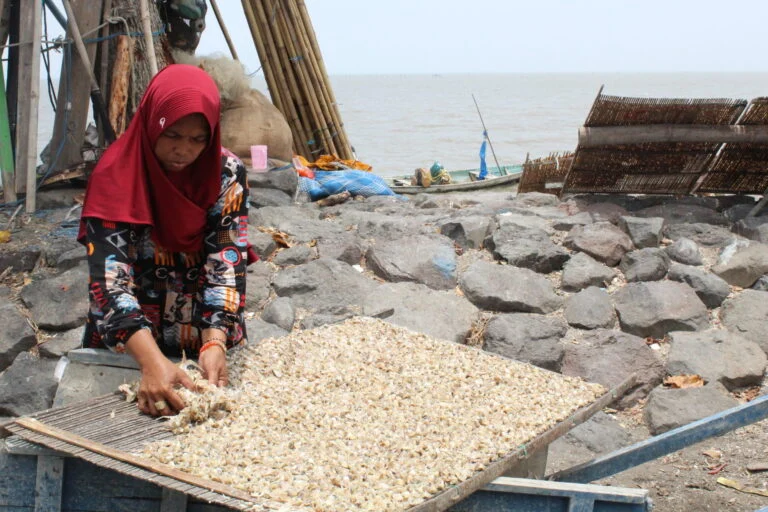
The controversial Surabaya Waterfront Land (SWL) reclamation project in East Java remains in a state of precarious ambiguity, leaving thousands of coastal residents and local fishermen in a protracted struggle for their livelihoods and environmental security. Despite a massive wave of public opposition that has persisted for over two years, the Indonesian government has yet to issue a definitive legal decree to permanently halt the project, fueling fears among the coastal communities that the development could be revived at any moment. The project, which proposes the creation of four massive artificial islands covering approximately 1,084 hectares, has become a flashpoint for debates over urban expansion, ecological preservation, and the rights of traditional maritime communities.
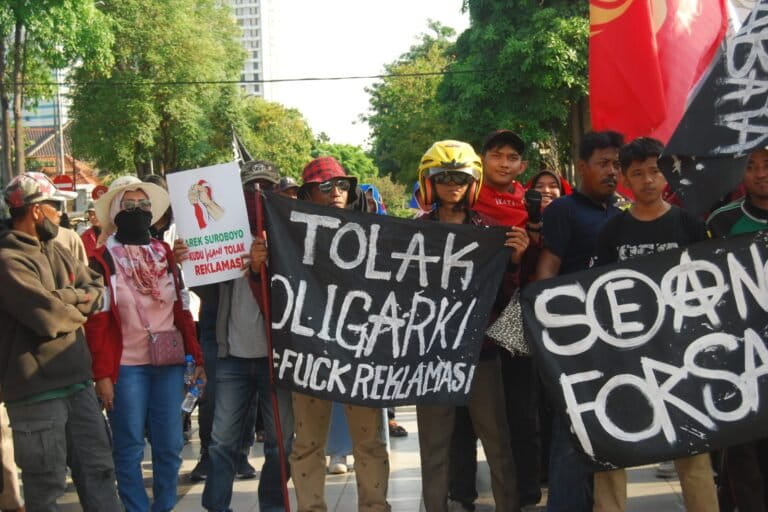
The uncertainty surrounding the SWL project has mobilized a broad coalition of civil society organizations and grassroots movements. Hamuka, the chairman of the Muhammadiyah Fishermen’s Congregation (Jalamu) in Surabaya, has emerged as a prominent voice for those whose lives are inextricably linked to the sea. According to Hamuka, the anxiety within the community is palpable because no official statement from either the developers or the government has confirmed a total cessation of the plan. He notes that the resistance is not a localized grievance but a unified front comprising 44 different associations and civil society organizations. This collective has repeatedly sought intervention from various levels of government, including the Surabaya Regional House of Representatives (DPRD), the East Java provincial administration, and the Ministry of Marine Affairs and Fisheries (KKP) in Jakarta.
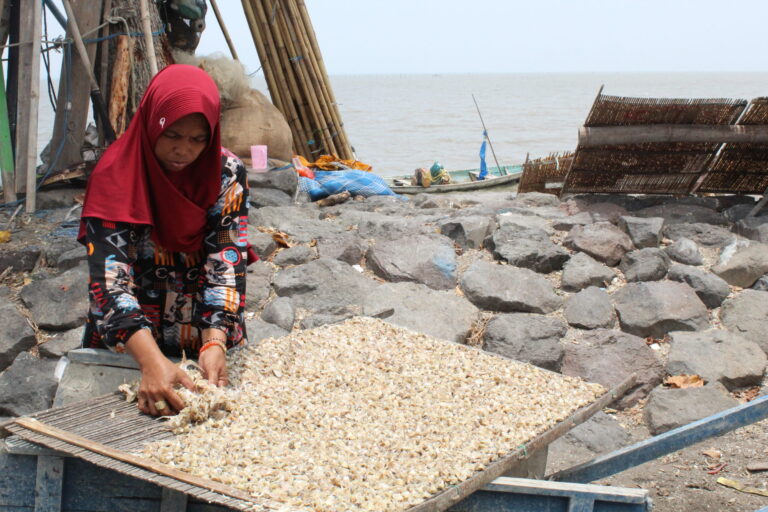
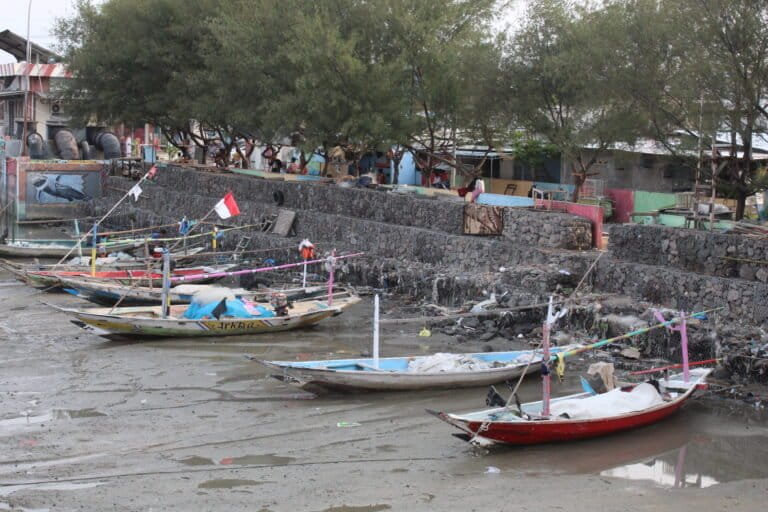
For the fishermen of Surabaya, the coastal waters are more than just a geographic feature; they represent a "living space" (ruang hidup) that sustains their families and maintains the local economy. The proposed 1,084-hectare reclamation area overlaps significantly with traditional fishing grounds where thousands of small-scale fishers operate daily. If the project proceeds, these communities face the grim prospect of being physically displaced and economically marginalized. Estimates suggest that approximately 8,000 families across five sub-districts in Surabaya are directly vulnerable to the project’s impacts. Beyond the immediate loss of fishing access, residents fear that the structural changes to the coastline will exacerbate natural disasters, such as coastal erosion and tidal flooding, which already plague parts of Northern Surabaya.
The Regulatory Framework and the Shift in National Status
The Surabaya Waterfront Land project was initially thrust into the national spotlight when it was designated as a National Strategic Project (PSN) under the Coordinating Minister for Economic Affairs Regulation No. 6 of 2024. This status provided the project with significant administrative advantages and accelerated permitting processes. However, following intense public scrutiny and a re-evaluation of its feasibility, the government reportedly revoked its PSN status. While this move was welcomed by activists, it did not automatically result in the project’s cancellation. Instead, it shifted the project into a regulatory gray area where the developer still holds certain preliminary approvals, such as the Marine Space Utilization Suitability (KPRL) document.
Miftahul Huda, Secretary of the Directorate General of Marine and Coastal Management at the KKP, has defended the normative framework of reclamation, suggesting that such projects are theoretically designed to improve the quality of coastal areas. Huda maintains that any reclamation must be preceded by a rigorous Environmental Impact Analysis (Amdal) to identify a "middle ground" that benefits both the developer and the community. He acknowledges that while reclamation carries inherent negative implications, it can also drive economic growth and land enhancement if managed correctly. However, critics argue that this "middle ground" often fails to account for the irreversible loss of biodiversity and the social disruption caused to traditional communities.
Scientific Warnings and Technical Integrity
The debate over the SWL project is further complicated by warnings from the scientific community regarding the technical viability of building artificial islands in Surabaya’s coastal environment. Herman Wahyudi, a professor at the Department of Civil Engineering at the Institut Teknologi Sepuluh Nopember (ITS), emphasizes that the government must maintain absolute transparency and honesty in its feasibility studies. Wahyudi, who has conducted extensive research on Indonesian reclamation projects, warns against the manipulation of data to favor developers. He asserts that if an objective study shows that the negative impacts outweigh the benefits, the project must be terminated without hesitation.
Technically, the project faces significant hurdles. Wahyudi highlights the necessity of comprehensive hydrographic and meteocean surveys to understand wave patterns, tidal cycles, and current speeds. Failure to accurately model these factors could lead to disastrous consequences, including severe abrasion in neighboring areas and the siltation of river mouths. A major concern is the potential for the reclamation islands to obstruct the city’s drainage systems. If the islands are positioned too close to the existing shoreline, they could block the outflow of urban canals and rivers, significantly increasing the risk of catastrophic flooding in the city of Surabaya.
Furthermore, Wahyudi stresses that the ecological value of the seabed must be the primary filter for approval. The presence of coral reefs or critical fish spawning grounds should be an automatic "red flag" for any reclamation activity. He also points out that social aspects are often more difficult to manage than technical ones. Reclamation projects frequently result in the privatization of the coast, stripping the public of their right to access the sea and green open spaces. Wahyudi argues that any such project must legally guarantee at least 20% of the area as public green space and ensure that the local population is not cut off from the shoreline.
The Ecological Crisis: Mangrove Loss and Climate Risks
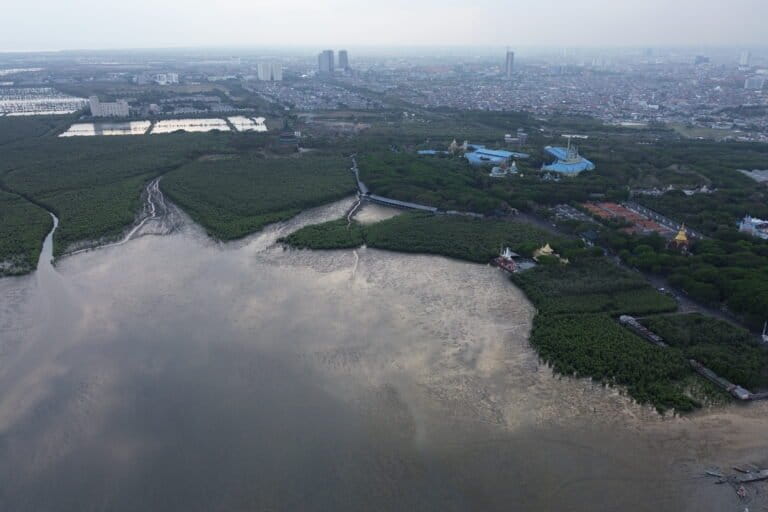
The Indonesian Forum for the Environment (WALHI) East Java has been at the forefront of the ecological argument against the SWL. Lucky Wahyu Wardhana, WALHI’s Head of Advocacy and Campaign, points out that the project threatens to destroy what remains of Surabaya’s vital mangrove ecosystem. Since the 1970s, the city has already lost approximately 50% of its mangrove cover due to urban expansion and industrial development. Data from WALHI reveals a staggering decline: in 1978, Surabaya had 3,300 hectares of mangroves; by 1985, this had dropped to 2,500 hectares. Today, it is estimated that only 1,000 to 1,500 hectares remain.
The loss of these mangroves is not just a blow to biodiversity; it is a direct threat to the city’s climate resilience. Mangroves serve as a natural barrier against storm surges and rising sea levels. The SWL project, which targets the northern and eastern coasts, would further fragment these habitats. This environmental degradation is set against the backdrop of a sobering report from the National Development Planning Agency (Bappenas) titled "Climate Resilient Development Policy 2020-2045." The report identifies the marine and coastal sectors as the most vulnerable to climate change, with East Java projected to suffer the highest economic and ecological losses in the country.
According to Bappenas, the potential economic loss in the coastal and marine sectors could reach IDR 81 trillion by 2024 if climate mitigation is not prioritized. WALHI argues that proceeding with a massive reclamation project like the SWL is fundamentally at odds with the government’s own climate resilience goals. By replacing natural coastal buffers with artificial islands, the city is essentially trading long-term ecological security for short-term real estate gains.
Social Implications and the Future of the Coast
The human element of the SWL controversy cannot be overstated. The 8,000 families identified as "at risk" are predominantly low-income households whose entire social fabric is built around the maritime economy. Women in these communities, who often play a crucial role in processing and selling the catch, face a loss of agency and income. The transition from a fishing-based economy to a service-based one—often promised by developers—rarely benefits the original inhabitants, who lack the formal education or capital to participate in high-end waterfront developments.
The current situation remains a tense standoff. While construction has not fully commenced—aside from a symbolic gateway—the lack of a formal cancellation keeps the community in a state of constant vigilance. Activists and residents are calling for the government to move beyond verbal assurances and provide a "black-and-white" legal guarantee that the Surabaya Waterfront Land project will not proceed. They argue that true "development" should not come at the cost of destroying the environment and displacing the very citizens it claims to serve.
As Surabaya continues to grow, the pressure on its coastline will only increase. The SWL case serves as a critical test for Indonesia’s commitment to sustainable coastal management. Whether the government chooses to prioritize the interests of private developers or the long-term survival of its coastal communities and ecosystems will define the future of the nation’s second-largest city. For now, the fishermen of Surabaya continue to guard their mangroves and their waters, waiting for a definitive sign that their "living space" is finally safe from the encroaching sands of reclamation.