Nasution Nanang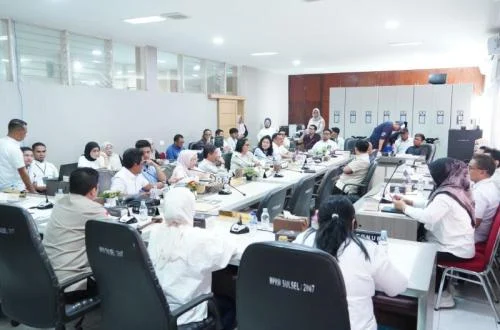
The Provincial Regional House of Representatives (DPRD) of South Sulawesi has launched a comprehensive investigation into persistent allegations of subsidized fertilizer price manipulation in Bone Regency, following numerous complaints from local farmers. The DPRD’s Commission B for Economic Affairs is spearheading the inquiry into reports that the retail price of subsidized fertilizers, critical for agricultural productivity, has significantly exceeded the government-mandated Highest Retail Price (HET). This issue, if left unaddressed, threatens the livelihoods of thousands of farmers in the region and could undermine national food security initiatives.
Background of Indonesia’s Subsidized Fertilizer Program
Indonesia, as an agrarian nation, heavily relies on its agricultural sector, which contributes substantially to its Gross Domestic Product and employs a significant portion of the workforce. To ensure food security and support the welfare of its farmers, the Indonesian government implements a robust subsidized fertilizer program. This program aims to provide essential agricultural inputs like urea and NPK Phonska at affordable prices, thereby reducing production costs for farmers and encouraging higher yields. The subsidy mechanism is designed to bridge the gap between market prices and the HET, making fertilizers accessible to smallholder farmers who might otherwise struggle to afford them.
PT Pupuk Indonesia (Persero), a state-owned enterprise, plays a pivotal role as the primary producer and distributor of subsidized fertilizers across the archipelago. The distribution chain is meticulously planned, typically involving the producer, a network of regional distributors (Pelaku Usaha Distribusi or PUD), and authorized retailers or kiosks (Penerima Pupuk pada Titik Serah or PPTS) where farmers can purchase the fertilizers at HET. Strict regulations govern this process, including the allocation of quotas based on farmer registration (e.g., through Rencana Definitif Kebutuhan Kelompok Tani or e-RDKK), price controls, and oversight mechanisms to prevent diversion or price gouging. Annually, the government allocates substantial budgets, often trillions of rupiah, to this program, underscoring its strategic importance. For instance, in recent years, the allocation for subsidized fertilizers has consistently been among the largest agricultural support programs, reflecting the government’s commitment to buffering farmers against volatile input costs. The program covers millions of hectares of agricultural land and supports millions of farmers nationwide, making any disruption to its integrity a matter of significant national concern.
The Allegations in Bone Regency: A Deep Dive into Price Discrepancies
The current investigation by South Sulawesi’s DPRD focuses specifically on Bone Regency, a vital agricultural hub known for its rice and other food crop production. Farmers in several sub-districts within Bone, including Amali, Sibulae, Cina, Tonra, and Ma’re, have lodged formal complaints, asserting that they are forced to purchase subsidized fertilizers at prices far exceeding the HET. Yasir Machmud, the Deputy Chairman of the South Sulawesi DPRD, revealed during a recent public hearing at the provisional DPRD office in Makassar that the primary cause of these inflated prices appears to be an alleged "lengthened supply chain." This suggests the involvement of unauthorized intermediaries who insert themselves into the legitimate distribution network, adding layers of costs and profit margins before the product reaches the end-user.
Under the official pricing structure, the HET for Urea fertilizer is set at Rp90,000 per 50 kg sack, while NPK Phonska is set at Rp92,000 per 50 kg sack. However, farmer testimonies and evidence collected by the DPRD indicate that these fertilizers are being sold in the field for as much as Rp110,000 per sack. This represents an increase of approximately 20-22% above the official HET, a significant burden for farmers operating on thin profit margins. When confronted, retailers have reportedly attributed these additional costs to "delivery charges" or "transportation fees." While some logistical costs are inherent, the magnitude of the increase suggests that these charges are being manipulated or are disproportionately high, potentially masking illicit profits.
The investigation has been bolstered by compelling video evidence submitted by farmers, which reportedly captures instances of these inflated sales and the justifications provided by retailers. This tangible evidence lends considerable weight to the farmers’ claims and provides a clear starting point for the DPRD’s fact-finding mission. The reported incidents are said to have occurred and are projected to continue during the period extending into 2025-2026, indicating a systemic and ongoing problem rather than isolated incidents. This protracted timeline highlights the urgency of the DPRD’s intervention to prevent further financial distress for farmers in the upcoming planting seasons. The economic impact on individual farmers is substantial; for a farmer cultivating one hectare of rice, requiring several sacks of fertilizer per season, an additional Rp20,000 per sack can translate into hundreds of thousands of rupiah in unexpected costs, significantly eroding their potential profits or even pushing them into debt.
DPRD’s Investigation and Initial Findings
The public hearing, which took place last Wednesday at the temporary DPRD office in Makassar, served as a crucial platform for airing these grievances and initiating the formal investigation. Commission B, responsible for economic affairs, is tasked with scrutinizing the entire distribution mechanism from the producer to the final point of sale. Yasir Machmud emphasized the seriousness of the allegations, highlighting that any deviation from the established distribution protocol is a direct violation of government policy designed to support farmers.
Mardjono, another member of Commission B, voiced suspicions regarding the involvement of third parties, specifically mentioning Village-Owned Enterprises (BUMDes) or cooperatives. While BUMDes and cooperatives are intended to empower local communities and support economic activities, including agricultural input supply, their unauthorized or improperly regulated involvement in the subsidized fertilizer distribution chain could inadvertently create additional layers, leading to price hikes. If BUMDes or cooperatives are purchasing from authorized distributors and then reselling to farmers with an added markup, it essentially creates an extra, unofficial distribution tier that bypasses the HET regulations. This scenario would contravene the principle of direct sales from authorized retailers to farmers at the stipulated prices. The DPRD’s investigation will delve into the operational practices of these entities to ascertain their role, if any, in the alleged price manipulation. The presence of multiple actors in the supply chain, each adding a margin, often leads to the ultimate price paid by the farmer far exceeding the HET, even if no single actor is overtly charging an exorbitant amount.
Official Responses and Accountability
In response to the allegations, Sukodim, the Senior Manager Regional 4A for PT Pupuk Indonesia (Persero), reiterated the company’s official stance and standard operating procedures. He firmly stated that PT Pupuk Indonesia has never issued instructions for the direct sale of either subsidized or non-subsidized fertilizers directly to farmers. This statement underscores the established protocol: farmers are required to purchase fertilizers exclusively from official, authorized kiosks or retailers (PPTS). This direct-to-retailer model is designed to minimize opportunities for intermediaries and ensure price control. Sukodim’s statement implicitly suggests that any deviation from this model, such as sales through unauthorized BUMDes or other entities, falls outside the company’s approved distribution framework and could be an indicator of irregularities. PT Pupuk Indonesia, as the state-owned holding company for fertilizer producers, maintains a sophisticated monitoring system for its distribution network, and any reported anomalies are typically investigated internally. However, the sheer scale of the network and the potential for localized collusion can sometimes make comprehensive oversight challenging.
The Ministry of Agriculture, which sets the HET and oversees the national fertilizer subsidy program, is also an implied party in this issue. While not directly quoted in the initial reports, their policies and enforcement mechanisms are directly impacted. The ministry would likely emphasize the importance of adhering to HET and would encourage local agricultural agencies to actively monitor and report any violations. Local governments, particularly in Bone Regency, also bear a significant responsibility in supervising the implementation of the subsidy program at the grassroots level. This includes ensuring that local kiosks comply with HET, preventing the hoarding or diversion of subsidized stock, and addressing farmer complaints promptly. Their proactive engagement is crucial for the success of the program.
Broader Implications and Potential Solutions
The alleged price manipulation in Bone Regency carries significant implications beyond the immediate financial burden on farmers.
- Economic Impact: At a macro level, it threatens agricultural productivity and, consequently, national food security. When farmers are forced to pay higher prices for inputs, their production costs increase, which can lead to reduced profitability, decreased investment in farming, or even a shift away from certain crops. This can result in lower yields, impacting the overall supply of food commodities and potentially contributing to food inflation. For individual farmers, the economic strain can be devastating, leading to increased indebtedness and a diminished quality of life.
- Erosion of Trust: Such incidents erode public trust in government programs designed to assist vulnerable populations. Farmers who feel exploited by the system may become disillusioned, potentially reducing their willingness to participate in official agricultural initiatives or even resorting to informal, unregulated markets.
- Systemic Vulnerabilities: The case highlights systemic vulnerabilities in the distribution of subsidized goods. These often include a lack of real-time transparency in supply chains, insufficient oversight mechanisms, the potential for rent-seeking behavior by intermediaries, and challenges in enforcing regulations across vast geographical areas. The "delivery charge" justification, for example, points to a common loophole where legitimate costs are inflated or fabricated to justify higher prices.
- Need for Reform: The investigation could serve as a catalyst for reviewing and strengthening the entire subsidized fertilizer distribution system. Potential solutions include:
- Enhanced Digital Tracking: Implementing advanced digital tracking systems (e.g., blockchain or robust QR code systems) from production to point of sale could provide real-time visibility and accountability for every sack of fertilizer. This would make it harder for unauthorized intermediaries to insert themselves into the chain.
- Direct Farmer-to-System Access: Exploring mechanisms that allow farmers to directly access their fertilizer allocations through digital platforms, reducing reliance on multiple physical intermediaries.
- Stricter Enforcement and Penalties: Imposing severe penalties, including legal action, for individuals or entities found to be involved in price manipulation or diversion of subsidized goods. This requires close coordination between law enforcement, agricultural authorities, and local governments.
- Farmer Education and Awareness: Empowering farmers with clear information about HET, their rights, and official complaint channels can enable them to identify and report irregularities more effectively.
- Review of BUMDes/Cooperative Involvement: A clear policy framework defining the legitimate role of BUMDes and cooperatives in subsidized fertilizer distribution, ensuring they act as extensions of the official retail network without adding unauthorized markups.
- Increased Oversight: Regular, unannounced inspections by multi-agency task forces (DPRD, local government, police, agriculture department) at distribution points and retail kiosks.
The South Sulawesi DPRD’s investigation into fertilizer price manipulation in Bone Regency is a critical step towards upholding the integrity of Indonesia’s vital agricultural subsidy program. The outcome of this inquiry will not only determine the fate of those allegedly involved in illicit practices but also set a precedent for strengthening oversight and accountability in the distribution of essential agricultural inputs nationwide. The challenge lies in translating findings into actionable reforms that ensure subsidized fertilizers reach farmers at the correct price, thereby securing their livelihoods and contributing to the nation’s broader food security goals.