Azin Asro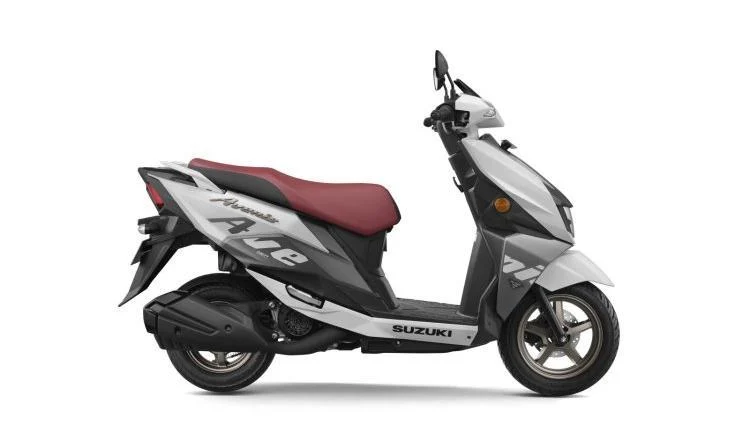
Suzuki has officially announced a significant aesthetic refresh for its flagship 125cc urban scooter, the Suzuki Avenis 125, introducing a series of high-contrast color palettes designed to bolster its appeal among younger, style-conscious commuters. This latest update, primarily highlighted by international automotive observers such as Indianautosblog, focuses on a "sporty-urban" theme that emphasizes the sharp, angular lines that have defined the Avenis since its global debut. The centerpiece of this update is the introduction of a dual-tone Pearl Glacier White and Metallic Oort Gray combination. This specific scheme utilizes a sophisticated interplay of stark white panels against deep gray accents, further embellished with oversized "Avenis" branding across the side fairings to ensure immediate brand recognition on the road. To complement the exterior, Suzuki has implemented a distinctive burgundy and black dual-tone seat, a premium touch that elevates the scooter’s visual profile from a standard utility vehicle to a lifestyle accessory.
While the mechanical underpinnings remain consistent with the previous model year, the visual overhaul is intended to maintain the model’s competitiveness in an increasingly crowded 125cc segment. The Avenis 125 has long been positioned as the "sportier" sibling to the more conservative Suzuki Access 125 and the touring-oriented Burgman Street 125. By refining the color options without altering the core architectural DNA, Suzuki aims to leverage the proven reliability of its existing platform while satisfying the consumer demand for modern, aggressive styling.
Detailed Evolution of the Suzuki Avenis 125 Design Language
The Suzuki Avenis 125 was originally conceived as a response to the growing demand for "moto-scooters"—vehicles that offer the convenience of a step-through frame with the aggressive visual cues of a sportbike. The latest color update reinforces this philosophy. The bodywork remains characterized by its sharp "beak" front end, which houses a vertically stacked LED headlamp assembly. This lighting configuration is not merely for aesthetics; it provides a high-intensity beam pattern designed for urban environments where visibility is paramount.
The rear of the vehicle continues to feature the twin triangular LED taillight setup, which has become a signature of the Avenis identity. The integration of these lights into the tapered rear section contributes to an aerodynamic silhouette that Suzuki engineers claim reduces wind resistance at cruising speeds. The addition of the Pearl Glacier White and Metallic Oort Gray option joins an existing palette that includes Metallic Lush Green and Metallic Matte Black, providing a spectrum of choices ranging from understated elegance to high-visibility sportiness.
Engineering Excellence: The Suzuki Eco Performance (SEP) Engine
Beneath the new aesthetic layers lies the heart of the Avenis 125: a 124.3 cc, single-cylinder, air-cooled engine. This powerplant is equipped with Suzuki Eco Performance (SEP) technology, a proprietary engineering suite designed to optimize the combustion process. The SEP philosophy focuses on reducing mechanical friction and enhancing the fuel-air mixture to ensure that every drop of fuel is converted into efficient motion.
In terms of output, the engine delivers approximately 8.7 PS at 6,750 rpm and a peak torque of 10 Nm at 5,500 rpm. While these figures may seem modest compared to high-performance motorcycles, they are precisely calibrated for the stop-and-go nature of metropolitan traffic. The CVT (Continuously Variable Transmission) is tuned to provide a smooth, linear power delivery, eliminating the "jerky" sensation often found in budget-oriented scooters. This makes the Avenis 125 particularly accessible to novice riders while providing enough "zip" for experienced commuters to navigate lane-filtering scenarios safely.
Furthermore, the engine is compliant with the latest global emission standards, including India’s BS6 Phase 2 (OBD-2) requirements, which necessitate on-board diagnostics to monitor real-time emissions. This compliance ensures that the Avenis remains a viable product in markets with stringent environmental regulations.
Technological Integration and Connectivity Features
In an era where digital integration is a primary selling point, Suzuki has maintained the Avenis 125’s edge by retaining its advanced digital instrument cluster. The LCD panel is fully integrated with the Suzuki Ride Connect system, which utilizes Bluetooth technology to link the rider’s smartphone to the vehicle.
Once connected via the dedicated Suzuki app, the dashboard provides a suite of features including:
- Turn-by-Turn Navigation: Allowing riders to follow directions without mounting a separate GPS device or looking down at a phone.
- Communication Alerts: Real-time notifications for incoming calls, SMS messages, and WhatsApp alerts directly on the screen.
- Safety Features: Phone battery level displays and over-speeding alerts to encourage responsible riding.
- Last Parked Location: A GPS-enabled feature within the app that helps users locate their scooter in crowded parking lots.
This focus on "smart mobility" reflects a broader trend in the two-wheeler industry where the vehicle is seen as an extension of the user’s digital ecosystem. By offering these features in the 125cc segment, Suzuki effectively bridges the gap between entry-level utility and premium tech-forward transportation.
Ergonomics, Utility, and Daily Practicality
Beyond performance and tech, the Suzuki Avenis 125 is engineered for the rigors of daily use. One of the most praised features of the model is the external fuel filler cap located at the rear, just above the taillight. This design allows riders to refuel without having to open the seat—a significant convenience during daily commutes.
The scooter offers a generous 21.8 liters of under-seat storage, capable of holding most half-face helmets or a variety of personal items such as groceries or gym gear. In the front, the Avenis features dual storage pockets. The left compartment is enclosed and houses a standard USB charging port, allowing riders to charge smartphones or other electronic devices while on the move. The right compartment is an open-top pocket designed for quick access to water bottles or small items.
For rider comfort, the Avenis 125 utilizes a long, well-padded seat designed to accommodate both a rider and a pillion comfortably. The floorboard is spacious enough to allow for various foot positions, reducing fatigue during longer rides. Safety is managed by a Combined Braking System (CBS), which distributes braking force to both the front disc and rear drum brakes when the rear brake lever is applied, significantly reducing stopping distances and preventing wheel lock-up on slippery surfaces.
Market Analysis: The Discontinuation in Indonesia
While the Avenis 125 continues to see updates and success in markets like India and parts of Latin America, its journey in the Indonesian market tells a different story. As of mid-2024, Suzuki Indonesia (PT Suzuki Indomobil Sales) effectively phased out the Avenis 125 from its local lineup. The decision highlights the complex nature of regional consumer preferences in Southeast Asia.
Industry analysts point to the "Indian-centric" design of the Avenis 125 as the primary hurdle it faced in Indonesia. The Indonesian scooter market is dominated by models like the Honda Vario and Yamaha Aerox, which favor large 14-inch wheels and a "slim-but-aggressive" aesthetic. The Avenis 125, with its 12-inch front and 10-inch rear wheel configuration, appeared "bottom-heavy" to many local consumers. Furthermore, the stout, muscular bodywork that is highly prized in the Indian market did not resonate with the Indonesian preference for sharper, more slender silhouettes.
The failure of the Avenis 125 to gain traction in Indonesia serves as a case study for global manufacturers. Despite having superior technology (such as the SEP engine and Bluetooth connectivity) and a competitive price point, the visual "cultural fit" of a vehicle can often outweigh its technical merits. Suzuki has since shifted its focus in Indonesia toward the Burgman Street 125EX, which features a more "Maxi-scooter" styling and larger 12-inch wheels both front and rear, better aligning with local tastes for premium urban cruisers.
Chronology of the Avenis 125 Development
The timeline of the Avenis 125 reflects Suzuki’s commitment to the 125cc platform:
- Late 2021: Suzuki officially launches the Avenis 125 in India, targeting the "Gen Z" demographic with its sporty design.
- Early 2022: The model is exported to various international markets, including the Philippines and Latin America.
- Late 2022: Suzuki Indonesia introduces the Avenis 125 at the Indonesia Motorcycle Show (IMOS), marking its entry into the competitive SE Asian market.
- 2023: Suzuki updates the engine to meet BS6 Phase 2 standards, adding E20 fuel compatibility (allowing the scooter to run on a blend of 20% ethanol).
- Mid-2024: Following sluggish sales and a shift in consumer interest, the Avenis 125 is quietly removed from the official Suzuki Indonesia website.
- Late 2024: Suzuki releases the Pearl Glacier White and Metallic Oort Gray color update for the Indian and global export markets to maintain momentum.
Competitive Landscape and Implications
The 125cc scooter segment is one of the most fiercely contested in the global automotive industry. The Avenis 125 competes directly with heavyweights such as the TVS NTORQ 125, the Yamaha RayZR 125 Fi Hybrid, and the Honda Grazia. Each of these competitors offers a unique value proposition: the NTORQ focuses on raw performance and exhaust note; the RayZR emphasizes lightweight agility and hybrid assistance; and the Grazia relies on Honda’s reputation for refinement.
By doubling down on aesthetic refreshes, Suzuki is attempting to keep the Avenis 125 relevant in the face of these competitors. The "dual-tone" strategy is particularly effective in the Indian market, where personalization and "road presence" are key factors in a buyer’s decision-making process.
From a broader perspective, the continued investment in the Avenis 125 suggests that Suzuki remains committed to internal combustion engine (ICE) technology in the short to medium term. While the company has teased electric scooter prototypes, the reliability and low cost of ownership associated with the SEP-equipped 125cc platform remain the backbone of its sales volume in emerging economies.
Final Assessment of the Avenis 125 Refresh
The introduction of the Pearl Glacier White and Metallic Oort Gray colorway is a tactical move by Suzuki to extend the lifecycle of the Avenis 125. By addressing the visual demands of the market without the R&D costs associated with a full mechanical overhaul, Suzuki can maintain competitive pricing while offering a "new" feel to the consumer.
For the global rider, the Avenis 125 remains a formidable choice for urban mobility. It offers a rare combination of sporty aesthetics, advanced connectivity, and utilitarian practicality. Although its specific design language led to its exit from the Indonesian market, its success in other regions proves that there is a significant audience for a scooter that balances "fun" with "function." As urban centers become increasingly congested, vehicles like the Avenis 125, which offer high fuel efficiency and easy maneuverability, will continue to play a vital role in the global transportation landscape.