
 Lina Irawan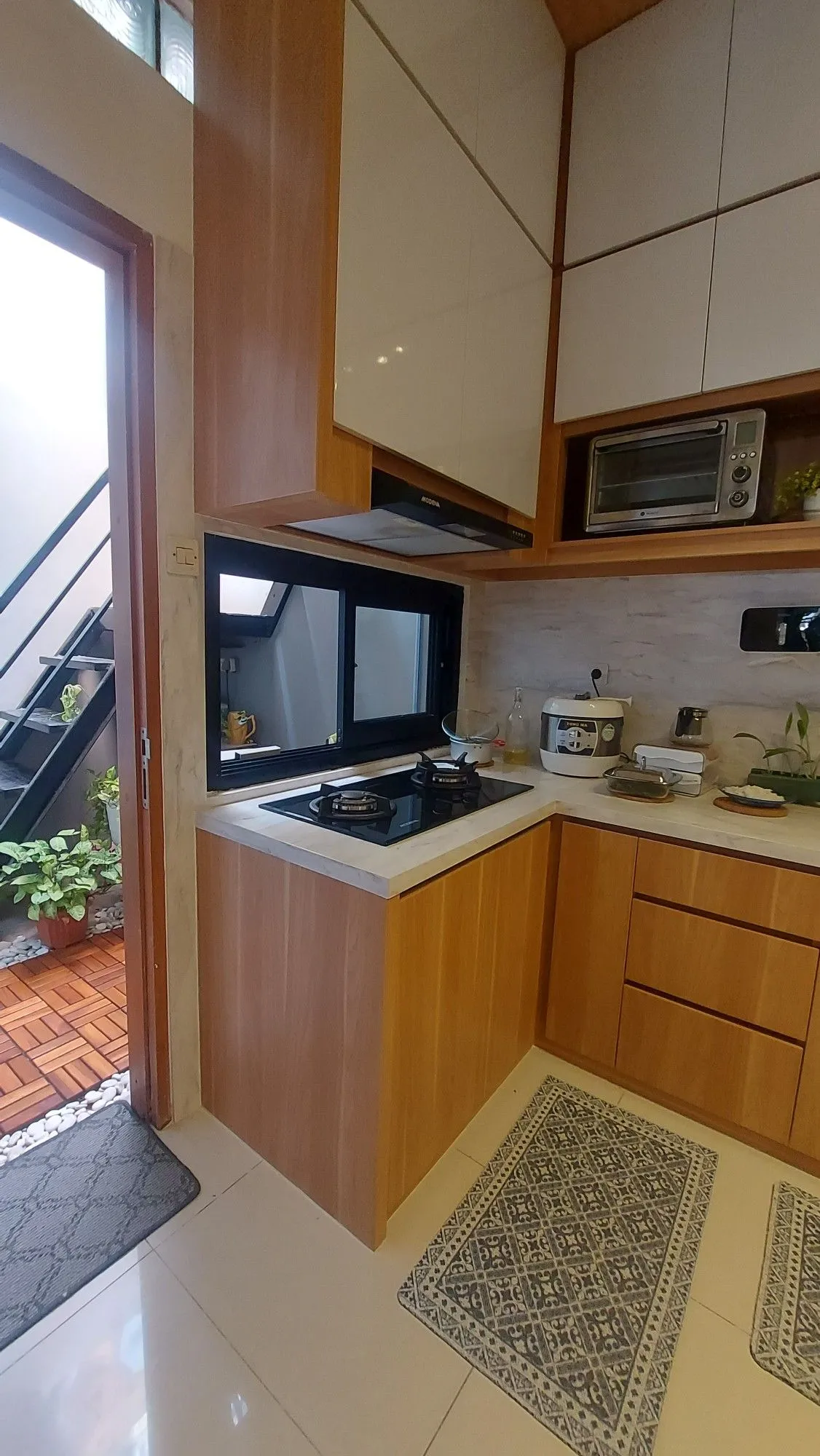
In contemporary interior design, the minimalist kitchen set has emerged as a paramount choice, meticulously balancing two fundamental objectives: optimizing spatial utility and preserving an impeccably clean design aesthetic. This style deliberately eschews superfluous decorative ornamentation, thereby cultivating an immediate sense of visual spaciousness and tranquility within the culinary domain. The precise arrangement of a kitchen profoundly influences the overall comfort and liveability of a home. A meticulously organized layout demonstrably mitigates mental fatigue and enhances efficiency during daily activities, transforming a potentially stressful environment into a serene and productive one.
Designing a cooking space transcends the mere act of concealing pots and pans within cabinets. It is a sophisticated undertaking rooted in fundamental principles of visual composition, architectural proportion, and the meticulous engineering of workflow pathways. Each element, from the placement of a utensil drawer to the alignment of overhead cabinetry, demands careful consideration and strategic integration.
The Genesis and Evolution of Minimalist Kitchen Design
The principles of minimalism, often encapsulated by the adage "less is more," trace their origins to early 20th-century movements like Bauhaus and Scandinavian design, which prioritized functionality, clean lines, and a rejection of excessive embellishment. In the context of kitchen design, this philosophy gained significant traction post-World War II, as urban living led to smaller residential footprints and a greater demand for efficient, uncluttered spaces. The mid-to-late 20th century saw kitchens transition from purely utilitarian backrooms to integrated living spaces, necessitating designs that were both highly functional and aesthetically pleasing. Minimalism offered a compelling solution, providing visual calm and maximizing perceived space, a trend that has only accelerated into the 21st century as homes increasingly embrace open-plan layouts and a desire for simplified living. This evolution underscores a broader societal shift towards valuing experiences and efficiency over material accumulation, where the kitchen becomes a testament to thoughtful living.
Why Visual Composition is Paramount in Kitchen Design
The human eye inherently seeks order and coherence. When kitchen elements are haphazardly placed or poorly aligned, the visual field becomes cluttered, leading the brain to perceive the space as chaotic and, consequently, fatiguing. A well-executed visual composition, conversely, guides the eye smoothly and effortlessly from one point to another. This uninterrupted visual flow is critical, allowing even compact kitchens to feel expansive and remarkably comfortable. Research in environmental psychology consistently indicates that uncluttered and orderly spaces contribute significantly to reduced stress levels and enhanced cognitive function, directly impacting the well-being of occupants.
Beyond mere aesthetics, the precise placement of cabinetry requires an acute understanding of architectural integration. Every line, plane, and dimension of the kitchen must seamlessly harmonize with the overarching structure of the home. This involves considering how the kitchen’s components interact with existing walls, windows, and structural beams, ensuring that the new design enhances, rather than detracts from, the building’s inherent integrity.
Ergonomics and Safety: Designing for Human Interaction
Minimalist design inherently prioritizes safety and user comfort by eliminating sharp corners and protruding decorative elements that are prone to causing accidents. The characteristic flat, flush surfaces significantly reduce the risk of accidental bumps or injuries during busy cooking sessions. This emphasis on smooth transitions and integrated hardware not only contributes to a sleek aesthetic but also to a safer operational environment.

Furthermore, an immaculately organized space has a profound calming effect on the psyche. The absence of visual noise allows for greater mental clarity and reduces the cognitive load associated with navigating a cluttered environment. From a property investment perspective, a meticulously designed minimalist kitchen often commands higher market appeal. Its timeless aesthetic and perceived efficiency make it more attractive to potential buyers, frequently cited by real estate experts as a key factor in increasing a home’s resale value, sometimes by as much as 5-10% in competitive markets, depending on the quality of the renovation.
Mastering Architectural Lines for Spatial Perception
The intrinsic character of a kitchen is heavily influenced by its linear composition. In minimalist design, horizontal lines are strategically employed to create an illusion of increased width and expanse. For instance, extended, linear drawer fronts visually stretch the space, making a compact room feel significantly larger than its actual dimensions. These lines are formed by the subtle gaps between drawer panels, the thickness of countertops, and the base lines of upper cabinets. The fewer vertical interruptions that dissect these horizontal arrangements, the more serene and expansive the visual outcome.
Conversely, vertical lines are typically reserved for tall storage units (often referred to as ‘tall units’) or integrated refrigerator doors. Their purpose is to draw the eye upwards, creating a sense of height and loftiness, which can be particularly beneficial in kitchens with lower ceilings. The intersection and alignment of these vertical and horizontal lines demand absolute precision. Even a slight misalignment in a cabinet door gap can immediately disrupt the visual harmony, rendering the entire kitchen appearance disheveled and unprofessional. This meticulous attention to detail is a hallmark of truly exceptional minimalist design.
The Art of Balance in Layout
Without a considered approach to balance, a kitchen space can feel disproportionate or visually heavy on one side. Designers typically employ two primary strategies to achieve equilibrium:
Symmetrical Balance
This approach involves creating an identical, mirror-image arrangement on both the left and right sides of a central axis. Often, the cooktop and its corresponding range hood serve as this focal point. Symmetrical layouts inherently exude an aura of formality, order, and classic elegance. However, achieving total symmetry can frequently pose practical challenges, particularly when constrained by existing architectural features such as window placements, structural columns, or pre-existing plumbing and electrical installations. Furthermore, an overly rigid symmetrical design can sometimes feel somewhat inflexible or static for the dynamic requirements of daily use.
Asymmetrical Balance
More frequently embraced in modern kitchen designs, asymmetrical balance achieves equilibrium not through identical forms but through the equal distribution of visual weight. This technique allows for greater flexibility and dynamism. For example, a large, prominent window on one side of the kitchen can be effectively balanced by a tall, dark-colored pantry unit on the opposite side. While their forms are distinctly different, both elements possess a comparable visual gravity, effectively commanding equal attention from the eye. Asymmetrical balance lends a more fluid, organic, and contemporary feel to the kitchen, allowing for creative solutions that adapt to unique spatial constraints while maintaining visual harmony.
The Rhythm of Cabinet Composition
A compelling interior space requires visual rhythm, achieved through the systematic repetition or thoughtful gradation of forms and sizes. The simplest method to establish this rhythm in a kitchen is by standardizing the dimensions of cabinet doors. A consistent sequence of doors, perhaps each measuring 60 centimeters in width, immediately imparts a sense of order and regularity. This creates a predictable visual beat that is pleasing to the eye.

Rhythm can also be artfully constructed through gradation. A series of drawers, progressively increasing in thickness from the slimmest at the top to the thickest at the bottom, gently guides the eye downwards, creating a subtle yet dynamic visual narrative. It is crucial to avoid haphazardly mixing too many disparate door or drawer sizes within a single linear arrangement, as this instantly disrupts the established rhythm and introduces visual discord, making the space feel fragmented rather than cohesive.
Defining the Focal Point
Every well-designed kitchen benefits from a singular focal point—an element that instantly captures attention upon entering the space. The cooktop area, often paired with a striking backsplash, is a prime candidate for this role. Utilizing materials such as intricately veined natural stone or custom-patterned tiles for the backsplash can transform this functional zone into an artistic statement. Similarly, a substantial marble-topped island positioned centrally can serve as a powerful visual anchor, drawing the eye and establishing the kitchen’s aesthetic identity.
The cardinal rule, however, is to limit the design to a single dominant focal point. If a kitchen island is designed to be exceptionally prominent and eye-catching, then the surrounding wall areas should be deliberately understated, perhaps with plain colors or minimalist finishes. Overloading a space with multiple competing focal points will invariably lead to visual fatigue and diminish the impact of each individual element. The key is to create a hierarchy of visual interest, allowing one star to truly shine.
The Strategic Use of Negative Space
The impulse to fill every available wall surface with cabinetry, from floor to ceiling, is a common misconception in kitchen design. In reality, strategically incorporating "negative space"—deliberately leaving portions of the wall empty—provides essential visual relief for the eye. This deliberate emptiness allows the kitchen to breathe, preventing it from feeling cramped or claustrophobic.
Beyond creating a sense of openness, a plain, unadorned wall offers an opportunity for the chosen surface material to exhibit its inherent texture and subtle color variations. The true luxury of minimalist design often emanates from this sense of unencumbered space, rather than from an abundance of expensive materials or intricate details. There is no need to overcrowd walls with cabinets to convey a sense of value or sophistication; indeed, often the opposite is true. Thoughtful negative space contributes to a refined and elevated aesthetic.
Scale and Architectural Proportion
The dimensions of kitchen cabinetry must always be proportionate to the overall size of the room. Introducing an overly large island into a compact apartment kitchen, for example, will immediately disrupt the ergonomic flow and visual balance, hindering comfortable movement and making the space feel disproportionate. Similarly, the thickness of the countertop (worktop) plays a crucial role. A countertop that is excessively thick can appear clunky and awkward when paired with sleek, slender base cabinets, undermining the minimalist aesthetic.
Interior designers frequently employ the 60:30:10 rule for color distribution, a principle borrowed from classical aesthetics and often used in various design disciplines. This ratio dictates that 60% of the room should be dominated by a primary color (typically seen on major elements like cabinets), 30% by a secondary color (used for countertops, backsplashes, or accent walls), and the remaining 10% for an accent color (applied to smaller items like bar stools, decorative objects, or light fixtures). This systematic approach ensures a harmonious and balanced color palette, preventing any single color from overwhelming the space while allowing for subtle pops of interest.

Guiding the Visual Flow
Visual flow refers to the effortless path the eye takes when surveying a room. Strategic design choices can actively direct this movement. For instance, installing floor tiles with a linear pattern that extends towards a window will naturally draw the gaze outwards, connecting the interior with the external environment and enhancing the perception of depth.
Within the cabinet panels themselves, the absence of visible handles is a hallmark of minimalist design that significantly enhances visual flow. Handle-less cabinetry allows the eye to glide smoothly across uninterrupted surfaces, free from the visual "snags" that traditional hardware can create. Furthermore, all large electronic appliances, such as refrigerators, ovens, and dishwashers, should ideally be integrated or "built-in." This ensures their bodies do not protrude from the cabinetry, maintaining a seamless visual plane and preventing them from disrupting the smooth visual trajectory.
Ergonomics and Workflow Engineering
Even the most visually stunning kitchen will prove frustrating if it fails to support comfortable and efficient cooking. The layout must be meticulously engineered to align with natural human movement and typical culinary processes. The "Work Triangle" concept, which delineates the optimal pathways between the three primary kitchen functions—the cooktop, the sink, and the refrigerator—remains a foundational standard in kitchen design. The cumulative distance traveled between these three points is ideally maintained within a range of 3 to 7 meters (approximately 10 to 23 feet) to minimize unnecessary movement and maximize efficiency.
Crucially, sufficient counter space for food preparation should be strategically located immediately adjacent to the sink area, facilitating a seamless workflow from washing to chopping. Furthermore, the height of the countertops must be precisely tailored to the stature of the primary user to prevent back strain and shoulder tension during prolonged cooking activities. These ergonomic considerations are not merely conveniences but essential components of a truly functional and user-centric minimalist kitchen.
The Imperative of Material Continuity
Introducing an excessive number of disparate materials into a kitchen can visually fragment the space, making it feel smaller and more chaotic. A fundamental principle of minimalist design is to foster a sense of cohesion through material continuity. Utilizing the identical material for both the countertop and the backsplash, for example, creates a seamless visual flow, imparting the illusion of a single, continuous stone surface extending from the work area upwards.
A similar rule applies to the direction of wood grain on cabinet panels. If the cabinet doors feature a vertical grain, then all corresponding cabinetry within that space should ideally maintain the same vertical orientation. Limiting the primary materials in a kitchen to a maximum of three distinct types helps to preserve a clean, uncluttered aesthetic and reinforces the minimalist ethos of simplicity and unity.
Lighting as a Sculptor of Space
Even the most meticulously crafted design will appear flat and lifeless without a sophisticated lighting scheme. Lighting is not merely functional; it actively sculpts space, revealing the subtle textures of materials and imparting depth to various corners and surfaces. Strategic task lighting, such as LED strips installed directly beneath upper cabinets, is essential for illuminating food preparation areas, ensuring safety and precision during chopping and cooking.

The color temperature of the lighting must also be carefully calibrated to complement the chosen materials and color palette. Natural wood tones, for instance, are often enhanced by warmer, yellowish light (typically around 2700K-3000K, often referred to as ‘warm white’), which accentuates their richness. Conversely, cool-toned materials like matte grey cabinetry or stainless steel typically benefit from neutral white light (around 4000K-4500K), which maintains their crispness without introducing unwanted yellow casts. A layered lighting approach—combining ambient, task, and accent lighting—is crucial for creating a versatile and inviting atmosphere.
The Psychology of Color in Minimalist Kitchens
Color possesses an inherent power to manipulate the perception of spatial dimensions and evoke specific moods. Light hues, such as crisp white or soft cream, are highly reflective. When applied to cabinetry, they create an illusion of seamless integration with the walls, making the entire room feel significantly more expansive and airy. These colors maximize natural and artificial light, further contributing to a bright and open atmosphere.
In stark contrast, darker colors, such as deep navy blue or rich moss green, are highly absorptive of light. While they can imbue a space with a dramatic, sophisticated, and intimate ambiance, their dominant use in a small kitchen can paradoxically make the room feel more enclosed and visually constrictive. The strategic application of dark colors is therefore vital; they are often best employed as accents or in larger kitchens where their depth can be appreciated without overwhelming the space. The 60:30:10 rule for color distribution becomes especially critical here, ensuring that dark tones are used judiciously to avoid diminishing the sense of space.
The Kitchen as a Social Epicenter
Modern kitchens have transcended their traditional utilitarian role to become the undisputed social epicenter of the home, places where family and friends gather, converse, and connect. Consequently, the layout must seamlessly accommodate both rigorous culinary work and relaxed social interaction.
A kitchen island or a peninsula serves as an ideal transitional boundary, naturally delineating the cooking zone from the social area. It is imperative to design these elements with ample legroom beneath the counter to comfortably accommodate bar stools, allowing guests to sit and engage without obstructing the critical workflow around the cooktop. Furthermore, whenever architectural options permit, the sink should be oriented towards the living area or an exterior window, rather than facing a blank wall. This thoughtful placement facilitates interaction, allowing the cook to remain part of the conversation or enjoy an external view, transforming a solitary task into a communal experience.
Common Compositional Missteps
The frequent pitfall in kitchen design often stems from an overzealous attempt to integrate too many disparate ideas, particularly those gleaned from diverse online sources, into a single, constrained space. A critical error arises when elements such as window frames, cabinet boundaries, and door heights lack consistent alignment, leading to a visually jarring and uncomfortable aesthetic. All primary linear elements should be meticulously aligned and drawn parallel from the initial stages of room sketching to ensure a harmonious and cohesive outcome.
Another common mistake involves the selection of overly small floor tiles with tightly packed grout lines, which can make the floor area appear excessively busy and detract from the minimalist ideal of calm and simplicity. Large format tiles with minimal grout lines are generally preferred for their ability to enhance the perception of spaciousness and reduce visual clutter. Crucially, while the exterior of minimalist cabinetry may appear sleek and uncluttered, neglecting the internal organization of drawers and cabinets is a significant oversight. If cooking utensils and appliances are haphazardly crammed inside, the kitchen’s efficiency and long-term functionality will be severely compromised, undermining the very essence of minimalist design.

Sustaining Long-Term Tidiness
The minimalist kitchen, by its very nature, demands a degree of discipline and conscious effort from its inhabitants to maintain its pristine aesthetic. The countertops, in particular, should ideally remain clear and uncluttered once cooking activities have concluded. This necessitates dedicated, hidden storage solutions for all small appliances and utensils. Investing in custom drawer inserts, pantry organizers, and built-in compartments is paramount to ensure every item has its designated place, allowing for quick and efficient tidying.
Furthermore, the selection of cabinet materials plays a vital role in long-term maintenance. Opting for finishes that are resistant to fingerprints and smudges can significantly reduce the visual impact of daily use, ensuring surfaces remain impeccably clean and unblemished. A proactive approach to decluttering and regularly sorting through cooking equipment is also essential. Overly packed cabinets inevitably lead to an overflow of items, with pots, pans, and countertop appliances gravitating back onto the once-clear surfaces, thus compromising the minimalist ideal.
Precision Execution with InteriorDesign.ID
The meticulous calculation of proportions and the precise measurement of material joins in a modern kitchen are far from arbitrary estimations; they are critical elements demanding expert precision. Even a slight miscalculation in scale can render a space feeling rigid, unbalanced, or aesthetically jarring. Effective planning must invariably be complemented by skilled craftsmanship from professionals who possess a deep understanding of architectural precision and execution standards.
The team at InteriorDesign.ID is equipped with the expertise to assist clients in every phase of this intricate process, from accurately calculating dimensions and engineering ergonomic workflows to crafting visually compelling compositions. Their comprehensive services ensure that every detail, from the macro layout to the micro-level material junctions, is handled with utmost care and technical proficiency. Clients are encouraged to reach out to InteriorDesign.ID to re-evaluate and refine their kitchen layouts, transforming their culinary spaces into exemplary models of minimalist design that are both breathtakingly beautiful and highly functional.








