
 Lina Irawan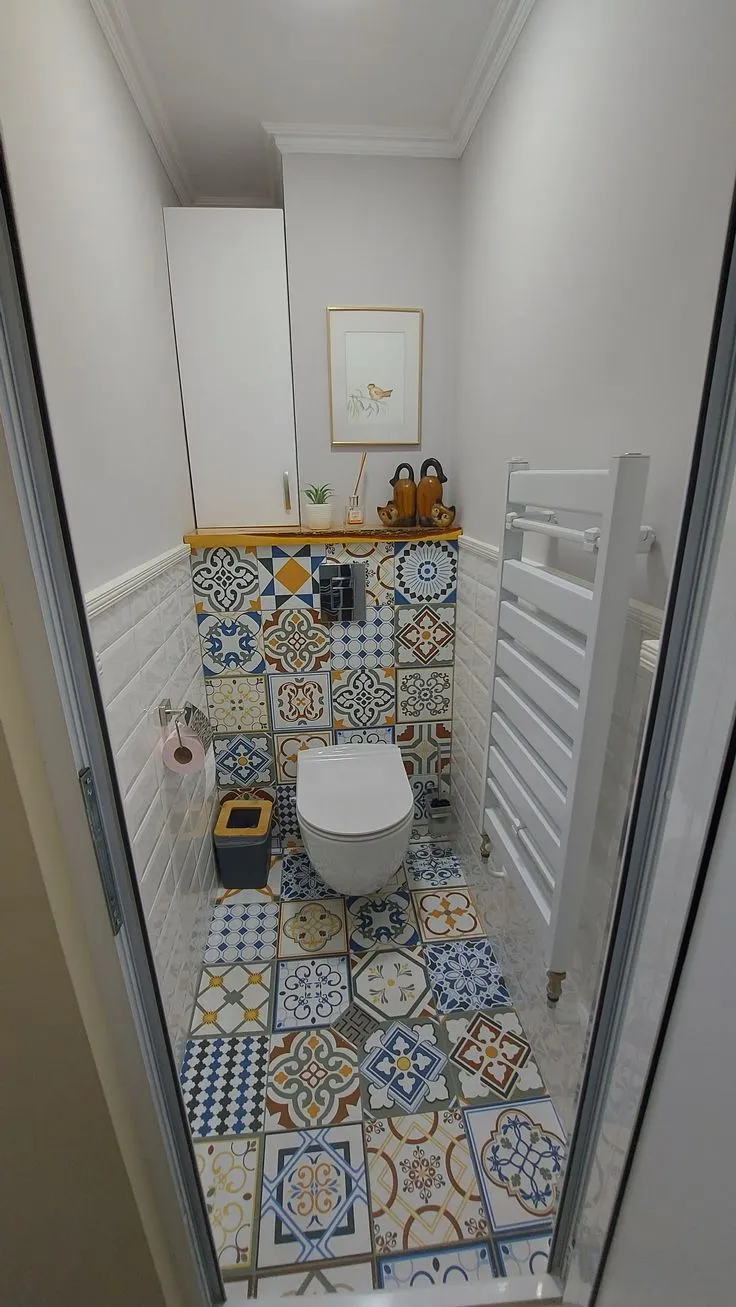
For homeowners navigating the challenges of smaller living spaces, the quest for design solutions that maximize perceived area is paramount. One of the most impactful, yet often misunderstood, strategies lies beneath our feet: the choice of floor tiling. Contrary to a pervasive myth that small rooms demand small tiles for balance, architectural and interior design experts unequivocally advocate for large-format tiles as the superior method to create an immediate and enduring sense of spaciousness. This approach leverages visual psychology, minimizing interruptions to the eye and transforming compact areas into expansive canvases.
The Science of Perception: How Tiles Manipulate Space
The human eye instinctively tracks lines and boundaries within an environment. When entering a room, our gaze registers the floor’s surface, and the frequency of grout lines significantly influences our perception of its size. A multitude of small tiles, typically 30×30 cm or 40×40 cm, creates a dense grid of intersecting lines. This visual clutter acts as a series of constant interruptions, effectively "caging" the eye and causing the brain to interpret the space as confined and visually crowded. Each grout line serves as a stopping point, fragmenting the floor into numerous small segments and preventing a continuous visual flow. This optical illusion can make a genuinely compact room feel even more restrictive and less inviting.
Conversely, large-format tiles drastically reduce the number of these visual interruptions. With fewer, more widely spaced grout lines, the floor transforms into a cohesive, uninterrupted surface, resembling a single, flowing canvas that stretches from wall to wall. This seamless appearance deceives the eye, allowing it to sweep across the entire area without encountering frequent visual breaks. The result is a profound psychological effect: the room feels significantly larger, often appearing twice its actual size. This principle is rooted in Gestalt psychology, specifically the law of continuity, where the eye tends to follow the smoothest path, perceiving unified patterns rather than discrete elements. When applied to flooring, this means an unbroken surface suggests an unbroken space, leading to an enhanced sense of openness and airiness.
The Evolution of Tile Technology and Design Trends

The shift towards larger tile formats is not merely a stylistic preference but also a testament to advancements in tile manufacturing technology. Historically, smaller tiles were more manageable to produce and install. However, modern manufacturing processes, particularly for porcelain stoneware, have enabled the creation of exceptionally large, durable, and precise tiles. Rectified edges, a critical innovation, allow for near-perfectly straight cuts, reducing the required grout line thickness to a mere 1-2 mm. This precision is fundamental to achieving the seamless look that underpins the spacious illusion.
The demand for larger tiles has also been driven by global demographic and architectural trends. With increasing urbanization and rising property costs, living spaces in major cities worldwide are becoming progressively smaller. Micro-apartments, compact townhouses, and efficient urban dwellings are now common. This context makes design strategies that visually expand space not just desirable but essential. The evolution from standard 60×60 cm tiles to imposing 80×80 cm, 120×60 cm, and even larger formats reflects a conscious effort by manufacturers to cater to this need, offering products that are both aesthetically pleasing and functionally superior for modern compact living. The trend also aligns with the minimalist and open-plan design philosophies that prioritize clean lines and uncluttered aesthetics.
Expert Consensus: Architects and Interior Designers Emphasize Spatial Integrity
Leading architects and interior designers consistently advocate for large-format tiles in small spaces, framing it as a cornerstone of intelligent spatial planning. "The integrity of a room’s footprint is paramount," explains an unnamed senior architect often quoted in industry forums. "By minimizing visual breaks on the floor, we maintain that integrity, allowing the eye to perceive the space as a unified whole rather than a collection of fragmented squares." This professional consensus highlights that the floor, often the second-largest continuous surface after the ceiling, plays a critical role in defining a room’s perceived volume. Breaking this surface into numerous small grids fundamentally undermines the visual coherence of the space.
Furthermore, designers note the enhanced resale value of properties featuring large-format tiling. Buyers often perceive homes with such flooring as more modern, luxurious, and well-designed, directly correlating the seamless aesthetic with a premium quality finish. This perception translates into a tangible return on investment, making the initial outlay for larger tiles and potentially more complex installation a worthwhile expenditure.
Strategic Application Across Diverse Home Zones

The application of large tiles should be tailored to the specific function and characteristics of each area within a home. A blanket approach without considering zone-specific needs may not yield optimal results.
-
Open-Plan Living and Family Rooms: These are prime candidates for maximizing the illusion of space. For an immediate impact, tiles measuring at least 60×60 cm are recommended. For those seeking an elevated sense of luxury and expanse, 80×80 cm homogeneous tiles are an excellent choice. Crucially, these tiles should be installed continuously, without any threshold or dividing line, extending seamlessly from one functional area to the next. This unbroken flow merges distinct zones into a singular, expansive field. Light colors such as white, cream, or pale grey are highly advisable, as they reflect natural light, further brightening and enlarging the space. A slightly glossy finish can enhance this effect by bouncing light into every corner.
-
Kitchens and Dining Areas: While kitchens in minimalist homes are often dominated by cabinetry, large tiles remain highly effective. A 60×60 cm tile with a matte finish strikes a perfect balance between achieving a spacious illusion and ensuring safety, preventing slips in areas prone to spills. It’s vital to resist the temptation to differentiate the kitchen floor with smaller, distinct tiles. This practice creates a visual break, boxing off the kitchen and negating the open-plan feel. Instead, extend the main living area tiles directly into the kitchen. Any desired decorative elements or contrasting patterns should be confined to the backsplash, allowing the floor to maintain its unifying role.
-
Narrow Hallways and Connecting Areas: These transitional spaces often present unique challenges. While large square tiles can require excessive cutting, rectangular "plank" tiles are ideal. Dimensions like 15×60 cm or 20×100 cm, often mimicking wood or natural stone, work exceptionally well. The key is to install them lengthwise, parallel to the direction of the hallway. This orientation draws the eye forward, elongating the visual perspective and making the hallway feel more proportionate and less cramped. Installing them crosswise, however, would create a "stair-step" effect, visually segmenting and shortening the corridor.
-
Bathrooms: Often seen as an exception due to concerns about slipperiness, bathrooms can significantly benefit from large tiles. Modern large-format tiles are available with various matte or rustic textures specifically designed for wet areas, ensuring safety without compromising aesthetics. Tiles of 40×40 cm or 60×60 cm can transform a modest bathroom into a luxurious, hotel-like retreat. Beyond aesthetics, larger tiles mean fewer grout lines, which translates to less area for soap scum and grime to accumulate, simplifying cleaning and maintenance. Skilled tile installers can expertly manage the necessary floor gradients for drainage, even with larger tile formats, ensuring functionality is not sacrificed for style.
Beyond Size: The Nuance of Color, Texture, and Finish

While size provides the fundamental structural advantage, the choice of color, texture, and finish are crucial elements that perfect the spatial illusion. These attributes work in concert with tile dimensions to enhance brightness, depth, and overall aesthetic harmony.
- Color: Light, neutral tones such as off-white, cream, pale grey, or soft beige are consistently recommended. These colors have a high light reflectance value (LRV), meaning they bounce light around the room, making it appear brighter and more expansive. Darker colors, while sometimes used for dramatic effect, tend to absorb light and can make a small space feel even smaller and enclosed.
- Texture: For general living areas, a smooth or subtly textured finish enhances the seamless look. In wet areas like bathrooms or kitchens, a matte or slightly textured finish provides essential slip resistance without creating visual busyness. Heavily textured tiles, while unique, can sometimes create shadows that break up the continuous surface.
- Finish (Gloss vs. Matte): A polished or semi-gloss finish can amplify the perception of space by reflecting light more intensely, creating a subtle mirroring effect. However, a full gloss can sometimes be too reflective or prone to showing imperfections. A satin or slightly honed finish often provides a sophisticated balance. For a more understated, contemporary feel, a matte finish is excellent, especially when paired with natural light, as it diffuses light softly rather than reflecting it sharply.
Installation Precision: A Critical Investment
The effectiveness of large-format tiling hinges significantly on the quality of its installation. Unlike smaller tiles that are more forgiving of minor subfloor imperfections, large tiles demand a perfectly level and stable subfloor (screed). Any unevenness will be magnified, leading to lippage (uneven tile edges) that compromises both aesthetics and safety. Homeowners should anticipate potential additional costs for professional subfloor leveling, which is a non-negotiable step for a flawless finish.
Specialized tools and expertise are required for handling and laying large tiles. These include large-format tile lifters, specific adhesive types designed for strong bonding over large areas, and precise leveling systems to ensure consistent height and minimal grout lines. The use of tile spacers is crucial for achieving the ultra-thin, rectified grout lines (1-2 mm) that are key to the uninterrupted visual effect. Furthermore, the color of the grout is paramount; it must be chosen to match the tile color as closely as possible. A contrasting grout, such as black grout on white tiles, would defeat the purpose by reintroducing visible grid lines, immediately negating the illusion of expanse. Investing in skilled installers experienced with large-format tiles is an investment in the overall success and longevity of the design.
Long-Term Benefits and Market Value
Beyond immediate aesthetic appeal, large-format tiles offer tangible long-term advantages. The reduced number of grout lines translates directly into easier maintenance. Grout, being porous, is notoriously prone to collecting dust, dirt, and moisture, making it a hotspot for stains and mildew. With fewer grout lines, cleaning becomes less laborious and more efficient. Many large-format porcelain and homogeneous tiles are also manufactured with protective anti-stain coatings, making spills easy to wipe away without leaving permanent marks. This inherent durability and ease of care contribute to the tile’s longevity and maintain its pristine appearance over time.

As previously mentioned, the contemporary, seamless look achieved with large tiles is a significant asset in the real estate market. Properties with this flooring often command higher resale values, as they appeal to modern buyers seeking sophisticated, low-maintenance, and visually expansive living environments. It signals a thoughtful and high-quality design choice, making the property more attractive and competitive.
Avoiding Pitfalls: Common Mistakes in Tile Selection and Installation
Even with the best intentions, certain missteps can undermine the benefits of large-format tiles in small spaces:
- Neglecting Subfloor Preparation: This is the most critical error. An uneven subfloor leads to lippage, cracking, and a visually flawed finish, regardless of tile size.
- Choosing Overly Busy Patterns: While large tiles minimize grout lines, a highly intricate or busy pattern on the tile itself can reintroduce visual clutter, defeating the purpose of a serene, expansive floor.
- Incorrect Grout Color: Using a contrasting grout color creates a grid, precisely what large tiles aim to eliminate. Always opt for a grout color that closely matches the tile.
- Ignoring Slip Resistance in Wet Areas: For bathrooms and kitchens, selecting large tiles without an appropriate matte or textured finish can create safety hazards. Prioritize safety alongside aesthetics.
- Inconsistent Tile Sizing Across Connecting Areas: Introducing different tile sizes or patterns in adjacent open-plan spaces (e.g., small tiles in the kitchen, large in the living room) visually chops up the floor plan, making both areas feel smaller. Maintain continuity.
- Poor Lighting: Even the most expansive-looking floor can feel confined in poorly lit spaces. Ensure adequate natural and artificial lighting to enhance the light-reflecting qualities of the tiles.
The Finishing Touches: Skirting and Seamless Transitions
The overall aesthetic and the illusion of space are significantly influenced by the often-overlooked detail of floor skirting (baseboards). Skirting that is excessively tall, thick, or contrasting in color can visually truncate the wall, making the room appear shorter and the ceiling feel oppressive.
To maintain the expansive visual flow created by large tiles, designers recommend one of two approaches:

- Flush Skirting (Rata Dinding): This involves integrating the skirting flush with the wall, creating a clean, uninterrupted line.
- Shadow Gap Skirting: This design creates a small, recessed gap between the wall and the floor, giving the impression that the wall is floating, which further enhances lightness and space.
If these more architectural options are beyond budget, choose ceramic skirting that matches the floor or wall color precisely. Crucially, keep the height to a maximum of 7 cm. For wood-look plank tiles, match the skirting color to the tile. These subtle tricks ensure the floor appears to extend seamlessly upwards, providing an additional layer of visual expansion.
In conclusion, the judicious selection and meticulous installation of large-format tiles represent a sophisticated and highly effective design strategy for creating the illusion of grandeur in compact homes. By understanding the principles of visual perception, leveraging technological advancements, and adhering to expert guidance, homeowners can transform modest spaces into areas that feel expansive, luxurious, and effortlessly modern. It is an investment in intelligent design, offering both immediate aesthetic rewards and long-term practical benefits.








